
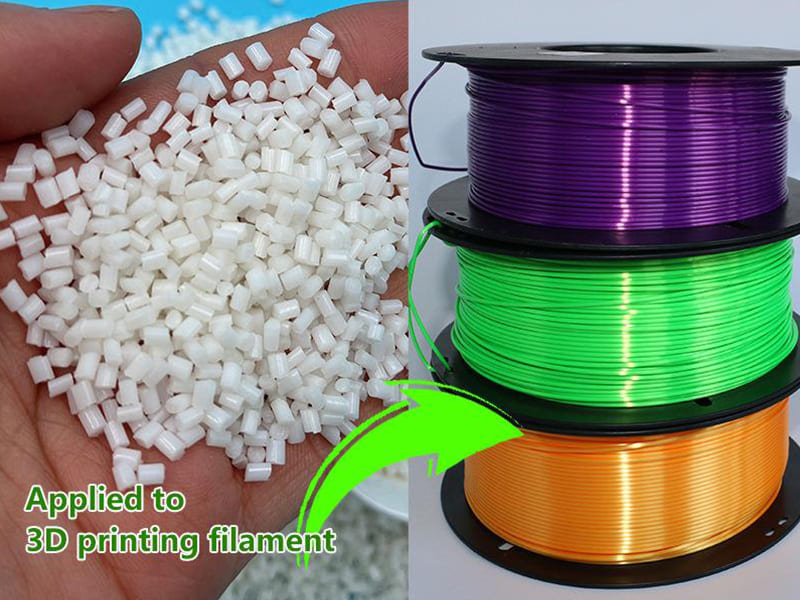
Ask “what is the melting point of PLA?” and most sources give you a number — somewhere around 150–180°C — and move on. That answer is directionally correct but practically insufficient. We’ve seen PLA parts warp on a car dashboard at 65°C, brackets lose load capacity in a warm enclosure, and injection-molded components degrade because the processor confused melting point with optimal processing temperature. The number alone doesn’t tell you what you actually need to know.
Understanding the melting point of PLA requires looking beyond a single temperature value. PLA is a semi-crystalline thermoplastic whose behavior depends on glass transition temperature (Tg), crystallinity, molecular weight, and processing history — not just where it melts. This article covers the real thermal behavior of PLA, explains why Tg matters more than Tm for part performance, breaks down how melting point affects 3D printing, injection molding, and thermoforming, and identifies when PLA is — and isn’t — the right material choice.
What Is the Melting Point of PLA?
The melting point of PLA falls between 150°C and 180°C, depending on material grade, molecular structure, and processing history. Most general-purpose PLA grades melt in the 150–170°C range. Modified or higher-crystallinity grades push toward 170–180°C.
This range isn’t an imprecision problem — it reflects how PLA actually behaves. Several factors drive the variation: degree of crystallinity, molecular weight and distribution, additives or impact modifiers, and thermal history (whether the material was annealed or rapidly cooled into an amorphous state).
| PLA Type | Typical Melting Range (°C) | Notes |
|---|---|---|
| General-purpose PLA | 150–170 | Common for FDM printing |
| High-crystallinity PLA | 165–180 | Improved heat resistance |
| Modified / blended PLA | 155–175 | Toughened or filled grades |
Why PLA Doesn’t Have a Single Sharp Melting Point
PLA contains both ordered (crystalline) and disordered (amorphous) regions. Unlike pure crystalline materials, semi-crystalline polymers don’t transition from solid to liquid at one temperature. Instead, crystalline domains melt progressively over a temperature interval.
Molecular weight distribution amplifies this effect. Shorter polymer chains soften and flow earlier, while longer chains need more thermal energy. As a result, PLA processing relies on melt windows rather than fixed temperature targets — an important distinction for anyone setting up a printing or molding process.
Melting Point vs. Glass Transition Temperature: The Critical Difference
What Is Glass Transition Temperature (Tg)?
The glass transition temperature of PLA typically falls between 55–65°C. At Tg, amorphous regions shift from a rigid, glassy state to a rubber-like state. The material doesn’t melt, but it softens significantly — losing dimensional stability, stiffness, and load-bearing capacity.
Below Tg, PLA behaves as a stiff engineering plastic. Above Tg, even moderate stress can cause permanent deformation. This is why PLA parts visibly warp in hot environments — inside vehicles, near heat sources, or in warm enclosures — even though the material is far below its melting point.
Why Tg Matters More Than Melting Point for Part Performance
Here’s the key engineering insight that most material guides miss: PLA parts almost always fail from heat deformation, not melting. Structural integrity degrades as soon as service temperature approaches Tg.
- Melting point (150–180°C): relevant for processing decisions
- Tg (55–65°C): critical for in-service performance
For example, a PLA bracket may never see temperatures above 80°C. Yet it can still lose load-bearing capacity because it has exceeded Tg. In our experience, this distinction is the single most common source of PLA application failures — designers assume “it won’t melt” when the real question is “will it hold shape?”
Common Mistakes When Confusing Tg and Tm
Material selection errors: Choosing PLA for heat-exposed applications, assuming the 150°C melting point provides adequate margin.
Application misjudgment: Overlooking creep and softening in load-bearing or tolerance-sensitive parts that operate above 55°C.
Process-use mismatch: Optimizing for printability or moldability without considering where the part actually operates.
| Property | Glass Transition (Tg) | Melting Point (Tm) |
|---|---|---|
| Typical range | 55–65°C | 150–180°C |
| Physical change | Stiff → rubber-like | Solid → molten |
| Relevance | Part performance | Processing behavior |
| Failure mode | Deformation, creep | Flow, collapse |
What Determines PLA’s Melting Point? Material Science Factors
Crystallinity and Polymer Structure
Crystallinity is the single most influential factor. Higher crystallinity means more ordered polymer regions requiring more thermal energy to disrupt. Low-crystallinity (amorphous-dominant) PLA shows a lower melting onset and narrower melt window. High-crystallinity PLA melts at a higher peak temperature across a broader range.
In practice, higher crystallinity doesn’t just “raise” the melting point — it widens the melting interval. This directly impacts flow consistency during processing and cooling-induced shrinkage after molding or printing.
Molecular Weight and Distribution
Higher molecular weight PLA offers greater thermal resistance and mechanical strength but exhibits increased melt viscosity and reduced flowability. Lower molecular weight PLA flows more easily but has a narrower processing window and lower final-part performance. This trade-off between processability and performance explains why different PLA grades behave very differently at similar nominal temperatures.
Additives and Modified Grades
Commercial PLA rarely exists as a pure polymer. Many grades include toughening agents, nucleating agents, or fillers. These modifications can shift, flatten, or broaden the melting range. For instance, heat-resistant PLA blends may show similar melting temperatures but improved dimensional stability due to controlled crystallization behavior.
Thermal Degradation
PLA is thermally sensitive. Above typical processing ranges, chain scission and hydrolytic degradation reduce molecular weight, lower effective melting temperature over time, and degrade mechanical properties. Higher temperature does not always mean better processing — careful temperature control is essential in both molding and extrusion.
How Is PLA Melting Point Measured?
DSC (Differential Scanning Calorimetry)
Material datasheets typically report PLA’s melting point using DSC, a thermal analysis technique measuring heat absorption and release during controlled heating. For polymers like PLA, DSC reveals thermal transitions across a temperature range rather than identifying a single “melting temperature.”
Reading a PLA DSC Thermogram
A typical PLA DSC curve shows three key features:
Glass transition (Tg): A baseline shift around 55–65°C, marking the onset of polymer chain mobility.
Cold crystallization peak: Shows amorphous PLA crystallizing during heating — common in fast-cooled or 3D-printed parts.
Melting peak (Tm): A broad endothermic peak between 150–180°C, representing crystalline domain melting.
The peak’s width and shape matter as much as its maximum temperature. A wide peak indicates heterogeneous crystal structures and explains why PLA processing relies on melt windows, not fixed setpoints.
Why DSC Results Vary Between Grades
Injection-grade PLA typically shows higher, more defined melting peaks with greater crystallinity. 3D printing PLA tends toward broader melting behavior with more pronounced cold crystallization. For engineers and procurement teams, this means DSC data should always be interpreted in the context of the intended manufacturing process — not used as a universal constant.
How PLA Melting Point Affects 3D Printing
Extrusion Temperature vs. Actual Melting Behavior
Although PLA melts between 150–180°C, typical FDM nozzle temperatures run 190–220°C. This is intentional. At the melting point, PLA transitions to a molten state but retains high viscosity. Higher extrusion temperatures achieve stable melt flow through small nozzles, reduce shear stress, and ensure consistent material deposition at printing speed.
Printing too close to the melting point often results in under-extrusion and weak layer bonding. Nozzle temperature should be selected based on rheological behavior, not just thermal transition data.
Layer Adhesion, Flow, and Cooling
Layer adhesion depends on interlayer diffusion of polymer chains, which only occurs when deposited material stays above Tg long enough to bond with the previous layer. Insufficient temperature produces brittle parts with poor fusion. Excessive temperature causes loss of shape control and surface defects. Rapid cooling improves dimensional accuracy but can limit bonding.
This balance explains why fan speed, print speed, and extrusion temperature must be tuned together — adjusting one without the others often creates new problems.
Common Temperature-Related Print Defects
Stringing: Excessive melt flow from overly high nozzle temperature. Sagging or collapse: Material stays too soft after deposition. Weak layers or delamination: Extrusion temperature too close to melting onset. Surface roughness: Reduced viscosity beyond the optimal flow window.
PLA Melting Point in Industrial Manufacturing
Injection Molding
PLA injection molding typically uses a melt temperature window of 170–200°C. Despite the relatively low melting range, PLA demands tight process discipline. The thermal window is narrow — temperatures too low risk short shots, while excessive heat accelerates degradation. PLA tolerates short residence times poorly, making hot runner systems challenging without precise control. Mold temperature strongly affects crystallinity, shrinkage, and final heat resistance.
Extrusion and Thermoforming
In extrusion, stable output typically occurs around 170–190°C. Thermoforming softens PLA sheets above Tg but below full melt, relying on viscoelastic deformation rather than complete melting. Because PLA degrades more readily than higher-temperature polymers, consistent temperature control and short thermal exposure are essential.
PLA vs. Engineering Thermoplastics
| Material | Typical Melt Temp (°C) | Thermal Stability | Manufacturing Implication |
|---|---|---|---|
| PLA | 150–180 | Low–moderate | Tight temperature control required |
| ABS | ~220–240 | Moderate | Wider process window |
| PETG | ~230–250 | Moderate | Better heat resistance |
| Nylon (PA) | 220–260+ | High | Robust industrial use |
This comparison explains why PLA suits disposable, lightweight, or low-heat applications, while ABS, PETG, and nylon handle parts requiring long-term thermal stability.
Can Annealing Improve PLA’s Heat Resistance?
What Annealing Does
Annealing heats PLA above Tg but below its melting range. Polymer chains gain enough mobility to reorganize into more ordered (crystalline) structures. The primary effect: increased crystallinity, which makes thermal softening less abrupt.
Effects on Heat Deflection Temperature
The most practical benefit is higher heat deflection temperature (HDT). Many PLA grades can jump from ~55–60°C HDT to 90–120°C after annealing. However, trade-offs exist: dimensional shrinkage or warping during treatment, loss of surface accuracy on tight-tolerance parts, and increased brittleness in highly crystallized material.
When Annealing Makes Sense
Annealing works best when heat resistance is a limiting factor, dimensional tolerances are relatively loose, and parts don’t face cyclic mechanical loading. It’s less suitable for precision components or thin-walled geometries where dimensional accuracy outweighs thermal gains. Treat annealing as a targeted post-process — not a universal fix for PLA’s thermal limitations.
When Is PLA a Poor Material Choice?
High-Temperature Environments
PLA performs poorly when service temperatures approach or exceed Tg (~55–65°C). Common failure scenarios include parts near motors, electronics enclosures with heat buildup, and outdoor components exposed to solar heating. The failure mode is heat deformation — not melting.
Load-Bearing and Structural Applications
Above Tg, PLA’s modulus drops sharply. Sustained stress causes permanent deformation, stress relaxation, and loss of dimensional tolerance. For brackets, fixtures, or precision interfaces, engineering plastics with higher Tg offer better long-term performance.
Long-Term Thermal Aging
Prolonged heat exposure — even well below melting point — can cause gradual molecular degradation, embrittlement, and unpredictable performance loss. This introduces reliability risks for applications requiring long service life.
| Suitable Applications | Poor Fit Applications |
|---|---|
| Prototypes and visual models | High-temperature environments |
| Low-load housings | Load-bearing components |
| Short-life consumer parts | Long-term thermal exposure |
Conclusion
The melting point of PLA (150–180°C) is a useful processing reference, but it’s only the starting point for engineering decisions. In real-world applications, PLA rarely fails by melting. Glass transition temperature (Tg ≈ 55–65°C) governs when parts lose stiffness, dimensional stability, and load-bearing capability. Crystallinity, molecular weight, and formulation further influence softening, flow, and degradation behavior across different grades.
Equally important, each manufacturing process — 3D printing, injection molding, extrusion, thermoforming — interprets “melting point” differently and operates within distinct thermal windows. Successful PLA use requires aligning material properties with processing method and service conditions, not relying on a single temperature number. Need help evaluating PLA or selecting the right thermoplastic for your project? [Contact our engineering team] for material guidance and manufacturing support.
FAQ
Is PLA’s melting point higher than ABS?
No. PLA melts at 150–180°C, while ABS melts at approximately 220–240°C. ABS offers a wider processing window and better thermal stability. PLA’s lower melting range reduces energy input during processing but limits suitability for higher-temperature applications.
Why does PLA deform before it melts?
PLA reaches its glass transition temperature (Tg ≈ 55–65°C) long before melting. Above Tg, PLA softens and loses stiffness even though it remains solid. Most real-world failures — warping, sagging, creep — happen from heat-induced softening, not actual melting. Based on our production experience, this is the most common source of PLA part failures in functional applications.
Can PLA work for injection molding?
Yes, but with constraints. Typical melt temperatures run 170–200°C. PLA tolerates narrow thermal windows and is sensitive to residence time. Hot runner systems require precise temperature control. Compared to ABS or nylon, PLA is less forgiving in high-volume production — but it works well for shorter runs with tight process discipline.
Does annealing improve PLA heat resistance?
Annealing increases crystallinity, which can raise heat deflection temperature from ~55–60°C to 90–120°C. However, it doesn’t change the true melting point. Trade-offs include dimensional shrinkage, warping, and increased brittleness. Annealing makes sense for loose-tolerance parts where heat resistance is the limiting factor — not for precision components.
What temperature causes PLA to fail in real use?
PLA typically begins losing functional performance above 55–60°C. Under sustained stress, deformation can occur even slightly below Tg. For reliable long-term service, limit PLA applications to environments staying well below 50°C — or switch to a higher-Tg thermoplastic.


