
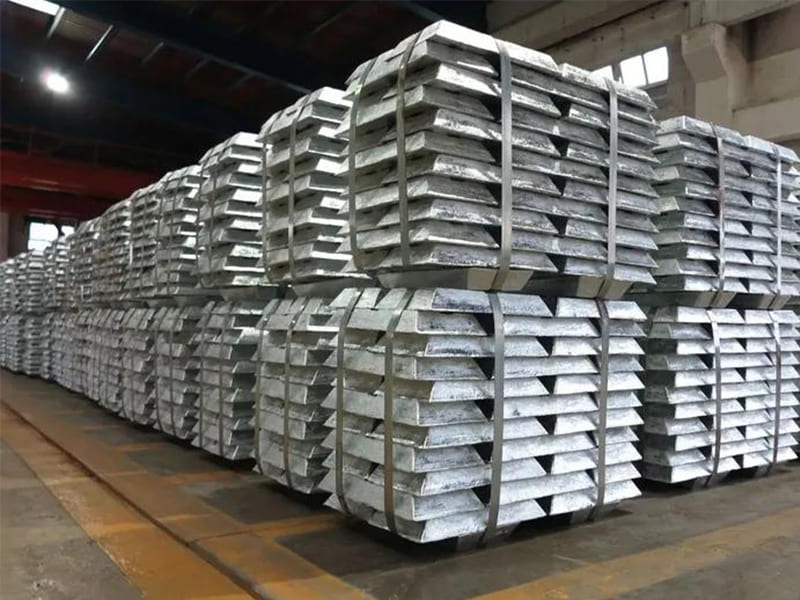
Set your zinc die casting furnace based on the “419.5°C melting point” you found in a handbook, and you’ll likely produce cold shuts on your first run. That number applies to pure zinc — not the Zamak alloy actually sitting in your crucible. The alloy melts over a range, not at a single temperature, and the difference between getting that range right or wrong shows up directly in part quality, scrap rate, and die life.
Understanding the melting point of zinc requires looking beyond the textbook value. This article covers the standard melting point of pure zinc, explains why zinc alloys melt over a range rather than at a fixed temperature, lists typical melting ranges for common Zamak alloys, shows how melting behavior affects casting and manufacturing processes, compares zinc with aluminum, copper, and steel, and addresses purity and measurement considerations. Whether you’re a die casting engineer setting process parameters, a designer selecting alloys, or a buyer evaluating zinc versus alternative metals, the goal is to connect melting point data to real manufacturing decisions.
Standard Melting Point of Pure Zinc
Under standard atmospheric pressure, high-purity zinc (≥99.99%) melts at a well-defined temperature:
| Unit | Melting Point |
|---|---|
| °C | 419.5 |
| °F | 787.1 |
| K | 692.7 |
This value represents equilibrium conditions — pure composition, uniform heating, and atmospheric pressure. In industrial furnaces, operators typically heat zinc above this point to ensure full melting and adequate fluidity.
Why Zinc Melts Where It Does
Zinc crystallizes in a hexagonal close-packed (HCP) structure at room temperature. Its metallic bonding strength is moderate — stronger than low-melting metals like tin or lead, but weaker than transition metals like iron or nickel. As temperature rises, atomic vibration overcomes these bonding forces at ~419.5°C.
This balance explains why zinc melts at a temperature low enough for efficient casting and galvanizing, yet high enough for stability in most service environments.
| Metal | Crystal Structure | Melting Point (°C) |
|---|---|---|
| Zinc (Zn) | HCP | 419.5 |
| Aluminum (Al) | FCC | ~660 |
| Copper (Cu) | FCC | ~1,085 |
| Iron (Fe) | BCC/FCC | ~1,538 |
Why Zinc Alloys Don’t Have a Single Melting Point
Solidus and Liquidus
Once alloying elements enter the picture, zinc no longer melts at one fixed temperature. Instead, it transitions through a range defined by two boundaries:
Solidus temperature: Where melting begins. Below this point, the alloy is fully solid. Liquidus temperature: Where the alloy becomes completely liquid. Between these two, the material exists in a semi-solid “mushy” state where solid and liquid coexist.
This behavior is fundamental to multi-element systems — not a defect or anomaly. From an engineering standpoint, “melting” is not instantaneous. Material flow, shrinkage, and segregation all change across this interval.
Why the Range Matters for Manufacturing
Engineers don’t design zinc alloy processes around a single temperature. They design around a temperature band.
Process window control: Heat above the liquidus to ensure full fluidity, but don’t overheat — that increases oxidation, dross, and mold wear. Defect prevention: Operating too close to the solidus causes misruns, cold shuts, and incomplete mold filling. Thermal management: A wider melting range demands tighter furnace control to avoid partially solid regions.
In our die casting operations, we set injection temperature 20–40°C above the liquidus for Zamak alloys. That provides enough superheat for stable flow without the oxidation and die wear problems that come with running 60–80°C above liquidus.
Typical Melting Ranges of Common Zinc Alloys
Most structural zinc parts use Zamak alloys — Zn-Al systems with small additions of magnesium and copper.
| Alloy | Typical Composition | Approx. Melting Range (°C) |
|---|---|---|
| Pure Zinc | Zn ≥ 99.99% | 419.5 (single point) |
| Zamak 3 | Zn–4%Al | ~381–387 |
| Zamak 5 | Zn–4%Al–1%Cu | ~380–390 |
| Zn–Al–Mg | Zn–Al + trace Mg | ~380–395 |
Values vary with exact composition, impurity level, and measurement method.
Aluminum addition lowers the liquidus compared to pure zinc, reducing energy consumption and improving mold fillability. Copper increases strength and hardness but slightly widens the melting range. Magnesium additions are small — they improve grain structure and reduce oxidation without meaningfully shifting melting temperature.
How Melting Behavior Affects Casting and Manufacturing
Die Casting Temperature Selection
In zinc die casting, injection temperature is always set above the liquidus — never at the “melting point.”
Too low: Partial solidification during filling produces cold shuts, misruns, and poor surface finish. Too high: Increased oxidation and dross, higher gas solubility leading to porosity, and accelerated die wear.
Based on our production data, the sweet spot for Zamak 3 runs between 400–420°C injection temperature. Staying within this window balances flowability, surface quality, and die longevity.
Flowability and Defect Control
Zamak alloys transition quickly from solid to liquid thanks to their narrow melting range. This delivers excellent mold filling — even for thin-wall parts down to 0.5 mm — and relatively low solidification shrinkage. Both factors improve dimensional accuracy and reduce the need for complex feeding systems.
Operating too close to the solidus raises defect risk: incomplete fill, cold shuts, and internal porosity from trapped gases. Understanding the melting range lets engineers balance fluidity and solidification control, reducing scrap rates.
Why Zinc Excels at Low-Temperature Casting
Compared to aluminum and steel, zinc offers clear manufacturing advantages driven by its melting behavior:
| Factor | Zinc Alloys | Aluminum | Steel |
|---|---|---|---|
| Casting temperature | Low (~380–430°C) | Medium (~660–720°C) | Very high (>1,400°C) |
| Energy demand | Low | Moderate | High |
| Die life | Long | Medium | Short |
| Thin-wall capability | Excellent | Good | Limited |
Lower thermal stress on dies means longer tool life and more predictable maintenance cycles. Faster heating and cooling support high-volume, high-repeatability production. In projects we’ve delivered, zinc die cast components typically cost 15–30% less per part than equivalent aluminum die castings at volumes above 10,000 units — primarily due to energy savings and extended die life.
Does Purity, Pressure, or Atmosphere Change the Melting Point?
Purity and Impurities
The 419.5°C value applies to high-purity zinc. As purity decreases, trace impurities (lead, cadmium, iron, aluminum) disrupt the crystal lattice, causing melting to begin at slightly lower temperatures and introducing a small solidus-liquidus interval. Commercial-grade zinc may show less predictable melting behavior than laboratory-grade material — relevant for casting consistency and furnace calibration.
Pressure and Atmosphere
Under normal industrial conditions, pressure has negligible influence on zinc’s melting point. Atmosphere doesn’t change the melting temperature either, but it affects melt quality. In air, oxidation and dross formation increase. Controlled or inert atmospheres produce a cleaner melt and more stable processing.
How Is the Melting Point Measured?
DSC (Differential Scanning Calorimetry) is the standard method. A small zinc sample and reference are heated at a controlled rate. The instrument measures heat flow differences, revealing the melting transition as a clear endothermic peak. For pure zinc, this peak aligns closely with 419.5°C.
For alloys, DSC identifies both solidus onset and liquidus completion — defining the full melting range. Minor variations between published values typically reflect differences in heating rate, sample purity, or whether the “melting point” refers to onset temperature versus peak temperature.
Zinc vs. Aluminum, Copper, and Steel
Melting point differences translate directly into manufacturing economics.
Zinc vs. Aluminum: Zinc alloys cast at much lower temperatures, reducing furnace energy, shortening cycles, and extending die life. Aluminum offers higher service temperature capability at higher processing cost.
Zinc vs. Copper: Copper’s high melting point (~1,085°C) makes it energy-intensive and less suitable for complex die casting. Zinc delivers excellent flowability and detail at a fraction of the thermal load.
Zinc vs. Steel: Steel’s melting point is nearly four times zinc’s, pushing production toward forging and machining. Zinc enables near-net-shape casting that minimizes secondary operations.
Conclusion
The 419.5°C melting point of pure zinc is a reliable reference, but it’s only the starting point for engineering decisions. In manufacturing, zinc is almost always used in alloyed form, where a solidus-liquidus range — not a single temperature — defines the real process window. Engineers who design around this range achieve more stable flow, better surface quality, and higher repeatability in die casting.
Understanding zinc’s melting behavior directly supports process stability, defect reduction, die life improvement, and cost optimization. When treated as a system-level parameter rather than a textbook number, the melting point of zinc becomes a practical tool for better manufacturing decisions. Need help selecting the right zinc alloy or optimizing your die casting process? [Contact our engineering team] for material guidance and precision manufacturing support.
FAQ
Is the melting point of zinc lower than aluminum?
Yes. Pure zinc melts at ~419.5°C versus ~660°C for aluminum. This gap explains why zinc alloys dominate low-temperature die casting — they require less energy, enable faster cycles, and impose far less thermal stress on molds. Aluminum is chosen when higher service temperature or strength-to-weight ratio is required.
Why do zinc alloys melt over a range instead of at one temperature?
Because alloys are multi-element systems. Alloying elements (Al, Cu, Mg) create regions that begin melting at different temperatures. As a result, zinc alloys have a solidus (start of melting) and liquidus (fully liquid) with a semi-solid interval in between. This range — not a single point — defines the real casting process window.
What temperature is zinc typically cast at?
Zinc alloys are usually cast 20–40°C above their liquidus temperature. In practice, ~380–430°C is common depending on alloy grade and part geometry. Too low risks misruns and cold shuts. Too high increases oxidation, gas pickup, and die wear. Precise control within the window matters more than the exact number.
Does higher purity zinc always have a higher melting point?
Generally, yes — higher purity yields a sharper, more defined melting point near 419.5°C. Trace impurities slightly depress the temperature and introduce a small melting range. The effect is modest for most industrial grades but matters in precision metallurgy and calibration applications.
Is zinc suitable for high-temperature applications?
No. Zinc’s low melting point limits its use at elevated service temperatures. Zinc alloys perform best at room temperature to moderately warm environments, where their castability, dimensional accuracy, and cost efficiency are strongest. For sustained high-temperature service, aluminum, copper alloys, or steels are more appropriate choices.


