
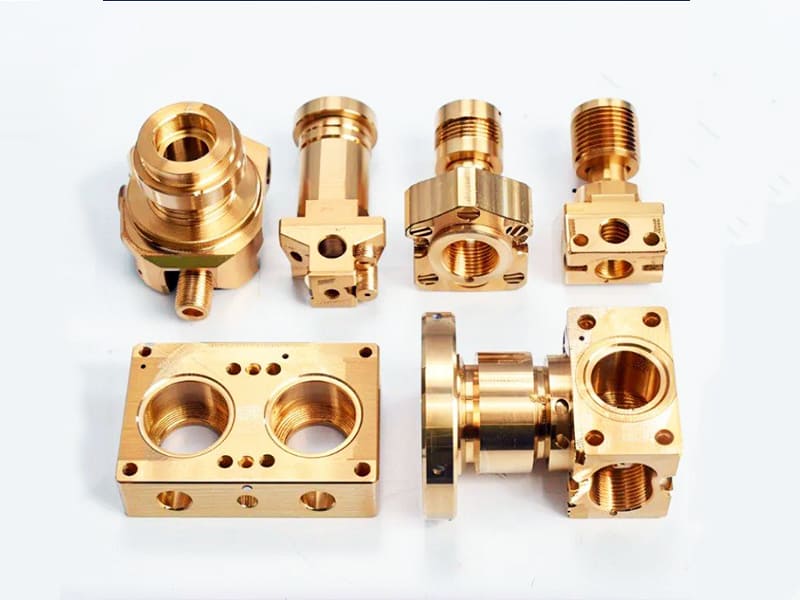
Quick Answer: Brass cannot be anodized in the same way as aluminum. Aluminum anodizing works because aluminum forms a stable, uniform Al₂O₃ (aluminum oxide) layer that can be grown to controlled thickness (typically 10–25 µm decorative, up to 50+ µm hard anodizing) through electrochemical oxidation. Brass is a copper-zinc alloy, and when oxidized electrochemically, copper forms CuO/Cu₂O while zinc forms ZnO simultaneously — these oxides grow at different rates, produce different thicknesses, and do not bond uniformly. The resulting layer is typically less than 1–3 µm thick, uneven, weakly adhered, and inconsistent in color. For most CNC machined brass components requiring corrosion resistance, conductivity, or consistent appearance, the engineering-preferred alternatives are nickel plating (5–25 µm, excellent corrosion resistance and conductivity), PVD coating (1–5 µm, hardness 1,500–3,000 HV, consistent color), or clear lacquer (low-cost tarnish protection).
Why Brass Cannot Be Anodized Like Aluminum
The explanation for brass anodizing’s limitation is electrochemical, not process-related. Anodizing works when the base metal forms a single, stable oxide that grows as a dense, continuous film.
Aluminum’s favorable chemistry: When aluminum is oxidized in a sulfuric acid bath with applied current, the reaction produces Al₂O₃ uniformly across the surface. The oxide is:
- Chemically stable in most environments
- Coherent — forms a continuous film with no large voids or gaps
- Adherent — bonds strongly to the aluminum substrate through an oxide-metal interface
- Porous in its mid-layer structure, allowing subsequent dyeing before sealing
- Thickness-controllable from approximately 5 µm (flash anodize) to 50+ µm (hard anodize Type III)
Brass’s mixed-oxide problem: Brass contains copper (typically 55–70%) and zinc (30–45%). During electrochemical oxidation:
- Copper oxidizes to CuO (black) and Cu₂O (red-brown) depending on potential and temperature
- Zinc oxidizes to ZnO (white or pale)
- These two oxide systems grow at different rates and produce different morphologies side-by-side on the same surface
- The interface between copper-rich and zinc-rich microstructural domains within the brass creates discontinuities in the oxide layer
- The result is an irregular, mixed oxide that is mechanically weak, visually inconsistent, and provides minimal barrier protection
Thickness comparison: Aluminum anodizing routinely produces 10–25 µm dense oxide in a controlled bath. The most controlled electrochemical oxidation processes applied to brass produce a mixed oxide layer of approximately 1–3 µm — primarily because the competing oxide reactions do not allow a single coherent film to build thickness uniformly.
Color inconsistency: In aluminum anodizing, the porous oxide absorbs dye uniformly because the pore structure is consistent. On brass, the irregular oxide prevents uniform dye absorption, producing the blotchy, patchy color that is the most visible sign of inadequate brass anodizing.
What Does Happen When Brass Is Electrochemically Oxidized
While “true” anodizing is not achievable on brass, electrochemical oxidation processes can be applied for decorative purposes with realistic expectations.
Process Sequence
Step 1 — Surface preparation (critical): The surface condition of brass has more influence on the final finish appearance than the oxidation parameters. Machining oil, coolant residue, polishing compounds, and oxide layers from handling all prevent uniform oxidation. Preparation typically involves:
- Alkaline cleaning (removes oils, fingerprints, machining residue)
- Light acid pickling in mild acid (removes surface oxides, activates the surface for oxidation)
- Rinsing with deionized water between each step
Over-pickling is a risk specific to brass: prolonged acid exposure preferentially removes zinc from the surface, leaving a copper-enriched layer (dezincification) that oxidizes differently from the bulk alloy — worsening color consistency.
Step 2 — Electrolyte selection: Unlike aluminum anodizing (standard sulfuric acid, ~150–200 g/L at 18–22°C), brass electrochemical oxidation typically uses phosphoric acid-based electrolytes. Phosphoric acid is less aggressive toward copper than sulfuric acid, reducing the tendency for pitting and uneven etching. Mixed-acid systems are also used in specialty processes.
Step 3 — Current application: The brass part (anode) oxidizes as current flows through the electrolyte. Current density, bath temperature, and time are the primary process variables. Tighter control of these parameters improves consistency but cannot overcome the fundamental mixed-oxide behavior of the Cu/Zn system.
Step 4 — Post-treatment: After oxidation, sealing with clear lacquer, wax, or passivation treatment stabilizes the surface and slows the further oxidation that would otherwise cause tarnishing. Without sealing, the electrochemically oxidized brass surface continues to change color as it further oxidizes in air.
What the Process Produces
The electrochemically oxidized brass surface produces:
- A thin, mixed oxide layer (< 1–3 µm) with brown, bronze, or dark tones
- Matte to satin surface appearance
- Limited tarnish resistance (superior to bare brass, significantly inferior to plated surfaces)
- Color that varies with alloy composition, surface roughness, and process conditions
The machining quality dependency: Unlike thick paint or plating that can obscure surface texture, the thin oxide layer on brass follows and amplifies the underlying surface. A part machined to Ra 1.6 µm will show machining lines and tool marks through the finish. A part polished to Ra 0.4 µm or below produces a more uniform, refined appearance after oxidation. For any appearance-critical brass application, polishing to Ra ≤ 0.4–0.8 µm before finishing is effectively mandatory.
When Brass Anodizing (Electrochemical Oxidation) Makes Sense
There are specific application categories where controlled electrochemical oxidation of brass provides adequate performance:
Decorative hardware with accepted color variation: Cabinet handles, architectural trim, lighting fixtures, and display components where a warm, matte, “aged brass” aesthetic is the design intent. The natural color variation of brass oxidation — which is a defect in precision manufacturing — becomes an aesthetic feature in applications seeking an antique or artisanal appearance.
Low-contact surfaces: Front panels, covers, display housings, and architectural elements that see minimal mechanical contact. The thin oxide layer has low wear resistance, but in applications where it will not be rubbed, scratched, or subjected to handling pressure, it can last acceptably.
Cost-sensitive decorative components: When visual appearance is important but not precision-controlled, and the cost of PVD or plating cannot be justified, electrochemical oxidation provides a step above bare brass or simple lacquering at low cost.
Artistic and jewelry applications: In artistic metalwork and some jewelry, the natural variation of brass oxidation is intentional. Different alloy zones, textures, and treatments produce complex color patterns that would be impossible to achieve with uniform plating.
When Brass Oxidation Treatment Should NOT Be Used
The limitations of brass electrochemical oxidation make it unsuitable for several common engineering applications:
Corrosion-critical applications: The oxide layer is too thin (< 3 µm), non-continuous, and poorly adherent to provide meaningful corrosion protection. In humid environments, salt air, or any chemical exposure, the oxidized brass will continue to tarnish and corrode beneath the oxide layer. ASTM B117 salt spray test performance of oxidized brass is typically measured in hours to first corrosion, compared to hundreds of hours for nickel-plated brass.
Electrical contacts and connectors: Brass is widely used in connectors, terminals, and contact springs because of its electrical conductivity. The oxide layer increases contact resistance and introduces variability into electrical performance. Any electrochemical oxidation process applied to a contact surface defeats the purpose of using brass in that application.
Consistent color in production: The batch-to-batch color variation of brass oxidation is incompatible with production environments where visual consistency is specified. Because the brass alloy composition varies within allowable limits between production batches, and because the surface condition and oxidation process parameters all affect the outcome, matching color between parts produced at different times is unreliable.
Wear surfaces and sliding contacts: The hardness of the brass oxide layer is well below that of the base brass alloy, and the layer wears off rapidly under any mechanical contact. For sliding surfaces, knobs, valve bodies, fittings, and any part that sees cyclic handling, the surface life of an oxidized finish is typically weeks to months rather than the years expected from a functional coating.
Alternative Finishing Processes for CNC Brass Parts
| Finish | Thickness | Hardness | Corrosion Resistance | Conductivity | Color Consistency | Relative Cost |
|---|---|---|---|---|---|---|
| Electroless nickel | 5–25 µm | 500–700 HV | Excellent | Moderate | Excellent | Medium |
| Electroplated nickel | 5–25 µm | 200–400 HV | Good | Good | Excellent | Medium |
| Hard chrome | 2–250 µm | 800–1,000+ HV | Moderate | Low | Good | Medium-high |
| Gold flash plating | 0.1–0.5 µm over nickel | Low | Excellent | Excellent | Excellent | High |
| PVD (TiN, CrN, DLC) | 1–5 µm | 1,500–3,000 HV | Good | Low | Excellent | High |
| Clear lacquer | 5–20 µm | Low | Moderate | Unchanged | Good | Low |
| Chemical oxidation | <3 µm | Very low | Poor | Moderate | Poor | Low |
Nickel Plating — Most Common Engineering Solution
Electroless nickel is the standard choice for CNC brass parts requiring both corrosion resistance and dimensional consistency. The autocatalytic deposition mechanism produces uniform thickness regardless of part geometry — a critical advantage over electroplating for complex shapes with internal features, blind holes, and threaded ports.
For electrical contacts and connectors in brass, electrolytic nickel plating maintains adequate conductivity while providing corrosion protection. A nickel-plated brass pin achieves contact resistance typically below 5 mΩ at standard contact forces — comparable to bare brass before oxidation but stable over months of service rather than degrading as bare brass tarnishes.
PVD Coating — Premium Performance and Aesthetics
Physical vapor deposition (PVD) produces hard, thin coatings (TiN gold color, CrN silver, TiAlN dark, DLC dark gray/black) with hardness of 1,500–3,000 HV — 5–10× harder than the hardest plated nickel. For premium consumer products, luxury hardware, and wear-critical decorative parts, PVD provides:
- Consistent, repeatable color that does not vary with batch or alloy composition
- Wear resistance measured in years rather than weeks
- Very thin deposit (1–5 µm) that does not significantly affect tolerances
- Compatibility with complex part geometries (line-of-sight limitation applies, but is manageable for most hardware shapes)
PVD cost is substantially higher than plating, and the process typically requires a nickel or chrome undercoat on brass to ensure adhesion.
Clear Lacquer — Simple Protection Against Tarnishing
For indoor applications where the natural brass color is desired and only tarnish prevention is needed, clear lacquer (nitrocellulose, polyurethane, or acrylic-based) provides effective protection at minimal cost. The lacquer does not affect electrical conductivity significantly for most contact applications, maintains the metallic appearance of the brass, and can be easily stripped and reapplied if damaged.
Limitation: lacquer has low mechanical hardness and will scratch and chip under regular handling. For parts that are frequently handled or assembled/disassembled, lacquer life is short.
Common Defects in Brass Oxidation Finishing
| Defect | Appearance | Root Cause | Prevention |
|---|---|---|---|
| Uneven color (blotching) | Patchy brown/dark areas | Copper-zinc differential oxidation; surface contamination | Polish to Ra ≤ 0.8 µm; improve cleaning; standardize alloy source |
| Machining line visibility | Tool marks visible through finish | Ra too high before finishing | Polish to Ra ≤ 0.4 µm; use finer finishing passes |
| Peeling or flaking | Oxide detaches | Inherent weak oxide adhesion; over-oxidation | Reduce process time; add clear coat immediately after oxidation |
| Dark spots or streaks | Localized black areas | Over-oxidation; localized current concentration; contamination | Control current density; improve pre-cleaning |
| Batch-to-batch color variation | Parts from different batches look different | Alloy composition variation within specification; process drift | Standardize material supplier and grade; use PVD for color-critical parts |
The most practically important conclusion from this table: most defects in brass oxidation finishing trace to either material variability (alloy composition) or surface condition (machining quality, cleanliness), not to process parameter errors. Improving the control of these upstream variables produces more consistent results than fine-tuning the oxidation parameters.
DFM Guidelines for Brass Parts Requiring Surface Finishing
Surface finish before treatment: For any surface treatment on brass, achieve the target Ra before finishing. Polishing brass to Ra ≤ 0.4 µm before oxidation produces a significantly more uniform result than treating at Ra 1.6 µm. For plating, Ra ≤ 0.8 µm is typically adequate because the plated layer averages some surface roughness.
Edge quality: Deburring and edge breaking (0.2–0.5 mm chamfer) should be performed before any surface treatment. Burrs and sharp edges create local areas of high current density in electrochemical processes, producing thick, rough oxide accumulation at these points. For plating, edge buildup is also a concern — sharp edges receive more deposit than flat surfaces.
Blind hole orientation: For any wet chemical process (plating or oxidation), parts with blind holes should be oriented so the holes are open downward during processing, allowing solution to drain and preventing chemical trapping that causes delayed staining or corrosion.
Thread protection: For threaded brass components that will be plated, account for plating thickness in thread tolerances. A 10 µm nickel layer adds approximately 0.020 mm to external thread pitch diameter. Threads requiring close tolerance after plating should be machined undersize before plating, with the compensation calculated from the specified coating thickness and tolerance.
Avoid mixed-material assemblies before finishing: Whenever possible, finish brass components before assembly. If an assembly contains brass and another metal, applying a finishing process to the assembly introduces galvanic corrosion risk and may produce incompatible finishes on different materials.
Key Takeaways
- Brass cannot be anodized in the same way as aluminum: the Cu/Zn mixed oxide system produces an inconsistent, thin (< 3 µm), weakly adherent layer rather than the uniform, thick, stable Al₂O₃ layer achievable on aluminum.
- Electrochemical oxidation of brass is primarily decorative: the resulting surface is thinner and weaker than any functional engineering coating, provides minimal corrosion protection, and cannot achieve consistent color in production.
- The appearance of an oxidized brass surface depends more on pre-treatment machining quality than on the oxidation process: polishing to Ra ≤ 0.4–0.8 µm before oxidation is effectively mandatory for appearance-critical parts; machining marks at Ra 1.6+ µm are amplified, not hidden, by the oxidation treatment.
- For corrosion resistance on brass, nickel plating (electroless or electrolytic) is the engineering standard: 5–25 µm nickel provides ASTM B117 salt spray resistance measured in hundreds of hours, versus hours for oxidized brass surfaces.
- For wear resistance and consistent color on premium brass parts, PVD coating is the preferred solution: 1–5 µm PVD (TiN, CrN, DLC) achieves 1,500–3,000 HV hardness and fully repeatable color independent of alloy batch variation.
- For electrical contacts and connectors in brass, avoid any oxide-based treatment: the oxide layer increases contact resistance; nickel or gold plating is the correct finish for brass connector pins and terminals.
- For OEM procurement teams: when a brass component drawing specifies “anodizing,” clarify with the designer whether true anodizing performance (corrosion protection, hard surface) is intended, or whether the intent is decorative surface modification. These require fundamentally different processes — and different suppliers. A specification of “brass anodizing” delivered as a plating process would pass dimensional inspection but might fail the appearance standard, and vice versa.
Frequently Asked Questions
Can brass be anodized?
Not in the same way as aluminum. Aluminum anodizing works because aluminum forms a single, stable oxide (Al₂O₃) that grows as a uniform, thick, adherent film under controlled electrochemical conditions. Brass is a copper-zinc alloy, and both copper and zinc form different oxides simultaneously when electrochemically oxidized. These mixed oxides grow at different rates, produce different thicknesses, and do not bond uniformly — resulting in a thin (< 3 µm), patchy, weakly adherent surface rather than the controlled 10–50+ µm oxide achievable on aluminum. The surface treatment applied to brass in anodizing-like processes is more accurately described as electrochemical oxidation or controlled patination, and is used only for decorative purposes.
What is the best surface finish for CNC machined brass parts?
The best finish depends on the functional requirement. For corrosion resistance while maintaining electrical conductivity (connectors, terminals, contacts): nickel plating (electroless or electrolytic, 5–15 µm) is the standard choice, providing hundreds of hours of salt spray resistance and stable contact resistance. For wear resistance and premium appearance (hardware, consumer products, medical devices): PVD coating (TiN gold, DLC black, CrN silver, 1–5 µm at 1,500–3,000 HV) provides the best combination of hardness and color consistency. For cost-effective tarnish prevention (decorative indoor applications): clear lacquer (nitrocellulose or acrylic, 5–20 µm) maintains the natural brass appearance at minimal cost. For decorative vintage or aged appearance (artistic, furniture hardware): controlled electrochemical oxidation or chemical patination produces the brown/bronze tones characteristic of aged brass.
Why does electrochemically oxidized brass have uneven color?
Uneven color in oxidized brass results from two simultaneous factors. First, the brass microstructure contains copper-rich and zinc-rich phases (grains) that oxidize at different rates and produce different-colored oxides (copper produces dark red-brown CuO; zinc produces lighter ZnO). This differential produces color variation that tracks the microstructural grain pattern of the alloy. Second, any variation in surface condition — machining marks, residual oil, slight compositional differences between parts from different production batches — produces local variation in oxidation rate, amplifying the color variation. The fundamental problem is that the finishing process cannot overcome the material’s inherent tendency to produce mixed, non-uniform oxides.
How does brass anodizing compare to aluminum anodizing?
The comparison across key properties: aluminum anodizing produces 10–50+ µm of stable Al₂O₃, with hardness up to 400–450 HV (Type III hard anodize), excellent adhesion to the substrate, and dyeable porous structure for consistent color. Brass electrochemical oxidation produces < 3 µm of mixed CuO/ZnO, very low hardness, weak adhesion, and no dyeable porous structure (color comes from the oxide itself, which is inconsistent). Salt spray corrosion resistance: aluminum anodized to 25 µm typically achieves 300–500 hours ASTM B117 to first corrosion; oxidized brass typically fails within 24–72 hours. Anodizing is a standard industrial process for aluminum; electrochemical oxidation of brass is a niche decorative process with limited industrial use.
What causes peeling or flaking in brass oxidation finishing?
Peeling occurs because the mixed oxide layer on brass does not form a strong metallurgical bond with the substrate — unlike aluminum anodizing, where the Al₂O₃ layer transitions continuously from the base metal. The brass oxide layer bonds primarily through mechanical adhesion to the surface roughness rather than through an oxide-metal transition zone. This means that any stress applied to the coating — thermal cycling, mechanical contact, or the internal stress of the oxide layer itself if it is too thick or was deposited under unfavorable conditions — can cause adhesive failure. The long-term solution is not to improve the oxidation process but to use a different finishing approach (plating or PVD) that forms a genuine bond to the brass substrate.
Written by the CMS engineering team with 15+ years of CNC machining experience producing precision brass components with coordinated surface finishing — including nickel plating, gold plating, PVD coating, and clear lacquer — for connectors, hydraulic fittings, decorative hardware, instrumentation, and consumer electronics OEM manufacturing programs. Technical references: ASTM B117 (Salt Spray Test), ASTM B733 (Autocatalytic Nickel-Phosphorus Coatings on Brass), ASM Handbook Vol. 5 (Surface Engineering: Oxidation and Plating of Copper Alloys), MIL-DTL-16232 (Phosphate Coatings), Schlesinger M. — Electroplating (Copper Alloy Plating chapter).
Sourcing CNC Machined Brass Components with Surface Finishing?
At CMS, we produce precision CNC machined brass components — valves, connectors, fittings, housings, and hardware — and coordinate nickel plating, gold plating, PVD coating, and clear lacquer finishing with verified thickness, XRF verification, and first-article inspection.
[Request a brass component finishing specification and CNC machining quote →]


