
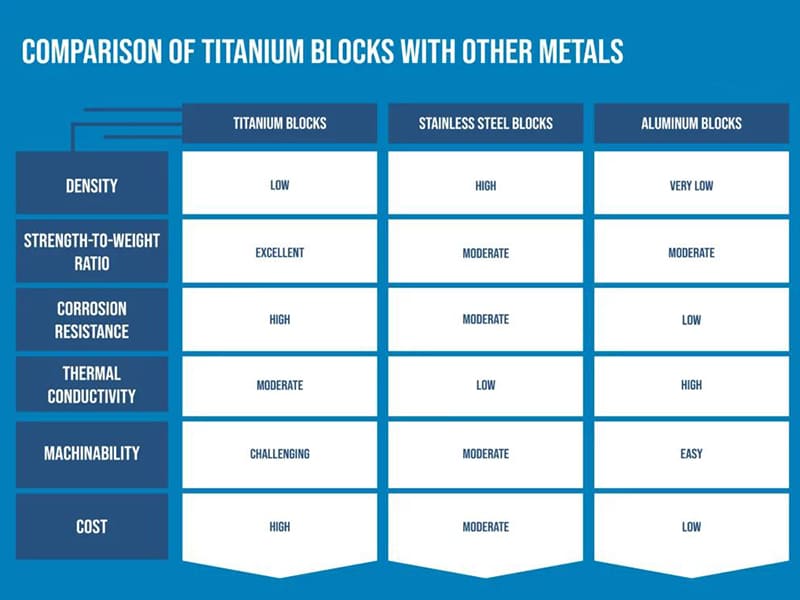
Quick Answer: The most widely used corrosion resistant metals are stainless steel (Cr₂O₃ passive layer from ≥10.5% chromium), aluminum (self-forming Al₂O₃ oxide layer), titanium (highly stable TiO₂ layer), and copper alloys (natural patina protection). Corrosion resistance is not absolute — it is environment-specific. 316 stainless steel with molybdenum performs excellently in marine chloride environments where 304 stainless develops pitting corrosion. Aluminum resists atmospheric oxidation but is vulnerable to galvanic attack in contact with steel. Titanium provides superior chemical resistance in oxidizing acid environments where no common steel or aluminum grade is adequate. Material selection must start with the service environment, not a general ranking.
What Are Corrosion Resistant Metals?
Corrosion resistant metals are engineering materials that maintain structural integrity, surface stability, and dimensional accuracy when exposed to moisture, oxygen, chemicals, salts, and temperature fluctuations — conditions that cause ordinary carbon steel to oxidize rapidly and lose mechanical properties.
Resistance is achieved through one of two mechanisms:
Passive oxide layer formation: Many corrosion resistant metals spontaneously form a thin, stable, adherent oxide film when exposed to oxygen. This film — typically only 1–10 nanometers thick — acts as a kinetic barrier between the metal surface and the environment, preventing further oxidation. The film is self-healing: if mechanically scratched, chromium, aluminum, or titanium atoms at the damaged surface re-oxidize and the passive layer reforms within seconds to minutes.
Chemical stability through alloying: Adding chromium, molybdenum, nickel, and other elements to iron alters the electrochemical behavior of the alloy, making corrosion reactions thermodynamically less favorable. The minimum chromium content for stainless steel passivation — approximately 10.5% by weight — is not arbitrary; below this threshold, the chromium-depleted surface around grain boundaries cannot sustain a continuous passive film, and the alloy behaves more like carbon steel.
The critical engineering principle: corrosion resistance is a system-level property, not a standalone material characteristic. The same alloy that performs perfectly in one environment can fail rapidly in another. 304 stainless steel resists atmospheric corrosion for decades; in contact with seawater or chloride-containing cleaning agents, it develops pitting corrosion at chloride concentration thresholds well below what 316 stainless steel withstands.
Why Some Metals Resist Corrosion: The Mechanisms
Passive Oxide Layer Formation
Aluminum oxide (Al₂O₃): Forms instantaneously in air; approximately 4–6 nm thick. Chemically stable between approximately pH 4.5 and pH 8.5, and mechanically hard enough to provide wear resistance as well as corrosion protection. In chloride environments below pH 4 or above pH 8.5, the oxide dissolves, exposing bare aluminum to accelerated attack.
Chromium oxide (Cr₂O₃): The foundation of stainless steel corrosion resistance. Forms at the stainless steel surface when the alloy contains sufficient chromium. The critical threshold is approximately 10.5% Cr by weight. At 18% Cr (as in 304 stainless), the layer is substantially more robust. Adding molybdenum (2–3% in 316 stainless) further stabilizes the passive layer against chloride-initiated breakdown.
Titanium oxide (TiO₂): Highly stable across a broad chemical environment range, including oxidizing acids (nitric acid, chromic acid), chlorine-containing media, and seawater. Effective at temperatures up to 260–315°C. Titanium is one of the few structural metals that remains passive in nitric acid — a property exploited in chemical processing equipment.
Alloying Elements and PREN
Specific alloying elements alter the electrochemical behavior of iron-based alloys:
Chromium (Cr): Forms the Cr₂O₃ passive layer. Higher chromium content improves passive layer stability.
Molybdenum (Mo): Improves pitting and crevice corrosion resistance in chloride environments. The Pitting Resistance Equivalent Number (PREN) quantifies this: PREN = %Cr + 3.3×%Mo + 16×%N. Molybdenum receives 3.3× the weighting of chromium in this formula.
Nickel (Ni): Stabilizes the austenitic phase in stainless steel and improves resistance to reducing acids.
Nitrogen (N): A powerful austenite stabilizer that also improves pitting resistance. Duplex stainless steels use nitrogen (0.1–0.3%) to balance the phase ratio and improve corrosion resistance simultaneously.
Corrosion Resistant Metals: Engineering Profile by Material
Carbon Steel (Low Corrosion Resistance)
Unalloyed carbon steel forms porous, non-adherent iron oxide (rust) that creates no protective barrier. Carbon steel is appropriate for cost-sensitive structural applications where corrosion is controlled through coatings (paint, galvanizing, epoxy) or where the service environment is dry and controlled. Its use in corrosion-exposed applications without protection is a maintenance cost error, not a material selection strategy.
Galvanized Steel (Moderate Corrosion Resistance)
Galvanizing applies a zinc coating (typically 45–85 µm for hot-dip galvanizing per ASTM A123) that protects steel through barrier isolation and sacrificial (galvanic) protection — zinc is anodic to steel in the electrochemical series and corrodes preferentially, cathodically protecting the steel even at coating gaps and cut edges. Hot-dip galvanized steel provides atmospheric service life of 50–100+ years in rural environments and 20–50 years in industrial environments, per American Galvanizers Association (AGA) data.
Aluminum (Good Corrosion Resistance, Environment-Dependent)
Aluminum’s self-forming Al₂O₃ passive layer provides excellent corrosion resistance in atmospheric environments and neutral aqueous environments (pH 4.5–8.5). Aluminum is vulnerable to chloride pitting at low pH, galvanic corrosion when in direct electrical contact with stainless steel or copper in the presence of electrolyte, and strong alkalis that dissolve the Al₂O₃ layer.
Alloy performance:
- 5xxx series (5052, 5083, 5086): Best corrosion resistance among structural aluminum, particularly in marine environments
- 6xxx series (6061, 6063): Good general corrosion resistance with better machinability
- 7xxx series (7075): Very high strength but more susceptible to stress corrosion cracking in aggressive environments
Stainless Steel (Very Good — With Grade-Environment Matching)
| Grade | Composition | PREN | Best Environment |
|---|---|---|---|
| 304 (1.4301) | 18% Cr, 8% Ni | ~18–20 | General indoor/outdoor, food, mild industrial |
| 316L (1.4404) | 18% Cr, 10% Ni, 2.5% Mo | ~24–26 | Marine, chloride-containing, chemical |
| 2205 Duplex (1.4462) | 22% Cr, 5% Ni, 3% Mo | ~33–35 | Offshore, chemical, high-chloride |
| 2507 Super Duplex (1.4410) | 25% Cr, 7% Ni, 4% Mo | >40 | Subsea, severe marine, chemical processing |
| 904L | 20% Cr, 25% Ni, 4.5% Mo | >36 | Sulfuric acid, seawater, reducing acids |
The common engineering error: specifying 304 stainless for all applications because it is “stainless steel” — which works until the part encounters chlorides, at which point pitting initiates at the 50–150 ppm chloride level that 304 cannot sustain passively.
Titanium (Outstanding Chemical Resistance)
Titanium’s TiO₂ passive layer is stable in conditions that attack every stainless steel grade — oxidizing acids, chlorinated solvents, seawater at elevated temperatures, and wet chlorine gas. This extreme chemical stability comes at a cost: titanium is typically 5–10× more expensive than 316 stainless per kilogram, and 3–5× more expensive to machine. It is justified in chemical processing when the alternative is frequent stainless steel replacement and production downtime.
Grades:
- Grade 2 (commercially pure, UNS R50400): Best corrosion resistance, 345 MPa tensile strength
- Grade 5 (Ti-6Al-4V, UNS R56400): High strength (880+ MPa) with excellent corrosion resistance
Copper and Copper Alloys (High Corrosion Resistance + Antimicrobial)
Copper develops a stable, adherent patina (primarily copper carbonate) that provides reliable long-term protection in atmospheric and marine environments. Unlike rust, copper patina does not undermine the underlying metal. Copper alloys also have antimicrobial properties — they inhibit survival of bacteria, fungi, and viruses on contact surfaces, making copper hardware functionally distinct from stainless steel in hygiene-critical environments.
Marine copper alloys:
- Naval brass (C46400): Dezincification-resistant for marine service
- Aluminum bronze (C61300–C63000): Excellent marine resistance, high strength, marine propellers and pump components
- Copper-nickel 90/10 (C70600) and 70/30 (C71500): Outstanding seawater resistance with anti-biofouling; standard for seawater piping, heat exchangers, and desalination equipment
Corrosion Types Engineers Must Address
Understanding which corrosion mechanism the service environment produces is essential for correct material selection.
Pitting Corrosion
Localized attack that penetrates deeply while the surrounding surface remains passive. Primary initiator: chloride ions that locally break down the passive film. Once a pit initiates, internal chemistry becomes acidic and chloride-enriched, sustaining attack even if the bulk environment is mild. This is the dominant failure mode for stainless steel in chloride environments.
Pitting resistance comparison: PREN = %Cr + 3.3×%Mo + 16×%N
- 304: PREN ~18–20 (critical pitting temperature ~15°C in 3.5% NaCl)
- 316: PREN ~24–26 (critical pitting temperature ~40°C in 3.5% NaCl)
- 2205 Duplex: PREN ~33–35 (critical pitting temperature >80°C)
- 2507 Super Duplex: PREN >40 (resistant across typical service temperatures)
Galvanic Corrosion
When two dissimilar metals are in electrical contact in the presence of an electrolyte, the more active (anodic) metal corrodes preferentially. The cathode-to-anode area ratio amplifies the effect — a large cathode accelerates corrosion of a small anode.
Common engineering mistakes:
- Aluminum components in direct contact with stainless steel fasteners in marine environments — aluminum corrodes at the contact zone
- Carbon steel bolts on stainless steel panels — carbon steel corrodes rapidly
- Copper piping connected directly to aluminum without an insulating coupling
Prevention: electrical isolation using insulating washers or dielectric fittings; protective coatings on the anodic material; selection of materials close in electrochemical potential.
Crevice Corrosion
Concentrated attack in confined spaces (overlapping joints, gasket interfaces, threaded connections) where stagnant electrolyte depletes oxygen. Stainless steels that rely on dissolved oxygen to maintain passive film are vulnerable — in oxygen-depleted crevice geometry, the film breaks down and the localized environment becomes acidic and chloride-concentrated. Design mitigation — eliminating crevice geometry through continuous welds, avoiding overlapping joints in seawater service — is as important as material selection.
Stress Corrosion Cracking (SCC)
Cracking under combined tensile stress and corrosive environment. Austenitic stainless steels (304, 316) are susceptible to SCC in hot chloride environments above approximately 60°C. Duplex stainless steels have substantially better SCC resistance. Titanium has excellent SCC resistance.
Corrosion Resistance by Environment
Marine and Saltwater
Seawater contains approximately 19,000 ppm chloride — well above the critical pitting threshold for 304 stainless (~50–150 ppm) and approaching the threshold even for 316 in stagnant or crevice conditions.
Recommended: 316L stainless (marine atmosphere and intermittent contact), duplex 2205 (continuous immersion), aluminum 5083/5086 (structural marine applications), copper-nickel 90/10 or 70/30 (seawater piping and heat exchangers), aluminum bronze (propellers, pump casings)
Avoid: 304 stainless in continuous seawater contact, carbon steel without heavy coating, standard brass (dezincification risk in seawater)
Chemical and Industrial Processing
Chemical processing requires material-chemical compatibility analysis rather than general ranking. The same titanium that resists nitric acid excellently is attacked by anhydrous hydrogen fluoride.
- Oxidizing acids (nitric, chromic): Titanium; high-alloy stainless steels
- Reducing acids (hydrochloric, dilute sulfuric): Hastelloy C-276, Inconel 625
- Alkalis/caustic: Nickel alloys; 304/316 stainless in low concentrations at moderate temperatures
- Seawater cooling: Copper-nickel; super duplex stainless
Outdoor Atmospheric Exposure
For outdoor structural applications exposed to rain, humidity, and urban/industrial atmosphere — but not direct seawater contact:
- Aluminum (6061, 5052): Excellent long-term atmospheric corrosion resistance, lightweight, no maintenance required
- Hot-dip galvanized steel (ASTM A123): Cost-effective for structural steel; expected life 20–75 years depending on corrosivity category
- 304 stainless steel: Higher initial cost, virtually zero maintenance, excellent appearance retention
Full Material Comparison for OEM Selection
| Material | Corrosion Resistance | Tensile Strength | Density (g/cm³) | Relative Cost | Key Limitation |
|---|---|---|---|---|---|
| Carbon steel (1045) | Low | 570 MPa | 7.85 | Low | Requires coating; rusts rapidly |
| Galvanized steel | Moderate | 550 MPa | 7.85 | Low–medium | Coating wears; not for acids |
| Aluminum 6061-T6 | Good | 310 MPa | 2.70 | Low–medium | Galvanic risk; chloride pitting at low pH |
| 304 stainless | Very Good | 515 MPa | 7.93 | Medium | Chloride pitting above ~150 ppm |
| 316L stainless | Excellent | 485 MPa | 7.99 | Medium–high | Crevice corrosion in stagnant seawater |
| 2205 Duplex SS | Excellent+ | 620 MPa | 7.80 | High | More difficult to weld and form |
| Titanium Grade 2 | Outstanding | 345 MPa | 4.51 | Very High | High machining cost; not for reducing acids |
| Copper-nickel 70/30 | Excellent (marine) | 380 MPa | 8.95 | High | Weight; not for strong acids |
CNC Machining Corrosion Resistant Metals
Material selection does not end at the alloy specification — machining operations can compromise corrosion-resistant properties if not properly controlled.
Stainless steel: CNC machining of 304 and 316 stainless requires controlled cutting speeds (60–120 m/min for carbide) to prevent work hardening at the tool-workpiece interface. Passivation after machining per ASTM A967 is required to remove iron contamination from cutting tools and restore the uniform Cr₂O₃ passive layer.
Aluminum: Anodizing (Type II, 5–25 µm) significantly improves corrosion resistance beyond the natural oxide layer. Any aluminum assembly with dissimilar metal contact requires insulating materials at the interface.
Titanium: Low thermal conductivity (7 W/m·K) concentrates heat at the cutting tip — sharp tools, high-pressure coolant (40–80 bar through-tool), and conservative cutting speeds (30–70 m/min) are essential. Excessive heat causes alpha-case formation (oxygen diffusion into titanium surface creating a brittle layer) that reduces both fatigue life and corrosion resistance.
Copper alloys: Prone to built-up edge on cutting tools — sharp tools with positive rake geometry and appropriate lubrication prevent surface tearing.
Material Selection Decision Framework
Start with the service environment — not with general rankings or cost:
- Define the corrosion environment: Primary corrosive agent (chlorides, acids, alkalis, oxygen, temperature); continuous or intermittent exposure; expected service life
- Identify candidate materials: Eliminate known incompatibilities; screen using PREN for pitting resistance or published corrosion rate data
- Apply mechanical and manufacturing constraints: Required tensile strength, weldability, machinability, available material forms
- Calculate lifecycle cost: Material and machining cost + coating and post-treatment cost + maintenance frequency + replacement cost + production downtime from corrosion failures
Practical selection examples:
| Application | Service Condition | Recommended Material | Reason |
|---|---|---|---|
| Marine shaft seal housing | Continuous seawater | 316L or 2205 duplex | Chloride pitting resistance |
| Outdoor structural bracket | Atmospheric, urban | 6061 aluminum or galvanized steel | Cost-effective atmospheric durability |
| Chemical reactor vessel | Nitric acid (oxidizing) | Grade 2 titanium | TiO₂ stable in oxidizing acids |
| Food processing conveyor | Wash-down, mild acids | 316L stainless | Food-grade, chloride-tolerant |
| Seawater heat exchanger tubes | Continuous seawater flow | 90/10 copper-nickel | Anti-biofouling, excellent seawater resistance |
| Precision medical instrument | Autoclave, sterilization | 316L or titanium | Passive layer survives steam, chemical agents |
Key Takeaways
- Corrosion resistance is environment-specific — 304 stainless resists atmospheric corrosion but pits in seawater; aluminum resists air but is attacked by strong alkalis. Always define the environment before selecting material.
- Passive oxide layers — Cr₂O₃, Al₂O₃, TiO₂ — are the primary protection mechanism; their stability in the specific service environment determines actual performance.
- The PREN number (PREN = %Cr + 3.3×%Mo + 16×%N) provides a comparative index for stainless steel pitting resistance: 304 (~18), 316L (~25), 2205 Duplex (~34), 2507 Super Duplex (>40).
- Galvanic corrosion is a system-level risk — aluminum in direct metal contact with stainless steel or copper in marine environments causes rapid aluminum corrosion at the contact zone.
- Machining affects corrosion resistance: stainless steel requires passivation per ASTM A967 after machining; titanium requires thermal management to prevent alpha-case formation.
- Lifecycle cost, not initial cost, is the correct economic basis — the cost of premature corrosion failure typically far exceeds the premium for the correct alloy.
- For OEM procurement teams, specify material by grade (316L, not “stainless steel”; 5083, not “aluminum”) and required surface treatment (passivation standard, anodizing type, galvanizing per ASTM A123).
Frequently Asked Questions
What are the most corrosion resistant metals for engineering applications?
The most corrosion resistant metals, in approximately increasing order of resistance in most environments, are: galvanized steel (moderate — zinc sacrificial protection), aluminum alloys (good — stable Al₂O₃ passive layer), stainless steel grades 304 and 316 (very good — Cr₂O₃ passive layer), copper-nickel alloys (excellent in marine environments), duplex and super duplex stainless steels (excellent — PREN 33–40+), and titanium (outstanding across oxidizing acid, marine, and chemical environments). The ranking is environment-dependent — titanium is not required for indoor atmospheric applications where aluminum or 304 stainless is adequate at far lower cost.
What is the difference between 304 and 316 stainless steel for corrosion resistance?
The critical difference is molybdenum content: 316 stainless contains 2–3% molybdenum versus zero in 304. Molybdenum is 3.3× as effective as chromium in the PREN formula for pitting resistance. 316 achieves PREN approximately 24–26, compared to 18–20 for 304. In practical terms, 304 is appropriate for general indoor/outdoor atmospheric applications and mild industrial environments. 316 is required when chloride exposure is significant — marine atmosphere, direct seawater contact, chloride-containing cleaning agents, or food processing with salt brine. Using 304 in applications that require 316 is a common and consequential selection error.
Is aluminum or stainless steel more corrosion resistant?
It depends on the environment. In most atmospheric and freshwater environments, both perform well. In chloride-rich marine environments at neutral pH, 316 stainless outperforms aluminum because its molybdenum-enhanced passive layer resists chloride pitting at concentrations that can initiate pitting in aluminum. In highly alkaline environments (concrete contact, sodium hydroxide), aluminum’s Al₂O₃ layer dissolves while stainless steel remains passive. Aluminum is vulnerable to galvanic corrosion when in contact with steel or copper alloys in the presence of moisture. Density and strength-to-weight ratio are often more important than the marginal corrosion resistance difference in atmospheric applications — aluminum (2.70 g/cm³) is one-third the weight of stainless steel.
How does galvanic corrosion occur and how can it be prevented?
Galvanic corrosion occurs when two metals with different electrochemical potential are in electrical contact in the presence of an electrolyte. The more active (anodic) metal corrodes preferentially while the more noble (cathodic) metal is protected. The rate depends on the potential difference and the cathode-to-anode area ratio — a large cathode accelerates attack on a small anode. Common examples: aluminum fasteners on copper panels corrode; carbon steel bolts on stainless steel structures corrode; zinc galvanizing on steel corrodes preferentially (intentionally — this is the protection mechanism). Prevention: electrical isolation using insulating washers or dielectric fittings between dissimilar metals; protective coatings on the anodic material; selecting materials close in electrochemical potential.
What corrosion resistant metals should I use for marine applications?
Material selection depends on the specific marine service condition. For marine atmosphere (non-immersed): 316L stainless steel or 5083 aluminum are both adequate. For direct seawater contact and hardware: 316L stainless for non-critical applications; duplex 2205 or super duplex 2507 for components with continuous seawater exposure. For seawater piping, heat exchangers, and cooling systems: 90/10 or 70/30 copper-nickel is the standard specification — excellent seawater resistance, anti-biofouling properties, and established industry track record in marine applications. For marine propellers, pump casings, and valves: aluminum bronze (C61300–C63000) provides high strength with excellent seawater corrosion resistance.
Written by the CMS engineering team with 15+ years of precision CNC machining experience in stainless steel, aluminum, titanium, and copper alloys for marine, chemical, medical, and industrial OEM manufacturing applications. Technical references: ASTM A967 (Passivation of Stainless Steel), ASTM A123 (Hot-Dip Galvanizing), ISO 8044 (Corrosion of Metals — Vocabulary), American Galvanizers Association (AGA) Galvanizing Performance Data.
Sourcing CNC Machined Components in Corrosion Resistant Metals?
At CMS, we machine stainless steel (304, 316L, duplex 2205), aluminum alloys (6061, 5083, 7075), titanium (Grade 2, Grade 5), and copper alloys to tight tolerances with material certification, passivation per ASTM A967, and CMM dimensional verification. Every project includes environment-specific material review and surface treatment recommendation before production begins.
[Request a material selection review and CNC machining quote →]


