
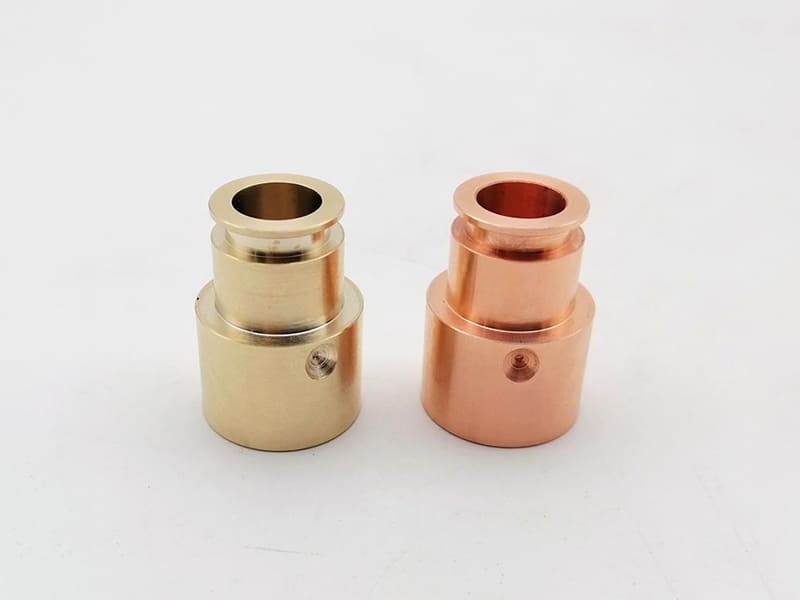
Спросите любого станочника CNC, что бы он предпочёл — обрабатывать партию латунных фитингов или медных шинных компонентов, и ответ почти всегда будет «латунь» — не потому, что медь плохой материал, а потому, что она ведёт себя совершенно иначе под режущим инструментом. Выбор между латунью и медью подаётся как вопрос материаловедения, но в производственных условиях CNC это на самом деле вопрос поведения при обработке. Два материала с пересекающимся химическим составом могут давать кардинально разные времена цикла, характер износа инструмента, результаты по чистоте поверхности и уровень брака.
Именно этой производственной реальности посвящена данная статья. Электропроводность, коррозионная стойкость и механическая прочность — всё это важно, но не менее важно то, насколько надёжно материал образует стружку, как долго служат инструменты и можно ли выдержать допуск в жёстких пределах на партии из 500 деталей. Понимание того, где латунь и медь каждая на своём месте в контексте обработки CNC, помогает инженерам избежать дорогостоящих замен материала на поздних этапах и даёт отделам закупок более чёткое представление о том, что определяет стоимость и сроки поставки.
Медь и латунь с точки зрения обработки резанием
Большинство сравнений материалов начинается с технических паспортов. В обработке CNC более полезная отправная точка — то, что происходит в зоне контакта инструмента и стружки, потому что именно там проявляются производственные последствия.
Медь: почему высокая электропроводность сопровождается компромиссами при обработке
Чистая медь (C11000 ETP — наиболее распространённая марка для обработки) определяется двумя свойствами, создающими проблемы в операциях CNC: чрезвычайно высокой пластичностью и очень высокой теплопроводностью. Проблема пластичности — более насущная. Вместо чистого сдвига перед режущей кромкой медь пластически деформируется. Материал обтекает вершину инструмента, образуя длинную непрерывную стружку, которая не ломается, нарастает на режущей кромке и оставляет после себя нестабильное состояние поверхности.
Теплопроводность добавляет вторую сложность. Тепло, генерируемое в зоне резания, быстро распространяется в заготовку, а не отводится вместе со стружкой. Это локально размягчает материал, усиливает адгезию между медью и передней поверхностью инструмента и ускоряет образование нароста (BUE). Результат — материал, требующий тщательного управления параметрами для стабильной обработки: не невозможно, но определённо не прощает ошибок.
Латунь: что меняет добавление цинка
Латунь — это по сути медь с добавлением цинка, обычно 10–40% по массе в зависимости от марки. Эта добавка меняет металлургическое поведение способами, напрямую благоприятными для обработки CNC. Цинк снижает пластичность, способствует локализации сдвига при резании и разрушает поведение пластического течения, которое делает медь трудной для обработки.
Практический результат: латунь даёт короткую, хорошо сегментированную стружку. Силы резания стабилизируются. Режущие кромки остаются чище. Чистота поверхности предсказуема, а не чувствительна к параметрам. Марки с хорошей обрабатываемостью, такие как C36000, идут дальше благодаря малым добавкам (обычно свинец или висмут), которые действуют как внутренние стружколомы, обеспечивая контролируемое, надёжное стружкообразование, что делает латунь выбором по умолчанию для высокопроизводительного точения CNC.
| Свойство (значимое для обработки) | Чистая медь | Латунный сплав |
|---|---|---|
| Пластичность | Очень высокий | Умеренный |
| Обрабатываемость | Плохая–удовлетворительная | Хорошая–отличная |
| Стружкодробление | Непрерывная, вязкая | Короткая, хорошо дроблёная |
| Стабильность чистоты поверхности | Трудности | Стабильная |
| Склонность к износу инструмента | Выше | Нижний |
Как свойства материала отражаются на поведении при резании CNC
Свойства в техническом паспорте важны лишь постольку, поскольку они влияют на то, что происходит во время резания. Для латуни и меди переход от свойства материала к результату обработки прямой и предсказуемый — как только вы понимаете механизм.
Механические свойства: взаимосвязь пластичности и твёрдости
Распространённое заблуждение — что более мягкие материалы легче обрабатывать. Медь надёжно это опровергает. Сочетание низкой твёрдости и чрезвычайной пластичности означает, что материал деформируется перед режущей кромкой, а не разрушается по плоскости сдвига. Результат — нестабильные силы резания, намазывание в зоне контакта инструмента и стружки и нестабильная геометрия элементов — особенно проблематично при точении CNC с жёсткими допусками, где диаметры отверстий и профили резьбы должны выдерживаться в пределах ±0,01–0,02 мм на протяжении производственной партии.
Латунные сплавы повышают твёрдость и снижают пластичность до диапазона, где контролируемый сдвиг заменяет пластическую деформацию. Материал разрушается по определённой плоскости сдвига, силы резания становятся предсказуемыми, а размерная стабильность существенно улучшается. Для прецизионного фитинга с отверстием 20 мм по допуску H7 (20,000–20,021 мм) латунь выдержит этот диапазон на сотнях деталей; медь при том же допуске требует значительно большего внимания к процессу.
Теплопроводность: влияние температуры зоны резания
Исключительная теплопроводность меди (~390 Вт/м·К) создаёт контринтуитивную проблему. Тепло, которое должно отводиться со стружкой, вместо этого рассеивается в заготовке. Зона резания никогда не достигает температуры, необходимой для контролируемого термического разупрочнения стружки, но поверхность заготовки нагревается достаточно, чтобы способствовать адгезии материала к передней поверхности инструмента. Нарост образуется, периодически отрывается и уносит с собой материал инструмента.
Латунь проводит тепло менее агрессивно (~120 Вт/м·К для C36000). Больше тепла отводится со стружкой, температура зоны резания стабилизируется, и износ инструмента следует предсказуемому характеру износа по задней поверхности, а не хаотичному разрушению из-за адгезии, характерному для меди. Для производственных условий, где интервалы замены инструмента должны планироваться, а не быть реактивными, эта разница операционно значима.
Стружкообразование: где разница наиболее заметна
Морфология стружки — самый наглядный показатель поведения при обработке. Медь образует длинную, вязкую, непрерывную стружку, которая наматывается на инструмент, заготовку и шпиндель — повышая риск остановок станка, царапин на поверхности и опасного запутывания стружки при высокоскоростных операциях. Удаление медной стружки из токарного центра, работающего на 2 000+ об/мин, действительно опасно.
Латунь образует короткую, завитую или ломаную стружку, которая чисто удаляется потоком СОЖ или сжатым воздухом. Это единственное различие в стружкообразовании одновременно влияет на качество чистовой поверхности, стойкость инструмента, время цикла и безопасность оператора.
| Свойство материала | Медь | Латунь | Влияние на обработку CNC |
|---|---|---|---|
| Пластичность | Очень высокий | Умеренный | Высокая пластичность вызывает налипание, плохое дробление стружки |
| Твёрдость (по Бринеллю) | ~40–50 HB | ~80–120 HB | Более высокая твёрдость улучшает стабильность резания |
| Теплопроводность | ~390 Вт/м·К | ~100–130 Вт/м·К | Избыточное тепло в заготовке против контролируемой зоны резания |
| Стружкообразование | Непрерывная, вязкая | Короткая, ломаная | Напрямую влияет на чистовую поверхность и стойкость инструмента |
Резка латуни против меди CNC: скорости, подачи и износ инструмента
The performance gap between brass and copper becomes most concrete when comparing actual cutting parameters and tool wear behavior in production operations.
Cutting Speed and Feed Rate: Practical Numbers
Brass tolerates significantly higher cutting speeds than copper. For C36000 free-machining brass in CNC turning, surface speeds of 150–250 m/min with a carbide insert at F0.10–0.20 mm/rev are standard practice. These parameters produce stable chips, predictable forces, and surface finishes in the Ra 0.8–1.6 µm range without secondary operations.
Copper (C11000) typically requires surface speeds of 60–120 m/min — roughly half the speed of brass — to maintain dimensional control and acceptable surface finish. Feed rates must be managed carefully: too high promotes smearing and BUE; too low causes rubbing and heat buildup. The working window is narrow, and drifting outside it produces parts that require rework or inspection rejection. For a production run of 1,000 precision fittings, the cycle time difference between brass at 200 m/min and copper at 90 m/min translates directly into significant scheduling and cost variation.
Tool Wear Mechanisms: BUE in Copper vs Abrasive Wear in Brass
Tool failure modes differ between the two materials, and understanding the difference matters for tooling strategy.
In copper machining, the dominant failure mechanism is built-up edge. Copper’s chemical affinity for most tool materials causes it to weld intermittently to the cutting edge. BUE builds up, eventually fractures away, and takes fragments of the tool edge with it. The cutting edge geometry degrades non-linearly — tools don’t wear gradually, they fail suddenly. This makes tool change intervals difficult to predict and first-pass yield harder to maintain.
Brass wears tools primarily through controlled flank wear — a gradual, predictable process that allows shops to establish reliable tool change intervals. An insert that machines 300 brass parts before reaching its wear limit will consistently machine 280–310 parts. The same predictability in copper is rare without tight monitoring.
Tool selection also differs. Copper benefits from sharp-edged uncoated or PVD-coated carbide with polished flute geometry to minimize adhesion. Brass is compatible with a wide range of carbide grades; TiN and TiAlN coatings work well, and tool geometry is less critical because adhesion isn’t the primary failure concern.
Surface Finish and Dimensional Stability Under Cutting
Surface finish performance follows directly from cutting behavior. Copper parts machined without optimized parameters frequently show drag marks, micro-tearing, and inconsistent Ra values between parts — Ra 1.6 µm can become Ra 3.2 µm or worse if parameters drift slightly or a tool edge accumulates BUE. For applications requiring consistent cosmetic finish or tight Ra specifications, this variability creates inspection burden.
Brass consistently delivers Ra 0.8–1.6 µm in turning and Ra 1.6–3.2 µm in milling under standard production conditions. The surface finish is stable enough that first-article results hold across the production run, which is what makes brass the preferred material for precision fittings, connectors, and instrumentation components where appearance and dimensional accuracy both matter.
| Аспект | Медь | Латунь |
|---|---|---|
| Cutting speed (typical) | 60–120 m/min | 150–250 m/min |
| Feed rate tolerance | Narrow | Wide |
| Риск наростообразования | Высокий | Низкий |
| Tool wear predictability | Бедный | Хорошо |
| Surface finish consistency | Сложная | Стабильный |
Machinability: Why Brass Outperforms Copper in Production
Machinability ratings exist for a reason — and the difference between brass and copper isn’t subtle. C36000 free-machining brass is rated at approximately 100% machinability (the benchmark standard). C11000 ETP copper typically rates at 20–30%. That gap reflects real production experience, not theoretical predictions.
What the Machinability Gap Means on the Shop Floor
The physics behind the gap is the ductility-shear relationship described earlier, but the shop-floor manifestation is straightforward: brass is predictable and copper isn’t. Machinists who work with both materials regularly describe copper as “experience-dependent” — meaning results depend heavily on the operator’s ability to respond to parameter drift, BUE formation, and chip entanglement in real time. Brass, by contrast, runs consistently across shifts and operators, which is exactly what automated CNC turning cells and bar-fed lathes require.
For engineers specifying materials on custom CNC parts, this translates into concrete risks. A copper part with ±0.015 mm tolerance on a 15 mm bore is achievable — but it requires closer process monitoring, tighter tool change schedules, and likely more inspection touches than an equivalent brass part. That added process management has a cost, even when it doesn’t show up on the material line of the quote.
Cycle Time, Scrap Risk, and Automation Suitability
Production economics reinforce the brass preference. Shorter cycle times from higher allowable cutting speeds, combined with longer predictable tool life and lower scrap rates, reduce per-part cost even when brass carries a raw material premium over certain copper forms.
For automated CNC turning — particularly bar-fed operations running overnight or lights-out — brass is the rational default for components that don’t require copper’s conductivity. Process upsets from BUE formation or chip entanglement in copper can halt a cell for hours; brass runs continuously without that risk.
| Фактор | Медь | Латунь |
|---|---|---|
| Оценка обрабатываемости | ~20–30% | ~100% (C36000) |
| Время цикла | Дольше | Shorter |
| Стабильность процесса | Sensitive | Robust |
| Риск брака | Выше | Нижний |
| Automation suitability | Ограниченный | Отлично |
Corrosion Behavior and Post-Machining Considerations
Cutting performance isn’t the only factor in material selection. Corrosion behavior and surface condition after machining influence long-term part reliability — and for both brass and copper, the machined surface state directly affects how the material performs in service.
Copper Oxidation and Surface Sensitivity
Freshly machined copper is chemically reactive. Surface oxide forms rapidly in air, and contamination from coolant residues or handling accelerates discoloration and early patina development. In decorative or architectural applications, this is expected and often desirable. In precision electrical contacts or optical-quality components, it’s a problem.
Surface defects from machining — torn edges, smeared material, residual BUE fragments — increase effective surface area and create sites for preferential oxidation. Parts that were dimensionally acceptable may still fail functional tests if surface condition is poor. This is why copper components often require polishing or protective coating immediately after machining, adding cost and lead time.
Dezincification Risk in Brass: What Actually Triggers It
Brass’s primary corrosion concern is dezincification — selective leaching of zinc from the alloy matrix, leaving a porous copper-rich structure with reduced mechanical strength. It’s worth being specific about when this actually occurs, because it’s commonly overstated as a general risk.
Dezincification requires specific conditions: prolonged exposure to chloride-rich water (notably in plumbing systems with soft, slightly acidic water), elevated temperatures above roughly 60°C, and stagnant or low-flow conditions. In standard industrial dry environments, indoor installations, or atmospheric exposure, dezincification is not a practical concern for most brass alloys.
CNC machining can influence this indirectly. Rough surface finish, micro-cracks from aggressive parameters, or residual tensile stress from high cutting forces can create initiation sites where corrosion progresses faster in susceptible environments. For plumbing fittings and fluid-handling components in known dezincification-risk environments, DZR brass grades (typically with 0.02–0.06% arsenic addition) are the correct specification.
Surface Treatment Options for Both Materials
Post-machining finishing choices differ by material and application. Copper components typically receive one of three treatments: protective clear lacquer for decorative parts, tin plating (3–10 µm) for electrical contact surfaces where oxide formation would increase contact resistance, or nickel plating for industrial components requiring both corrosion resistance and wear resistance. Brass parts may receive nickel plating, chromate passivation, or powder coating for outdoor or harsh-environment applications. For precision machined brass components used as-machined in indoor environments, no surface treatment is commonly required.
| Фактор | Медь | Латунь |
|---|---|---|
| Natural corrosion behavior | Oxidation, patina | Generally resistant |
| Primary risk | Surface-driven oxidation | Dezincification (specific environments) |
| CNC surface influence | Высокий | Умеренный |
| Typical finishing needs | Tin/nickel plating, lacquer | Plating or as-machined |
Common Copper and Brass Grades in CNC Machining
Grade selection within each material family matters almost as much as the brass-vs-copper decision itself. Different alloys within the same family can behave significantly differently in production.
Copper Grades: C11000 and Its Machining Constraints
C11000 (Electrolytic Tough Pitch Copper, ETP) accounts for the majority of machined copper components. It offers electrical conductivity of ~100% IACS and thermal conductivity of ~390 W/m·K — properties unmatched by any brass alloy. Machining C11000, however, requires the parameter and tooling discipline described throughout this article. Expect lower cutting speeds, careful chip management, and likely secondary finishing for any surface finish specification below Ra 1.6 µm.
C10100 (Oxygen-Free Electronic Copper, OFE) offers slightly higher purity and conductivity but machines similarly to C11000. The machining challenge isn’t changed by the small compositional difference; the material selection between C11000 and C10100 is driven by the conductivity or contamination requirements of the application.
Brass Grades: C26000, C36000, and the Right Choice for Production
Brass grade selection involves a real trade-off between formability and machinability.
C26000 (Cartridge Brass, 70/30): 70% copper, 30% zinc. Good formability — suitable for parts requiring both machining and cold forming, such as stamped-and-machined components. Machinability is moderate; it machines significantly better than copper but doesn’t reach the productivity of C36000.
C36000 (Free-Machining Brass, 61.5/35.5/3): The addition of approximately 3% lead (or bismuth in lead-free variants) creates microscopic internal chip-breaking inclusions. C36000 is the benchmark for CNC machinability — high cutting speeds, clean chip formation, excellent surface finish, and long tool life. It is the default specification for precision turned parts, fittings, valves, and connectors produced on CNC lathes and bar-fed turning centers.
C26200 and C28000 (Muntz Metal): Higher zinc content (40%+) improves hot workability and reduces cost but introduces elevated dezincification risk. Generally avoided for fluid-contact applications without DZR treatment.
| Класс | Тип материала | Обрабатываемость | Typical CNC Applications |
|---|---|---|---|
| C11000 | Pure copper (ETP) | Low (~20–30%) | Electrical contacts, bus bars, heat sinks |
| C26000 | Brass 70/30 | Moderate (~60%) | Formed + machined components |
| C36000 | Free-machining brass | Excellent (~100%) | Precision fittings, valves, high-volume turned parts |
How to Choose Between Brass and Copper for CNC Parts
The decision framework is straightforward once conductivity requirements are established — because that single factor often determines whether copper is necessary or merely assumed.
Start with Conductivity: Is Copper Actually Required?
If the application requires maximum electrical conductivity — current-carrying contacts, bus bars, electrical terminals at high current density — copper is the correct choice regardless of machining difficulty. Brass electrical conductivity (~25–30% IACS for C36000) cannot substitute for C11000’s ~100% IACS in these applications, and no machining advantage compensates for that functional gap.
Similarly, for thermal management components — heat sinks, cooling plates, thermal interface structures — copper’s ~390 W/m·K thermal conductivity compared to brass’s ~120 W/m·K is often decisive. If the thermal performance requirement was calculated based on copper properties, substituting brass changes the thermal analysis and may invalidate the design.
When Conductivity Isn’t the Dominant Requirement
For most mechanical CNC parts — fittings, valves, manifolds, instrumentation components, decorative hardware, housings — conductivity is secondary or irrelevant. In these applications, the manufacturing argument for brass is compelling. Shorter cycle times (often 40–60% faster), lower tool consumption, predictable surface finish, and better automation compatibility reduce per-part cost even when brass carries a slight material price premium.
Tight-tolerance features are safer in brass. A 12 mm bore at ±0.010 mm tolerance on a 500-part run is a standard production operation in C36000. In copper, achieving the same tolerance consistently requires tighter process controls, more frequent tool monitoring, and acceptance of a higher reject rate — all of which add cost that doesn’t appear in the material price.
Decision Table: Application-Driven Material Selection
| Сценарий применения | Preferred Material | Техническое обоснование |
|---|---|---|
| Electrical contacts, bus bars | Copper (C11000) | Maximum conductivity required |
| Heat sinks, thermal paths | Copper (C11000) | Thermal performance dominates |
| Precision fittings, valves | Латунь (C36000) | Stable machining, consistent finish |
| High-volume CNC turning | Латунь (C36000) | Cycle time and automation compatibility |
| Tight-tolerance mechanical parts | Латунь (C36000) | Lower scrap risk, predictable process |
| Cosmetic / decorative components | Латунь | Consistent appearance, easy finishing |
Заключение
Brass and copper serve different functions in CNC machining, and the choice between them deserves more engineering rigor than default material preferences usually allow. Copper earns its place in applications where conductivity or thermal performance is the primary design requirement — no brass alloy replaces it there. Outside those applications, however, the machining case for brass is strong: higher cutting speeds, better chip control, predictable tool wear, consistent surface finish, and lower scrap rates translate into real cost and schedule advantages at production volumes.
For engineers and procurement teams, the most reliable approach is to evaluate the brass vs copper decision against actual functional requirements first, then against manufacturing constraints. When conductivity isn’t critical, brass typically delivers better outcomes across every metric that matters in production — cycle time, tool cost, yield, and delivery reliability. When copper is genuinely required, the machining challenges are manageable — but they need to be planned for, not discovered during first-article inspection.
Часто задаваемые вопросы
Is brass easier to CNC machine than copper?
Yes, significantly. The reason isn’t hardness — it’s ductility and shear behavior. Brass forms short, controlled chips and produces stable cutting forces, allowing cutting speeds 1.5–2× higher than copper. Copper’s extreme ductility causes plastic deformation ahead of the tool, producing continuous chips, built-up edge, and surface inconsistency. In practical CNC operations, brass is predictable; copper requires active management.
Why does copper cause tool wear in CNC machining?
Copper causes wear primarily through adhesion rather than abrasion. Its chemical affinity for carbide and HSS tool materials promotes intermittent welding of copper to the cutting edge — built-up edge forms, fractures, and takes fragments of the edge coating or substrate with it. High thermal conductivity also softens the cutting zone, increasing material transfer to the tool face and accelerating this adhesion cycle.
Which material gives better surface finish in CNC machining?
Brass consistently delivers better and more repeatable surface finish under standard production conditions. Controlled chip formation and stable cutting forces keep Ra values in the 0.8–1.6 µm range in turning without secondary finishing. Copper can achieve fine finishes, but requires optimized tooling, conservative parameters, and often polishing steps — adding cost and process complexity.
Is brass suitable for electrical applications?
For moderate-conductivity applications — connectors, terminals, housings, and components where mechanical strength matters alongside conductivity — brass is suitable. C36000 provides ~25–30% IACS conductivity, adequate for many connector and housing applications. For current-carrying components where maximum conductivity is the design basis, copper remains the correct choice.
How does material selection affect CNC part cost?
Material selection affects cost well beyond the raw material line. Copper increases cycle time, tool consumption, inspection effort, and scrap risk — all of which add to total part cost. Brass supports faster machining, longer predictable tool life, and stable quality, reducing per-unit cost especially at medium-to-high volumes. For procurement teams quoting parts, these downstream effects often matter more than the material price difference itself.


