
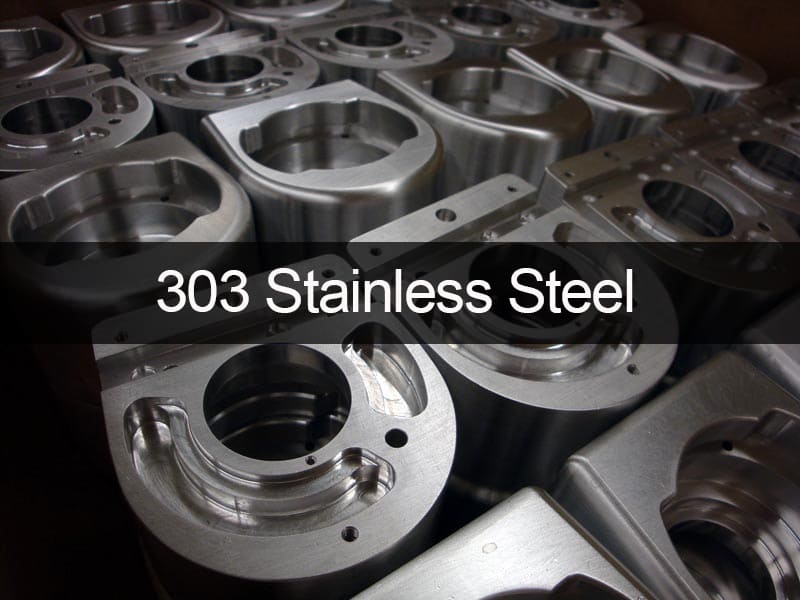
Нержавеющая сталь 303 (AISI 303 / UNS S30300) занимает уникальное и долговечное место в современном производстве. Это аустенитная нержавеющая сталь, которая была намеренно изменена, чтобы стать лучшим сортом для “свободной обработки”, даже если это означает потерю некоторой коррозионной стойкости и механической прочности. Этот компромисс не является проблемой; это инженерная причина, по которой 303 по-прежнему широко используется при обработке нержавеющей стали на станках с ЧПУ.
С инженерной точки зрения 303 выбирают не потому, что это самый прочный или наиболее коррозионностойкий сплав. Его выбирают потому, что он очень хорошо поддается обработке на станках. 303 образует короткую, хорошо контролируемую стружку, требует меньшего усилия резания и обеспечивает более предсказуемую чистоту поверхности, чем стандартная 304, благодаря добавлению серы в химический состав сплава. Это означает сокращение времени цикла и увеличение срока службы инструмента при крупносерийном точении, швейцарской обработке и прецизионном фрезеровании.
Однако эти преимущества имеют четкие границы. Те же добавки серы, которые облегчают обработку, также затрудняют сварку и снижают долговечность. Цель этой статьи — объяснить, почему инженеры выбирают 303 и, что не менее важно, когда им не следует этого делать. Чтобы правильно использовать 303, а не просто выбирать его по умолчанию, необходимо знать, как найти этот баланс.
Что такое нержавеющая сталь 303? Что такое определение материала и позиционирование?
Нержавеющая сталь 303 — это модифицированный аустенитный сплав, созданный для повышения эффективности производства. Он относится к семейству 300-й серии (хром-никель), но отличается тем, что специально разработан для субтрактивного производства.
Аустенитная нержавеющая сталь с изюминкой
303, как и 304, использует хром для пассивации поверхности и никель для поддержания стабильной аустенитной структуры. Это делает его прочным и немагнитным (в отожженном состоянии).
Важное изменение — добавление серы (S).
-
Механизм: Сера создает мягкие включения сульфида марганца (MnS), распределенные по всей металлической матрице.
-
Результат: Эти включения действуют как стружколомы и смазки внутри инструмента во время резания.
Место 303 среди нержавеющих сталей
303 — это сплав, созданный для конкретной цели, а не для общего применения.
-
По сравнению с 304: Обрабатывается на 20–30% быстрее, но менее устойчив к коррозии.
-
По сравнению с 316: 316 намного дешевле и проще в обработке, но он не служит так долго в морской среде.
-
По сравнению с 416: Он менее склонен к ржавчине, чем мартенситные сорта для свободной обработки (такие как 416), но он не такой твердый.
Инженерное определение: 303 создан для обработки, а не для эксплуатации в агрессивной среде. Выбирайте его, когда экономическая эффективность и контроль размеров важнее максимальной стойкости к воздействию окружающей среды.
Что входит в состав нержавеющей стали 303?
Химический состав 303 определяет его свойства. Он оптимизирован не для чистоты, а для того, насколько хорошо он поддается обработке.
Таблица 1: Нормальный химический состав (вес.%)
| Элемент | Минимум % | Максимум % | Роль инженера |
| Хром (Cr) | 17 | 19 | создает пассивный оксидный слой, который защищает от коррозии. |
| Никель (Ni) | 8 | 10 | стабилизирует аустенит и делает его прочнее и пластичнее. |
| Сера (S) | 0.15 | 0.35 | Ключевое отличие. Создает включения MnS для дробления стружки. |
| Марганец (Mn) | – | 2 | Соединяется с серой для создания полезных включений. |
| Фосфор (P) | – | 0.2 | Микроэлемент, который способствует обрабатываемости. |
| Углерод (C) | – | 0.15 | поддерживается на низком уровне для сохранения пластичности материала. |
| Железо (Fe) | Баланс | Базовая матрица. |
Инженерная цена серы
Включения MnS разрушают непрерывный слой оксида хрома, который защищает нержавеющую сталь, но сера делает материал легко обрабатываемым.
-
Последствие 1: Питтинговая коррозия начинается легче в этих местах, где находятся включения.
-
Последствие 2: Включения повышают уровень напряжений, что сокращает срок службы материала.
В результате сера вызывает “горячее растрескивание” при сварке, что делает 303 практически непригодным для сварки.
Что означают эти цифры для механических и физических свойств
Инженеры должны рассматривать свойства 303 с точки зрения их применения: для изготовления точных токарных деталей, валов и фитингов. Он прочный, но не так, как 304 или 17-4PH.
Механические свойства (отожженное состояние)
Таблица 2: Сравнение механических свойств
| Недвижимость | Нержавеющая сталь 303 | 304 Нержавеющая | Инженерная интерпретация |
| Прочность на разрыв | ~620 МПа (90 ksi) | ~515 МПа (75 ksi) | 303 немного прочнее в отожженном состоянии, потому что содержит серу и фосфор. |
| Предел текучести | ~240 МПа (35 ksi) | ~205 МПа (30 ksi) | Good enough for fasteners and structures that aren’t very important. |
| Растяжка | 35–50% | 40 to 60% | Less ductility. 303 doesn’t stretch as much before it breaks. |
| Brinell hardness | about 160 HB | about 150 HB | The hardness is about the same, and the machines work well without being too soft or gummy. |
| Fatigue Limit | Нижний | Выше | Don’t use 303 for parts that will be under a lot of cyclic loading (vibration). |
Tip for design: Don’t use 303 for parts that will be bent or formed in the cold. The parts will also crack when they bend because of the inclusions that break chips.
Why 303 Stainless Steel Works So Well (From a CNC Point of View)
303 stainless steel is the standard for “machinability” in the austenitic family of CNC manufacturing.
Control and stability of chips
-
304/316 Behavior: These alloys make long, stringy, tough chips that look like “bird’s nests” and wrap around the tool and workpiece. This means you have to stop often. They harden quickly when you work with them.
-
303 Behavior: The MnS inclusions make the chip break into small, easy-to-handle curls. This makes it possible for:
-
Continuous, automated operation, especially on Swiss lathes.
-
Less heat buildup at the cutting edge.
-
Less force needed to cut.
-
Life of the Tool and Finish of the Surface
The chips break off easily, and the sulfur acts as an internal “lubricant,” so tools can last three to five times longer in 303 than in 304.
303 naturally makes a smoother, matte finish without the tearing or galling that happens with 304. It consistently holds tight tolerances (e.g., ±0.01mm) over large production runs.
Table 3: Machinability Rating (AISI B1112 = 100%)
| Сплав | Rating % | Chip Character | Типичная область применения |
| 303 | 75% | Small and fragile | Turning a lot of things at once |
| 304 | 45% | Long, stringy | Общее производство |
| 316 | 40% | Hard and stringy | Parts for marine use |
| 17-4PH | 50% | Medium, hard | Shafts with a lot of strength |
303 Stainless Steel CNC Machining Guidelines
303 is forgiving, but fine-tuning the process can save a lot of money.
1. Choosing the right tools
-
Твердый сплав: Standard carbide tools without a coating or with a TiAlN coating work very well.
-
Geometry: To cut the metal cleanly, use positive rake angles.
-
Sharpness: To avoid work hardening, keep your tools sharp. However, 303 hardens much less than 304.
2. Cutting Settings
-
Скорость: You can run 303 at higher surface speeds (SFM) than 304, which means you can get more done.
-
Охлаждающая жидкость: High-pressure coolant is helpful but not as important as it is with 304 because the chips come out easily. Oil is often used in Swiss machining to make things slide better.
3. Turning and milling
-
Поворот: 303 is great at turning. Swiss machining is the standard material for turned parts with small diameters and complex shapes, like screws, pins, and bushings.
-
Фрезерование: It mills well, but deep pocketing can still make things hot.
303 stainless steel has some limitations (critical boundaries).
The trade-offs in engineering for 303 are very clear. If you use it wrong, it can cause a huge failure.
1. Less resistance to corrosion
The sulfur inclusions make tiny breaks in the surface.
303 will rust and pit much faster than 304 in wet, salty, or marine environments. It often gets a “ginger” rust bloom.
Restriction: Do not use 303 on marine hardware or outside architectural features that will be exposed to rain.
2. Not weldable
Don’t weld 303. The weld pool cracks when it gets too hot because of the high sulfur content. The joint will be weak and have holes in it. You have to switch to 304 or 316 if you need to weld something.
3. Rules and regulations (food and medical)
-
Food Grade: NSF/FDA does not generally allow 303 for surfaces that come into contact with food because the sulfur inclusions can harbor bacteria and pit, making cleaning hard.
-
Медицина: It is not often used for implants. For cleanliness, 304V or 316LVM (Vacuum Melted) are better.
A Guide to Choosing Between 303 and 304 Stainless Steel
This is the most common choice of material when getting CNC work done.
Table 4: A Comparison of 303 and 304 Engineering
| Особенность | Нержавеющая сталь 303 | 304 Нержавеющая | Decision Reasoning |
| Обрабатываемость | Великий | Good / Bad | Use 303 for parts that are big and hard to make. |
| Коррозия | Good (Indoor) | Очень хорошо | Use 304 in wet or outdoor settings. |
| Свариваемость | Bad (Stay Away) | Великий | 304 is great for welded assemblies. |
| Cost (Part) | Less | Выше | 303 cuts down on machining time by a lot. |
| Cost (Material) | a little higher | Нижний | Faster production makes up for the lower material cost. |
| Чистота | Низкий | Высокий | Use 304 for food, medical, or vacuum. |
The Rule of Thumb:
-
Is it a screw machine part (bolt, nut, or fitting) that gets a lot of use? -> Use 303.
-
Is it a chemical tank or a welded sheet metal box? -> Use 304.
Common Uses for 303 Stainless Steel
303 is used all over the place in industries that need small, precise parts.
-
Крепежные элементы: Nuts, bolts, screws, and standoffs.
-
Автомобильная промышленность: Bushings, sensor housings, and shafts.
-
Аэрокосмическая промышленность: fittings that aren’t critical and parts of the secondary structure.
-
Электроника: Connectors, adapter bodies, and complicated milled housings.
-
General Industry: Valve bodies, nozzles, and pump shafts (for fluids that don’t corrode).
Things to think about for surface finishing and post-processing
Полировка
303 can be polished, but it will not achieve the same “mirror” finish as 304 or 316. When you look at them closely, the sulfur inclusions can look like tiny “grains” or pits.
Пассивация
For 303, passivation with nitric or citric acid is strongly suggested. It takes away iron and sulfides from the surface, making it more resistant to corrosion, like 304. But to stop “flash attack” on the sulfur inclusions, special passivation processes (like alkaline-alkaline-nitric) are often needed.
Summary—What Engineers Should Remember
303 stainless steel is a material that is made for manufacturing. It answers the question, “How do we quickly make 10,000 of these?” instead of “How can we keep this in the ocean for 100 years?”
Important Suggestions:
-
To lower unit costs, use 303 for CNC turned parts that aren’t welded and are made in large quantities.
-
Do not use 303 for marine, food-contact, or welded work.
-
Passivation should be required to get the most out of 303 parts.
-
Design for Machining: Use 303’s stability to hold tighter tolerances than you could with 304.
Engineers can take advantage of the speed of 303 without hurting the quality of the product by making sure that the material choice matches the manufacturing method and environmental limits.
Часто задаваемые вопросы
Q: Is 303 stainless steel able to be magnetized?
A: No. 303 is also austenitic and not magnetic when it is annealed, just like 304. But after a lot of cold working (machining), it can become a little magnetic, but not as much as 304.
Q: Does 303 get rusty?
A: It doesn’t rust easily in normal indoor settings, but it does rust much faster in wet, salty, or outdoor settings than 304. Pitting is the most common way for things to fail.
Q: Is it okay to use 303 on food equipment?
A: Usually not. The sulfur inclusions make tiny pits that can hold bacteria and are harder to clean. The most common “food grade” stainless steels are 304 and 316.
Q: What makes 303 not weldable?
A: The high sulfur content makes the weld bead “hot short,” which causes it to crack as it cools down. You can physically stick two pieces together, but the joint won’t be strong enough to hold them together.
Q: How do 303 and 303Se differ from each other?
A: 303Se uses Selenium instead of Sulfur to make it easier to work with. It has a slightly better surface finish and can be cold-headed, but it costs more and is less common than standard 303.


