
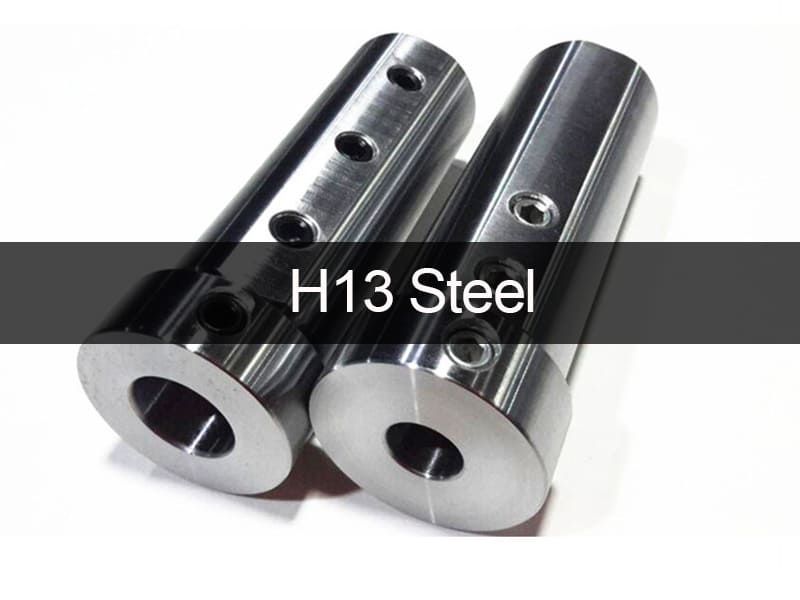
H13, çok yüksek sıcaklıklara maruz kalsa bile mukavemetini, tokluğunu ve boyut stabilitesini korumak üzere üretilmiştir. Krom–molibden–vanadyum alaşım sistemi, ona sıcak sertlik, termal yorulma direnci ve darbe direncinin iyi bir karışımını kazandırır. Bu da onu basınçlı döküm kalıpları, dövme kalıpları ve ekstrüzyon takımları için popüler bir tercih haline getirir. Bu makale, yüksek sıcaklıklarda kullanılacak takımlar için H13 seçilirken bu özelliklerin gerçek dünyadaki mühendislik kararlarını nasıl etkilediğini inceler.
H13 çeliği nedir? — Malzemelerin Tanımı ve Sınıflandırılması
H13 çeliği, yüksek sıcaklıklarda çalışan, termal yükleme döngülerinden geçen ve mekanik gerilme altında olan takımlar için üretilmiş bir krom-molibden sıcak iş takım çeliğidir. H13, AISI/ASTM gibi uluslararası standartlara göre H serisi takım çeliklerinin bir parçası olarak sınıflandırılır. Bu grup, tekrar tekrar ısıtılıp soğutulduğunda mukavemet kaybına, termal yorulmaya ve çatlamaya direnmek üzere tasarlanmıştır. Mühendislik açısından H13, takımların sürekli veya değişken ısıya maruz kalsa bile boyut olarak stabil ve mekanik olarak sağlam kalması gerektiğinde tercih edilir.
H Serisi Takım Çelikleri ve H13’ün Rolü
H serisi takım çeliklerinin tümü aynı tasarım hedefine sahiptir: yüksek çalışma sıcaklıklarında mukavemetlerini ve tokluklarını korurken aynı zamanda ısıl çatlak ve termal şoka dayanabilmek.
-
H11 daha yüksek tokluk ve termal şoka direnç üzerine odaklanır, ancak sıcak haldeyken biraz daha az serttir.
-
H21 mükemmel sıcak mukavemete sahip tungsten bazlı bir sıcak iş çeliğidir, ancak daha pahalıdır ve daha az toktur.
-
H13 iyi bir tercihtir çünkü sıcak sertlik, tokluk ve alaşım maliyeti açısından iyi bir dengeye sahiptir.
Bu denge, H13 takım çeliğinin genel amaçlı sıcak iş takımları için H serisindeki en yaygın ve standart kalite olmasının nedenidir.
H13 Neden Kalıp Çeliği Olarak da Bilinir
H13 kalıp çeliği, basınçlı döküm kalıplarında, yüksek termal talepli plastik enjeksiyon kalıplarında ve büyük takım bloklarında kullanımı nedeniyle sektörde yaygın bir terimdir. H13, geleneksel soğuk iş kalıp çeliklerinde olduğu gibi hızla yumuşamadan veya çatlamadan tekrarlanan termal döngülere dayanabilir.
Temel fark çalışma şekillerindedir: soğuk iş kalıp çelikleri oda sıcaklığında yüzey sertliği ve aşınma direncine odaklanırken, H13 ısıtıldığında termal stabilite, tokluk ve boyut kontrolüne odaklanır. H13, hem sıcak iş hem de kalıp işlerinde kullanılabilen çok yönlü bir çeliktir.
H13 çeliğinin kimyasal yapısı ve alaşımları nasıl etkilediği
H13 çeliğindeki krom-molibden-vanadyum alaşım sistemi, onu sıcak iş uygulamalarında iyi çalışır hale getiren şeydir. Bu sistem, yüksek sıcaklıklarda ve tekrarlanan termal yükleme altında mukavemeti, tokluğu ve yapısal stabiliteyi korumak üzere tasarlanmıştır. H13'ün bileşimi, soğuk iş takım çeliklerinde olduğu gibi maksimum sertlik için optimize edilmemiştir. Bunun yerine, sıcak mukavemet korunumu ve termal yorulma direnci için optimize edilmiştir.
H13 Çeliğinin Tipik Kimyasal Bileşimi (wt%)
| Element | Normal Aralık (%) | En Önemli Görev |
| Karbon (C) | 0.32–0.45 | Mukavemet ve sertliğin temeli |
| Krom (Cr) | 4.75–5.50 | sıcak mukavemet ve oksidasyona direnç |
| Molibden (Mo) | 1.10–1.75 | Sıcaklık değişimlerine direnebilir ve termal yorulmayı kontrol edebilir. |
| Vanadyum (V) | 0.80–1.20 | şeyleri daha güçlü ve aşınmaya daha az yatkın hale getirir. |
| Silisyum (Si) | 0.80–1.20 | Şeklini korur ve kolayca yumuşamaz. |
| Manganez (Mn) | 0.20–0.50 | şeylerin sertleşmesine yardımcı olur |
Kesin sınırlar standarta ve tedarikçiye bağlı olarak biraz farklılık gösterir.
Alaşım Elementleri Sıcak İş Performansını Nasıl Etkiler
-
Krom (Cr) H13’ün yüksek sıcaklıklarda çalışma kabiliyetinin önemli bir parçasıdır.
-
Mikroyapısal rol: Martensit ve krom açısından zengin karbürlerin stabil kalmasına yardımcı olur.
-
Performans üzerindeki etkisi: yüksek sıcaklıklarda daha güçlü ve oksidasyona daha dirençli hale getirir.
-
Mühendislik önemi: Takımların tekrar tekrar ısıya maruz kaldığında yumuşama ve yüzey kalitesini kaybetme olasılığını azaltır.
-
-
Molibden (Mo) şeylerin ısı ve yumuşamadan bozulma olasılığını azaltır.
-
Mikroyapısal rol: Martensitik matrisi güçlendirir ve karbürün kabalaşmasını yavaşlatır.
-
Performans üzerindeki etkisi: tekrar tekrar ısıtıldıktan sonra sert kalır.
-
Mühendislik önemi: Çok fazla termal döngüden geçen basınçlı döküm ve dövmede kullanılan takımlar için çok önemlidir.
-
-
Vanadyum (V) Vanadyum ince, stabil karbürler oluşturur.
-
Mikroyapısal rol: Taneleri küçülterek ve ikincil karbürler oluşturarak.
-
Performans üzerindeki etkisi: tokluğunu azaltmadan aşınmaya karşı daha dirençli hale getirir.
-
Mühendislik önemi: Sıcak iş kalıplarının ve kalıplarının kenarlarında ve yüzeylerinde daha uzun süre dayanmasına yardımcı olur.
-
-
Karbon, Silisyum ve Mangan Bu elementler sertleşebilirliği ve temperleme stabilitesini daha hassas hale getirir, bu da ısıl işlem tepkisini ve boyut kontrolünü daha öngörülebilir kılar.
H13 takım çeliği bileşimi, elementlerin, mikroyapının ve performansın birlikte nasıl çalıştığına dair planlı bir model gösterir. Bu nedenle H13, sadece yüksek sertlikte bir çelik yerine zorlu sıcak iş takımları için hâlâ en iyi malzemedir.
H13 çeliğinin mikroyapısı ve metalurjik süreçleri
H13 çeliğinin sıcak iş performansı yalnızca alaşım bileşimiyle değil, aynı zamanda uygun ısıl işlemle oluşan mikroyapı ve bunun yüksek sıcaklıklara ve döngüsel termal yüklemeye tepkisiyle belirlenir. Metalurjik açıdan H13, birçok takım çeliğinin kırıldığı veya yumuşadığı durumlarda stabil kalmak üzere üretilmiştir.
Isıl İşlem Sonrası Mikroyapı
Ostentileme, su verme ve temperleme süreçlerinden geçtikten sonra H13, çoğunlukla temperlenmiş martensit ve eşit şekilde dağılmış alaşım karbürlerinden oluşan bir mikroyapı kazanır. H13, krom, molibden ve vanadyum açısından zengin karbürlerle güçlendirilmiş nispeten temiz bir martensitik matris oluşturur. Bu, çok fazla birincil karbür içeren soğuk iş takım çeliklerinden farklıdır.
Bu karbür grubu:
-
Kaba veya sürekli değil, ince ve eşit şekilde dağılmış
-
Termal olarak kararlı, yani birçok kez ısıtılıp soğutulduğunda hızla pürüzlü hale gelmez.
Temperlenmiş martensitik matris onu tok ve yük taşıyabilir hale getirir, alaşım karbürleri ise yüzeyde onu daha güçlü ve daha dayanıklı yapar. Bu kombinasyon, H13'ün uzun süre yüksek sıcaklıklara maruz kaldıktan sonra bile kırılmadan mekanik strese dayanmasını sağlar.
H13 Neden Yüksek Sıcaklıklarda Kırmızı Sertliğini Korur
H13’ün kırmızı sertliğini, yani yüksek sıcaklıklarda kullanılabilir sertliğini koruma yeteneği, mikroyapısının ne kadar kararlı olduğuyla doğrudan ilişkilidir. Molibden önemlidir çünkü temperleme sırasında ve kullanım sırasında martensitin toparlanmasını ve yumuşamasını yavaşlatır. Vanadyum karbürleri ise çözünmeme ve kabalaşmama konusunda daha da iyidir, bu da basit alaşımlı çeliklerin sertliğini hızla kaybettiği sıcaklıklarda mukavemetlerini korumalarını sağlar.
Mühendislik açısından bakıldığında, bu kararlı mikroyapı H13’e güçlü termal yorulma direncini veren şeydir. Sıcaklık yükselip düştüğünde yüzeyde termal gerilmeler birikir. H13'ün temperlenmiş martensiti bu gerilmelere dayanabilir ve ince karbürleri çatlakların başlamasını ve yayılmasını engeller, bu da ısı çatlamasını azaltır.
Bu metalurjik davranış, H13'ün termal döngü ve yüksek sıcaklıkların başlıca arıza nedenleri olduğu sıcak iş ortamları için bir referans malzeme olduğu anlamına gelir. Tutarlı sertliğe, daha az çatlamaya ve öngörülebilir bir kullanım ömrüne sahiptir.
H13 çeliğinin mekanik ve termal özellikleri
H13 çeliği, mekanik ve termal özellikleri nedeniyle genellikle sıcak iş takımları için kullanılır. Bu özellikler takımın ne kadar dayanacağını belirler. H13 herhangi bir özelliği en üst düzeye çıkarmaya çalışmaz. Bunun yerine, boyutların ve yapıların zaman içinde kararlı kalmasına yardımcı olan dengeli ve öngörülebilir bir performans aralığı sunar.
Oda Sıcaklığında Mekanik Özellikler
Doğru şekilde ısıtıldığında, H13 oda sıcaklığında ağır hizmet takımları için yeterince güçlü ve toktur.
| Mülkiyet | Tipik Aralık | Takımlar İçin Ne Anlama Gelir |
| Sertlik (HRC) | 44–52 (normal çalışma aralığı) | Doğru miktarda mukavemet ve çatlak direnci |
| Çekme Dayanımı | ~1.400–1.600 MPa | ağır mekanik yükleri kaldırabilir |
| Akma Mukavemeti | ~1.100–1.300 MPa | kalıcı olarak şekil değiştirmez. |
| Darbe Tokluğu | Orta ile yüksek arası | gevrek kırılma olasılığını azaltır. |
| Elastik Modül | ~210 GPa | yük altındayken yapının sertliği |
Mühendisler, H13'ün kasıtlı olarak soğuk iş takım çeliklerinden daha düşük sertlikte çalıştırıldığını söyler. Bu, aşınmaya karşı direncini azaltır, ancak onu çok daha tok hale getirir; bu da aynı anda darbeye, sıkıştırmaya ve ısıtmaya maruz kalan kalıplar ve moldlar için çok önemlidir.
Yüksek Sıcaklıklarda Performans ve Yüksek Sıcaklıklarda Kararlılık
H13’ün ana faydası yüksek sıcaklıklarda ortaya çıkar.
-
Sıcak sertlik koruması: H13, kalıp döküm, dövme ve ekstrüzyonda yaygın olan yüksek sıcaklıklara maruz kaldığında yumuşamaz.
-
Termal yorulma direnci: Alaşımlarla stabilize edilmiş martensitik yapısı, yüzeyde çatlama veya çatlama olmadan tekrarlanan ısıtma ve soğutma döngülerine dayanabilir.
-
Temperleme kararlılığı: Molibden ve vanadyum, iş için bir şeyi ısıttığınızda meydana gelen mukavemet kaybını yavaşlatır.
H13 çeliğinin erime noktası (yaklaşık 1.420–1.450 °C) bir çalışma sıcaklığı değil, bir tasarım sınırıdır. Yapısal bütünlüğün en yüksek seviyesini ve çalışma sıcaklıkları ile metalurjik arıza arasındaki büyük güvenlik boşluğunu gösterir. Daha da önemlisi, sıcakken bir şeyin ne kadar iyi çalıştığının erime noktasına değil, erime noktasının çok altındaki mikroyapısının ne kadar kararlı olduğuna bağlı olduğunu gösterir.
Bunun Kalıpların ve Moldların Ömrü İçin Anlamı
-
Sertlik kaybı ısıda daha yavaş gerçekleşir
-
Termal döngüden kaynaklanan daha az çatlama
-
Tahmin edilmesi daha kolay bakım aralıkları
Pratik açıdan, H13 takım çeliğinin özellikleri, takımların daha uzun süre dayandığı, daha az felaket arızası yaşadığı ve yüksek sıcaklıklı üretim ortamlarında daha güvenilir çalıştığı anlamına gelir.
H13 çeliğinin ısıl işlemindeki adımlar ve sürecin nasıl daha iyi hale getirileceği
H13 çeliğinin ısıl işlemi standart bir sertleştirme süreci değildir; sıcak mukavemeti, termal yorulma direncini ve uzun vadeli boyutsal kararlılığı iyileştirmeyi amaçlayan dikkatlice planlanmış bir dizi adımdır. H13 yüksek sıcaklıklı, döngüsel ortamlarda çalışır, bu nedenle kötü ısıl işlem, kalıpların ve moldların çok erken arızalanmasının en yaygın nedenlerinden biridir.
H13 için normal ısıl işlem döngüsü
Standart bir H13 ısıl işlem sırası şunlardan oluşur:
-
Tavlama (yumuşak olarak tedarik edilirse) mikroyapıyı daha homojen hale getirmek ve kaba işlemeden önce işlenmesini kolaylaştırmak için yapılır.
-
Ön ısıtma (birkaç aşamada) çok önemlidir.
-
Amaç: Sıcaklık farklarını azaltmak ve termal şoku durdurmak.
-
Engineering logic: H13 has a lot of alloys in it, so rapid temperature changes can cause internal stresses before austenitizing even starts.
-
-
Östenitleme is done at a high temperature to break down alloy carbides into the matrix.
-
Key control: The temperature needs to be high enough to activate the alloy, but not so high that the toughness is affected by grain growth.
-
-
H13 is usually quenched with air or gas.
-
Why this is important: Controlled cooling keeps things from warping and lowers the chance of quench cracking compared to oil quenching.
-
-
Multiple Tempering Cycles: Usually, two or three tempering cycles are done right after hardening.
Why H13 Needs Multiple Tempering
To get H13’s thermal and mechanical stability, it needs to be tempered multiple times.
-
Relieving residual stress: The first temper lowers stresses caused by quenching, which lowers the risk of cracks.
-
Microstructural stabilization: After tempering, retained austenite changes and tempered martensite stays stable.
-
Service reliability: If H13 isn’t tempered enough, it may look hard at first, but it will soften in an unpredictable way when it’s used.
From an engineering point of view, single tempering is not enough for tools that need to be able to handle repeated thermal cycling.
How to avoid common heat treatment problems
-
Thermal cracking happens when the material isn’t heated enough or isn’t heated evenly. Önleme: Keeping the ramp rates under control and the furnace conditions the same.
-
Distortion of dimensions: This is often caused by uneven cooling or asymmetric geometry. Önleme: Stress relief after rough machining and a balanced section design.
-
Under-tempering: This makes the hardness unstable and causes heat checking to happen too soon. To avoid problems, follow the multi-temper practice and check the hardness after each cycle.
When it comes to H13 tool steel heat treatment, the most important thing is not getting the hardest steel possible, but following the steps correctly. When done right, heat treatment is the key to long mold life, consistent performance, and less risk when using tools.
H13 Steel’s Machinability and Manufacturing
H13 steel can be machined fairly well, but it depends a lot on the condition of the steel. From an engineering and cost-control point of view, successful manufacturing depends less on aggressive cutting parameters and more on choosing the right tools, managing distortion, and sequencing the steps in the process.
Machining in Annealed vs. Heat-Treated State
For most of the material removal, machining in an annealed state is highly recommended.
When H13 is annealed, it makes chips that are stable and cutting forces that are easy to predict.
-
Plan for the process:
-
Do roughing and semi-finishing work before heat treatment.
-
Leave a consistent amount of stock for finishing after heat treatment.
-
-
Mühendislik nedeni: It reduces tool wear, stress caused by machining, and makes it easier to predict how the dimensions will change after hardening.
Machining in a heat-treated state should be limited and done for a reason.
When the hardness level is normal (about 44–52 HRC), cutting forces go up a lot.
-
En iyi uygulama: Only use post-heat-treat operations for grinding, sizing, or fixing critical tolerances.
-
Too much machining after hardening costs more and makes it more likely that the surface will get damaged or that there will be residual stress.
Controlling distortion, tooling, and surface finish
Choosing the right tools
-
Annealed H13: For CNC milling and turning, coated carbide tools are better.
-
Hardened H13: CBN or ceramic tools can be used for light cuts, but grinding is still the best way to get precise features.
Things to think about when it comes to surface finish
Surface integrity is very important for hot-work tools. A bad surface finish can make stress build up and speed up thermal fatigue cracking.
Maintaining compressive surface stresses and consistent finishes is easier with controlled feeds, sharp tools, and good coolant management.
Stability after machining and distortion
H13 has good dimensional stability, but it can still warp if the section thickness isn’t even or if there is residual stress from machining.
-
Ways to reduce the damage:
-
Stress relief after bad machining
-
Machining sequences that are symmetrical
-
Don’t let certain areas get too hot during finishing work.
-
In practice, a good machining plan for H13 steel puts annealed-state machining first, controlled finishing after heat treatment, and strict distortion control. This directly leads to longer mold life and more predictable tool performance.
Common Uses of H13 Steel in Engineering
H13 is chosen for applications where high temperatures, thermal cycling, and mechanical load all happen at the same time. In these situations, thermal fatigue and softening, not just abrasion, are what usually cause failure. This makes H13 a better choice than cold-work grades like D2 or A2.
Uses for Hot-Work Tools
-
H13 die casting dies are the standard for aluminum and magnesium die casting tools in the industry.
-
Why H13? It stays hard when hot, doesn’t crack when heated, and stays the same size even when the temperature changes quickly.
-
Neden D2/A2 değil? D2 and A2 lose their hardness quickly at operating temperatures and are likely to crack when they get too hot.
-
-
Forging dies and forging tools get hit over and over again at high temperatures.
-
Why H13? Because it is tough and doesn’t break down when it gets hot, it makes cracks less likely to start at die corners and fillets.
-
Neden D2/A2 değil? Cold-work steels don’t have the thermal stability they need, and they often break instead of wearing down slowly.
-
-
Extrusion dies and tools need to be able to withstand high temperatures and not change shape.
-
Why H13: A stable tempered martensitic structure can hold weight at high temperatures without bending.
-
Neden D2/A2 değil? It doesn’t hold up to heat well enough, which makes the profile less accurate.
-
Mold Parts and Structural Tools
-
H13 is a common material for mold cores and cavities that are exposed to large temperature changes.
-
Engineering benefit: You can count on how the heat treatment will work, and there will be less cracking while the machine is in use.
-
A2 is stable at room temperature, but it doesn’t hold up to long-term thermal fatigue.
-
-
Die holders, inserts, and heavily loaded sections all benefit from H13’s toughness and hot strength.
-
Why H13: It keeps its mechanical integrity when it is exposed to both heat and clamping force.
-
The engineering lesson is that H13 is chosen not for its ability to resist wear, but for its thermal reliability and controlled failure behavior. This makes it the best material for tools that are used in hot conditions.
Design Limitations and Failure Modes of H13 Steel
H13 steel is a well-known hot-work tool steel, but it can still break. To choose the right materials and design tools that will last, you need to know how they usually fail and what their limits are.
Heat Checking and Thermal Fatigue
Thermal fatigue, which is often shown as surface heat checking, is the most common way that H13 tools fail.
-
The root cause is that heating and cooling cycles happen over and over again, which puts alternating tensile and compressive stresses on the surface.
-
Manifestation: Small cracks on the surface that get bigger over time.
-
Tasarım etkisi: Sharp corners, rough surfaces, or uneven cooling make cracks start faster, even in H13.
H13 is good at withstanding thermal shock, but it doesn’t stop thermal fatigue; it just slows it down compared to steels that are less stable.
Wear and Damage to the Surface
H13 is not very resistant to wear; it is only moderately resistant.
-
Sınırlama: Under conditions of high sliding wear or erosion, surface degradation may precede structural failure.
-
Engineering risk: over time, parts may lose their dimensions, surface finish, and quality.
To fix the problem, wear-dominated areas may need surface treatments or inserts made of materials that are more resistant to wear.
When H13 Isn’t the Best Option
When you should not use H13:
-
Wear is more important than thermal fatigue, like when blanking for a long time or abrasive forming.
-
Because the operating temperatures are low, cold-work steels are cheaper.
-
There is a lot of corrosion or chemical damage.
-
Extreme thermal shock goes beyond the limits of controlled process conditions.
From an engineering point of view, H13 is the best choice when heat and cyclic stress determine tool life. When other ways of failing are more common, using different materials often gives better performance and costs less overall.
Comparing H13 Steel to Other Tool Steels for Engineering Selection
When compared to other cold-work and hot-work options that are often suggested, it is easier to choose H13. The comparisons below look at more than just hardness. They look at the main causes of failure, how things behave when they get hot, and how reliable they are over time.
H13 vs. D2: Thermal Stability vs. Wear Resistance
D2 is a cold-work tool steel with a lot of carbon and chromium that is best at resisting wear at room temperature.
-
D2 strengths: It doesn’t wear out easily and its edges last a long time in sliding or abrasive conditions.
-
D2 has some problems: it softens quickly when it gets hot and doesn’t hold up well to thermal fatigue.
H13, on the other hand, is made to be strong in heat and thermal cycling.
The reality of engineering:
-
H13 stays hard and tough even when it’s hot.
-
When D2 is exposed to hot-work conditions, it loses its hardness and develops thermal cracks.
Final choice: Pick D2 when wear is more important than low temperature. When heat and thermal cycling determine tool life, pick H13.
H13 vs. A2: Hot-Work Capability vs. Dimensional Stability
A2 is a cold-work steel that hardens in the air. It is known for its dimensional stability and balanced properties at room temperature.
-
A2 strengths: Good size control during heat treatment and moderate wear resistance
-
A2 has some problems, like not being very hard when hot and not being able to handle thermal fatigue well.
H13 gives up some dimensional stability at room temperature in order to gain:
-
Strength that lasts at high temperatures
-
Resistant to thermal shock and heat checking
Final choice: A2 is usually enough for precision tools that work close to room temperature. H13 is the safer and longer-lasting choice for molds and dies that are heated over and over.
H13 vs. H11: Toughness, heat resistance, and cost.
H11 and H13 are very similar types of chromium hot-work steels.
-
H11 has higher toughness and resistance to thermal shock, but lower hot hardness.
-
H13 has better hot hardness retention and better wear resistance at high temperatures.
Trade-off in engineering:
-
H11 can handle hard hits and thermal shock a little better.
-
H13 lasts longer on surfaces and can be used in more places.
Final choice: H11 may be better for very high shock conditions. People usually choose H13 as the general-purpose hot-work steel because it works well and is cheap.
Summary of the Engineering Comparison
| Çelik | Hot Strength | Thermal Fatigue Resistance | Aşınma Direnci | Common Failure Mode |
| H13 | Yüksek | Yüksek | Orta | Gradual heat checking |
| D2 | Düşük | Düşük | Çok Yüksek | Thermal cracking |
| A2 | Düşük ila orta | low to moderate | moderate | softening, cracking |
| H11 | Orta | Çok Yüksek | Orta | Surface wear |
Overall selection logic: H13 is the most versatile benchmark hot-work tool steel because it has better thermal stability and cyclic heat exposure than pure wear resistance or room-temperature dimensional control.
Summary — What Engineers Should Know About H13 Steel
H13 steel is known for its ability to stay stable in high temperatures, not for its extreme hardness. The main thing that makes it valuable is that it stays strong, tough, and stable in size even after being heated, cooled, and loaded many times. This is where cold-work tool steels usually fail because they become too soft or too hot.
The chromium–molybdenum–vanadium alloy system gives H13 balanced hot-work performance, with a focus on resistance to thermal cycling and cracking rather than maximum wear resistance. Because of this, H13 is best for die casting, forging, and extrusion tooling, but not for applications where wear is a big problem or where other materials work better.
Sıkça Sorulan Sorular
What do people use H13 steel for?
H13 steel is mostly used for hot-work tools that have to deal with high temperatures, thermal cycling, and mechanical load all at the same time. Common uses include die casting dies (for aluminum and magnesium), forging dies, extrusion dies, hot shear blades, and thermally loaded mold parts like cores and cavities. When thermal fatigue, softening, or cracking limit the life of a tool, engineers choose H13 instead of just abrasion.
Is H13 steel good for making die casting molds?
Yes, H13 is widely thought to be the best material for die casting molds. Its alloy design gives:
-
Resistant to heat checking when the temperature changes quickly
-
Hardness stays the same even after being in contact with molten metal many times
-
Strong enough to handle the force of clamping and impact
H13 has a much longer and more predictable service life in die casting environments than cold-work steels.
What is the usual hardness range for H13?
Depending on the needs of the job, the normal working hardness range for H13 tool steel is 44–52 HRC.
-
Lower range (44–48 HRC): Better toughness and less chance of thermal cracking
-
Higher range (48–52 HRC): better strength in heat and durability of the surface
Pushing hardness above this range often makes thermal fatigue resistance worse and raises the risk of cracking, which isn’t helpful in hot-work service.
How does heat treatment change how H13 works?
H13’s performance depends a lot on how it is heated. Correct processing creates a stable tempered martensitic structure with small alloy carbides.
-
The temperature at which austenitizing happens controls the size of the grains and the dissolution of the carbide.
-
Quenching with air or gas keeps things from warping and cracking.
-
Multiple tempering cycles make hardness more stable, reduce residual stress, and make the material more resistant to thermal fatigue.
Improper tempering or uneven heating often causes premature heat checking or unpredictable softening while in use.
Which is better for hot work, H13 or D2?
H13 is clearly better than D2 for hot-work uses.
-
H13: Made to work at high temperatures, go through thermal cycling, and keep its hardness when it’s hot
-
D2: Designed to be resistant to wear at room temperature, but it quickly softens and breaks when heated.
D2 might work better than H13 in cold, wear-heavy tooling, but it can’t handle hot work for long periods of time.
When thermal stability and cyclic heat exposure are important, H13 steel is the best choice. When heat is not a controlling factor, other steels like D2 are better.


