
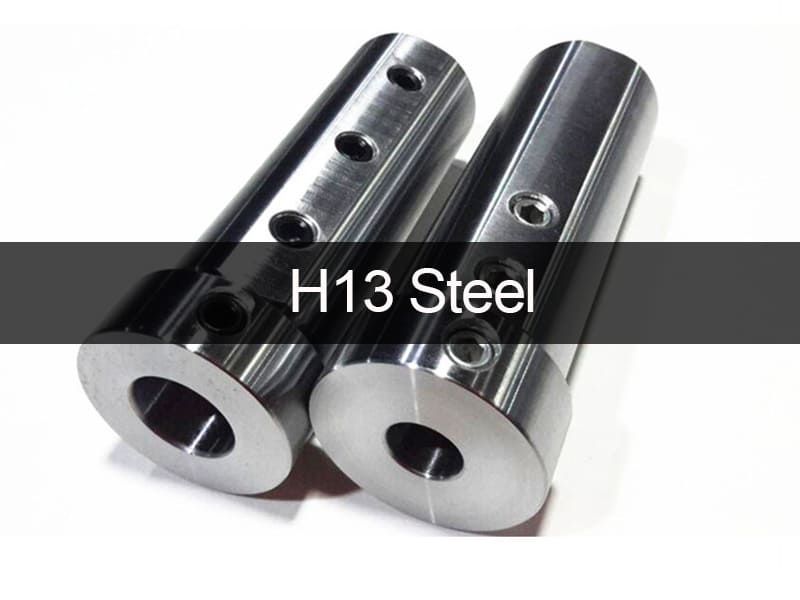
H13 создан для сохранения прочности, ударной вязкости и стабильности размеров даже при очень высоких температурах. Его система легирования хром–молибден–ванадий обеспечивает хорошее сочетание горячей твёрдости, сопротивления термической усталости и ударной стойкости. Это делает его популярным выбором для литейных форм, штампов для ковки и инструмента для экструзии. В этой статье рассматривается, как эти характеристики влияют на реальные инженерные решения при выборе H13 для инструментов, которые будут использоваться при высоких температурах.
Что такое сталь H13? — Определение и классификация материалов
Сталь H13 — это хромомолибденовая штамповая сталь горячей деформации, предназначенная для инструментов, работающих при высоких температурах, подвергающихся циклам термического нагружения и механическим нагрузкам. H13 классифицируется как часть инструментальных сталей серии H по международным стандартам, таким как AISI/ASTM. Эта группа была создана для сопротивления потере прочности, термической усталости и растрескиванию при повторном нагреве и охлаждении. В инженерных терминах H13 выбирают, когда инструменты должны сохранять стабильность размеров и механическую целостность даже при воздействии постоянного или переменного нагрева.
Инструментальные стали серии H и роль H13
Все инструментальные стали серии H имеют одну и ту же цель проектирования: сохранять свою прочность и ударную вязкость при высоких рабочих температурах, а также выдерживать тепловое растрескивание и термический удар.
-
H11 ориентирован на более высокую ударную вязкость и сопротивление термическому удару, но он немного менее твёрдый при нагреве.
-
H21 — это штамповая сталь горячей деформации на основе вольфрама, обладающая отличной горячей прочностью, но она дороже и менее вязкая.
-
H13 является хорошим выбором, поскольку обеспечивает хороший баланс горячей твёрдости, ударной вязкости и стоимости легирования.
Именно этот баланс делает инструментальную сталь H13 наиболее распространённой и стандартной маркой в серии H для универсальных инструментов горячей деформации.
Почему H13 также известна как штамповая сталь
H13 штамповая сталь — распространённый в отрасли термин, обозначающий её применение в литейных формах, пресс-формах для литья пластмасс с высокими термическими требованиями и крупных инструментальных блоках. H13 выдерживает повторные термические циклы без быстрого размягчения или растрескивания, что не характерно для традиционных штамповых сталей холодной деформации.
Основное различие заключается в принципе их работы: штамповые стали холодной деформации ориентированы на поверхностную твёрдость и износостойкость при комнатной температуре, тогда как H13 ориентирован на термическую стабильность, ударную вязкость и контроль размеров при нагреве. H13 — это универсальная сталь, которая может использоваться как для горячей деформации, так и для штамповой оснастки.
Химический состав стали H13 и влияние легирующих элементов
Система легирования хром-молибден-ванадий в стали H13 — это то, что обеспечивает её хорошую работу в применениях горячей деформации. Эта система разработана для сохранения прочности, ударной вязкости и структурной стабильности при высоких температурах и повторяющемся термическом нагружении. Состав H13 не оптимизирован для максимальной твёрдости, как у штамповых сталей холодной деформации. Вместо этого он оптимизирован для сохранения горячей прочности и сопротивления термической усталости.
Типичный химический состав стали H13 (вес.%)
| Элемент | Обычный диапазон (%) | Наиболее важная функция |
| Углерод (C) | 0.32–0.45 | Основа для прочности и твёрдости |
| Хром (Cr) | 4.75–5.50 | горячая прочность и сопротивление окислению |
| Молибден (Mo) | 1.10–1.75 | Способен противостоять изменениям температуры и контролировать термическую усталость. |
| Ванадий (V) | 0.80–1.20 | делает материал прочнее и менее подверженным износу. |
| Кремний (Si) | 0.80–1.20 | Сохраняет форму и не размягчается легко. |
| Марганец (Mn) | 0.20–0.50 | способствует закалке |
Точные пределы немного различаются в зависимости от стандарта и поставщика.
Как легирующие элементы влияют на характеристики при горячей деформации
-
Хром (Cr) является важной частью способности H13 работать при высоких температурах.
-
Роль в микроструктуре: Помогает мартенситу и хромсодержащим карбидам оставаться стабильными.
-
Влияние на характеристики: делает его прочнее при высоких температурах и более устойчивым к окислению.
-
Инженерное значение: Это снижает вероятность размягчения инструментов и потери качества поверхности при многократном воздействии тепла.
-
-
Молибден (Mo) делает материал менее подверженным разрушению от нагрева и размягчения.
-
Роль в микроструктуре: Это упрочняет мартенситную матрицу и замедляет укрупнение карбидов.
-
Влияние на характеристики: остаётся твёрдым после многократного нагрева.
-
Инженерное значение: Очень важно для инструментов, используемых в литье и ковке, которые проходят через интенсивное термическое циклирование.
-
-
Ванадий (V) Ванадий образует мелкие, стабильные карбиды.
-
Роль в микроструктуре: Уменьшение размера зерна и образование вторичных карбидов.
-
Влияние на характеристики: повышает износостойкость без снижения ударной вязкости.
-
Инженерное значение: Помогает формам и штампам горячей деформации дольше сохранять кромки и поверхности.
-
-
Углерод, кремний и марганец Эти элементы делают прокаливаемость и стабильность при отпуске более точными, что делает реакцию на термообработку и контроль размеров более предсказуемыми.
Состав инструментальной стали H13 демонстрирует продуманную взаимосвязь элементов, микроструктуры и эксплуатационных характеристик. Именно поэтому H13 остаётся лучшим материалом для требовательных инструментов горячей деформации, а не просто высокотвёрдой сталью.
Микроструктура и металлургические процессы стали H13
Характеристики стали H13 при горячей деформации определяются не только её легирующим составом, но и микроструктурой, формируемой в результате соответствующей термообработки, а также её реакцией на высокие температуры и циклическое термическое нагружение. С металлургической точки зрения H13 создан для сохранения стабильности там, где многие инструментальные стали разрушаются или размягчаются.
Микроструктура после термообработки
После прохождения процессов аустенитизации, закалки и отпуска H13 приобретает микроструктуру, состоящую в основном из отпущенного мартенсита с равномерно распределёнными легированными карбидами. H13 образует относительно чистую мартенситную матрицу, упрочнённую карбидами, богатыми хромом, молибденом и ванадием. Это отличается от штамповых сталей холодной деформации, которые содержат большое количество первичных карбидов.
This group of carbides is:
-
Not coarse or continuous, but fine and evenly spread out
-
Thermally stable, meaning it doesn’t get rough quickly when heated and cooled many times.
The tempered martensitic matrix makes it tough and able to hold weight, and the alloy carbides make it stronger and more durable on the surface. This combination lets H13 handle mechanical stress without breaking, even after being exposed to high temperatures for a long time.
Why H13 Stays Red Hard at High Temperatures
H13’s ability to keep its red hardness, which is usable hardness at high temperatures, is directly related to how stable its microstructure is. Molybdenum is important because it slows down the recovery and softening of martensite during tempering and when it is used. Vanadium carbides are even better at not dissolving and getting coarser, which keeps their strength at temperatures where simpler alloy steels lose their hardness quickly.
From an engineering point of view, this stable microstructure is what gives H13 its strong resistance to thermal fatigue. Thermal stresses build up at the surface when the temperature goes up and down. H13’s tempered martensite can handle these stresses, and its fine carbides stop cracks from starting and spreading, which lowers heat checking.
This metallurgical behavior means that H13 is a benchmark material for hot-work environments where thermal cycling and high temperatures are the main causes of failure. It has consistent hardness, less cracking, and a predictable service life.
The mechanical and thermal properties of H13 steel
H13 steel is often used for hot-work tools because of its mechanical and thermal properties. These properties determine how long the tool will last. H13 doesn’t try to maximize any one property. Instead, it gives a balanced and predictable performance envelope that helps keep dimensions and structures stable over time.
Mechanical Properties at Room Temperature
When heated correctly, H13 is strong and tough enough for heavy-duty tools at room temperature.
| Недвижимость | Типичный диапазон | What It Means for Tools |
| Твердость (HRC) | 44–52 (normal working range) | The right amount of strength and crack resistance |
| Прочность на разрыв | ~1,400–1,600 MPa | can handle heavy mechanical loads |
| Предел текучести | ~1,100–1,300 MPa | won’t change shape permanently. |
| Impact Toughness | Умеренный до высокого | lowers the chance of brittle fracture. |
| Модуль упругости | ~210 GPa | stiffness of the structure when it is under load |
Engineers say that H13 is run at a lower hardness than cold-work tool steels on purpose. This makes it less resistant to wear, but it makes it much tougher, which is very important for dies and molds that are hit, clamped, and heated at the same time.
Performance at High Temperatures and Stability at High Temperatures
H13’s main benefit shows up at high temperatures.
-
Hot hardness retention: H13 doesn’t get softer when it’s exposed to the high temperatures that are common in die casting, forging, and extrusion.
-
Thermal fatigue resistance: Its martensitic structure, which is stabilized by alloys, can handle repeated heating and cooling cycles without cracking or checking the surface.
-
Tempering stability: Molybdenum and vanadium slow down the loss of strength that happens when you heat something up for work.
The melting point of H13 steel (about 1,420–1,450 °C) is not a working temperature; it is a design limit. It shows the highest level of structural integrity and the big safety gap between operating temperatures and metallurgical failure. More importantly, it shows that how well something works when it’s hot depends on how stable its microstructure is far below the melting point, not the melting point itself.
What This Means for the Life of Molds and Dies
-
Hardness loss happens more slowly in heat
-
Less cracking from thermal cycling
-
Maintenance intervals that are easier to guess
In practical terms, the properties of H13 tool steel mean that tools last longer, have fewer catastrophic failures, and work more reliably in high-temperature manufacturing settings.
Steps in the heat treatment of H13 steel and how to make the process better
The heat treatment of H13 steel is not a standard hardening process; it is a carefully planned series of steps that aims to improve hot strength, resistance to thermal fatigue, and long-term dimensional stability. H13 works in high-temperature, cyclic environments, so bad heat treatment is one of the most common reasons why molds and dies fail too soon.
The normal heat treatment cycle for H13
A standard H13 heat treatment sequence consists of:
-
Annealing (if supplied soft) is done to make the microstructure more uniform and make it easier to machine before rough machining.
-
Preheating (in several stages) is very important.
-
Цель: Lower temperature differences and stop thermal shock.
-
Инженерная логика: H13 has a lot of alloys in it, so rapid temperature changes can cause internal stresses before austenitizing even starts.
-
-
Аустенитизация is done at a high temperature to break down alloy carbides into the matrix.
-
Key control: The temperature needs to be high enough to activate the alloy, but not so high that the toughness is affected by grain growth.
-
-
H13 is usually quenched with air or gas.
-
Why this is important: Controlled cooling keeps things from warping and lowers the chance of quench cracking compared to oil quenching.
-
-
Multiple Tempering Cycles: Usually, two or three tempering cycles are done right after hardening.
Why H13 Needs Multiple Tempering
To get H13’s thermal and mechanical stability, it needs to be tempered multiple times.
-
Relieving residual stress: The first temper lowers stresses caused by quenching, which lowers the risk of cracks.
-
Microstructural stabilization: After tempering, retained austenite changes and tempered martensite stays stable.
-
Service reliability: If H13 isn’t tempered enough, it may look hard at first, but it will soften in an unpredictable way when it’s used.
From an engineering point of view, single tempering is not enough for tools that need to be able to handle repeated thermal cycling.
How to avoid common heat treatment problems
-
Thermal cracking happens when the material isn’t heated enough or isn’t heated evenly. Предотвращение: Keeping the ramp rates under control and the furnace conditions the same.
-
Distortion of dimensions: This is often caused by uneven cooling or asymmetric geometry. Предотвращение: Stress relief after rough machining and a balanced section design.
-
Under-tempering: This makes the hardness unstable and causes heat checking to happen too soon. To avoid problems, follow the multi-temper practice and check the hardness after each cycle.
When it comes to H13 tool steel heat treatment, the most important thing is not getting the hardest steel possible, but following the steps correctly. When done right, heat treatment is the key to long mold life, consistent performance, and less risk when using tools.
H13 Steel’s Machinability and Manufacturing
H13 steel can be machined fairly well, but it depends a lot on the condition of the steel. From an engineering and cost-control point of view, successful manufacturing depends less on aggressive cutting parameters and more on choosing the right tools, managing distortion, and sequencing the steps in the process.
Machining in Annealed vs. Heat-Treated State
For most of the material removal, machining in an annealed state is highly recommended.
When H13 is annealed, it makes chips that are stable and cutting forces that are easy to predict.
-
Plan for the process:
-
Do roughing and semi-finishing work before heat treatment.
-
Leave a consistent amount of stock for finishing after heat treatment.
-
-
Engineering reason: It reduces tool wear, stress caused by machining, and makes it easier to predict how the dimensions will change after hardening.
Machining in a heat-treated state should be limited and done for a reason.
When the hardness level is normal (about 44–52 HRC), cutting forces go up a lot.
-
Лучшая практика: Only use post-heat-treat operations for grinding, sizing, or fixing critical tolerances.
-
Too much machining after hardening costs more and makes it more likely that the surface will get damaged or that there will be residual stress.
Controlling distortion, tooling, and surface finish
Choosing the right tools
-
Annealed H13: For CNC milling and turning, coated carbide tools are better.
-
Hardened H13: CBN or ceramic tools can be used for light cuts, but grinding is still the best way to get precise features.
Things to think about when it comes to surface finish
Surface integrity is very important for hot-work tools. A bad surface finish can make stress build up and speed up thermal fatigue cracking.
Maintaining compressive surface stresses and consistent finishes is easier with controlled feeds, sharp tools, and good coolant management.
Stability after machining and distortion
H13 has good dimensional stability, but it can still warp if the section thickness isn’t even or if there is residual stress from machining.
-
Ways to reduce the damage:
-
Stress relief after bad machining
-
Machining sequences that are symmetrical
-
Don’t let certain areas get too hot during finishing work.
-
In practice, a good machining plan for H13 steel puts annealed-state machining first, controlled finishing after heat treatment, and strict distortion control. This directly leads to longer mold life and more predictable tool performance.
Common Uses of H13 Steel in Engineering
H13 is chosen for applications where high temperatures, thermal cycling, and mechanical load all happen at the same time. In these situations, thermal fatigue and softening, not just abrasion, are what usually cause failure. This makes H13 a better choice than cold-work grades like D2 or A2.
Uses for Hot-Work Tools
-
H13 die casting dies are the standard for aluminum and magnesium die casting tools in the industry.
-
Why H13? It stays hard when hot, doesn’t crack when heated, and stays the same size even when the temperature changes quickly.
-
Why not D2/A2? D2 and A2 lose their hardness quickly at operating temperatures and are likely to crack when they get too hot.
-
-
Forging dies and forging tools get hit over and over again at high temperatures.
-
Why H13? Because it is tough and doesn’t break down when it gets hot, it makes cracks less likely to start at die corners and fillets.
-
Why not D2/A2? Cold-work steels don’t have the thermal stability they need, and they often break instead of wearing down slowly.
-
-
Extrusion dies and tools need to be able to withstand high temperatures and not change shape.
-
Why H13: A stable tempered martensitic structure can hold weight at high temperatures without bending.
-
Why not D2/A2? It doesn’t hold up to heat well enough, which makes the profile less accurate.
-
Mold Parts and Structural Tools
-
H13 is a common material for mold cores and cavities that are exposed to large temperature changes.
-
Инженерное преимущество: You can count on how the heat treatment will work, and there will be less cracking while the machine is in use.
-
A2 is stable at room temperature, but it doesn’t hold up to long-term thermal fatigue.
-
-
Die holders, inserts, and heavily loaded sections all benefit from H13’s toughness and hot strength.
-
Why H13: It keeps its mechanical integrity when it is exposed to both heat and clamping force.
-
The engineering lesson is that H13 is chosen not for its ability to resist wear, but for its thermal reliability and controlled failure behavior. This makes it the best material for tools that are used in hot conditions.
Design Limitations and Failure Modes of H13 Steel
H13 steel is a well-known hot-work tool steel, but it can still break. To choose the right materials and design tools that will last, you need to know how they usually fail and what their limits are.
Heat Checking and Thermal Fatigue
Thermal fatigue, which is often shown as surface heat checking, is the most common way that H13 tools fail.
-
The root cause is that heating and cooling cycles happen over and over again, which puts alternating tensile and compressive stresses on the surface.
-
Manifestation: Small cracks on the surface that get bigger over time.
-
Влияние на конструкцию: Sharp corners, rough surfaces, or uneven cooling make cracks start faster, even in H13.
H13 is good at withstanding thermal shock, but it doesn’t stop thermal fatigue; it just slows it down compared to steels that are less stable.
Wear and Damage to the Surface
H13 is not very resistant to wear; it is only moderately resistant.
-
Ограничение: Under conditions of high sliding wear or erosion, surface degradation may precede structural failure.
-
Engineering risk: over time, parts may lose their dimensions, surface finish, and quality.
To fix the problem, wear-dominated areas may need surface treatments or inserts made of materials that are more resistant to wear.
When H13 Isn’t the Best Option
When you should not use H13:
-
Wear is more important than thermal fatigue, like when blanking for a long time or abrasive forming.
-
Because the operating temperatures are low, cold-work steels are cheaper.
-
There is a lot of corrosion or chemical damage.
-
Extreme thermal shock goes beyond the limits of controlled process conditions.
From an engineering point of view, H13 is the best choice when heat and cyclic stress determine tool life. When other ways of failing are more common, using different materials often gives better performance and costs less overall.
Comparing H13 Steel to Other Tool Steels for Engineering Selection
When compared to other cold-work and hot-work options that are often suggested, it is easier to choose H13. The comparisons below look at more than just hardness. They look at the main causes of failure, how things behave when they get hot, and how reliable they are over time.
H13 vs. D2: Thermal Stability vs. Wear Resistance
D2 is a cold-work tool steel with a lot of carbon and chromium that is best at resisting wear at room temperature.
-
D2 strengths: It doesn’t wear out easily and its edges last a long time in sliding or abrasive conditions.
-
D2 has some problems: it softens quickly when it gets hot and doesn’t hold up well to thermal fatigue.
H13, on the other hand, is made to be strong in heat and thermal cycling.
The reality of engineering:
-
H13 stays hard and tough even when it’s hot.
-
When D2 is exposed to hot-work conditions, it loses its hardness and develops thermal cracks.
Final choice: Pick D2 when wear is more important than low temperature. When heat and thermal cycling determine tool life, pick H13.
H13 vs. A2: Hot-Work Capability vs. Dimensional Stability
A2 is a cold-work steel that hardens in the air. It is known for its dimensional stability and balanced properties at room temperature.
-
A2 strengths: Good size control during heat treatment and moderate wear resistance
-
A2 has some problems, like not being very hard when hot and not being able to handle thermal fatigue well.
H13 gives up some dimensional stability at room temperature in order to gain:
-
Strength that lasts at high temperatures
-
Resistant to thermal shock and heat checking
Final choice: A2 is usually enough for precision tools that work close to room temperature. H13 is the safer and longer-lasting choice for molds and dies that are heated over and over.
H13 vs. H11: Toughness, heat resistance, and cost.
H11 and H13 are very similar types of chromium hot-work steels.
-
H11 has higher toughness and resistance to thermal shock, but lower hot hardness.
-
H13 has better hot hardness retention and better wear resistance at high temperatures.
Trade-off in engineering:
-
H11 can handle hard hits and thermal shock a little better.
-
H13 lasts longer on surfaces and can be used in more places.
Final choice: H11 may be better for very high shock conditions. People usually choose H13 as the general-purpose hot-work steel because it works well and is cheap.
Summary of the Engineering Comparison
| Сталь | Hot Strength | Thermal Fatigue Resistance | Износостойкость | Common Failure Mode |
| H13 | Высокий | Высокий | Умеренный | Gradual heat checking |
| D2 | Низкий | Низкий | Очень высокий | Thermal cracking |
| A2 | Низкий до умеренного | low to moderate | moderate | softening, cracking |
| H11 | Умеренный | Очень высокий | Умеренный | Surface wear |
Overall selection logic: H13 is the most versatile benchmark hot-work tool steel because it has better thermal stability and cyclic heat exposure than pure wear resistance or room-temperature dimensional control.
Summary — What Engineers Should Know About H13 Steel
H13 steel is known for its ability to stay stable in high temperatures, not for its extreme hardness. The main thing that makes it valuable is that it stays strong, tough, and stable in size even after being heated, cooled, and loaded many times. This is where cold-work tool steels usually fail because they become too soft or too hot.
The chromium–molybdenum–vanadium alloy system gives H13 balanced hot-work performance, with a focus on resistance to thermal cycling and cracking rather than maximum wear resistance. Because of this, H13 is best for die casting, forging, and extrusion tooling, but not for applications where wear is a big problem or where other materials work better.
Часто задаваемые вопросы
What do people use H13 steel for?
H13 steel is mostly used for hot-work tools that have to deal with high temperatures, thermal cycling, and mechanical load all at the same time. Common uses include die casting dies (for aluminum and magnesium), forging dies, extrusion dies, hot shear blades, and thermally loaded mold parts like cores and cavities. When thermal fatigue, softening, or cracking limit the life of a tool, engineers choose H13 instead of just abrasion.
Is H13 steel good for making die casting molds?
Yes, H13 is widely thought to be the best material for die casting molds. Its alloy design gives:
-
Resistant to heat checking when the temperature changes quickly
-
Hardness stays the same even after being in contact with molten metal many times
-
Strong enough to handle the force of clamping and impact
H13 has a much longer and more predictable service life in die casting environments than cold-work steels.
What is the usual hardness range for H13?
Depending on the needs of the job, the normal working hardness range for H13 tool steel is 44–52 HRC.
-
Lower range (44–48 HRC): Better toughness and less chance of thermal cracking
-
Higher range (48–52 HRC): better strength in heat and durability of the surface
Pushing hardness above this range often makes thermal fatigue resistance worse and raises the risk of cracking, which isn’t helpful in hot-work service.
How does heat treatment change how H13 works?
H13’s performance depends a lot on how it is heated. Correct processing creates a stable tempered martensitic structure with small alloy carbides.
-
The temperature at which austenitizing happens controls the size of the grains and the dissolution of the carbide.
-
Quenching with air or gas keeps things from warping and cracking.
-
Multiple tempering cycles make hardness more stable, reduce residual stress, and make the material more resistant to thermal fatigue.
Improper tempering or uneven heating often causes premature heat checking or unpredictable softening while in use.
Which is better for hot work, H13 or D2?
H13 is clearly better than D2 for hot-work uses.
-
H13: Made to work at high temperatures, go through thermal cycling, and keep its hardness when it’s hot
-
D2: Designed to be resistant to wear at room temperature, but it quickly softens and breaks when heated.
D2 might work better than H13 in cold, wear-heavy tooling, but it can’t handle hot work for long periods of time.
When thermal stability and cyclic heat exposure are important, H13 steel is the best choice. When heat is not a controlling factor, other steels like D2 are better.


