
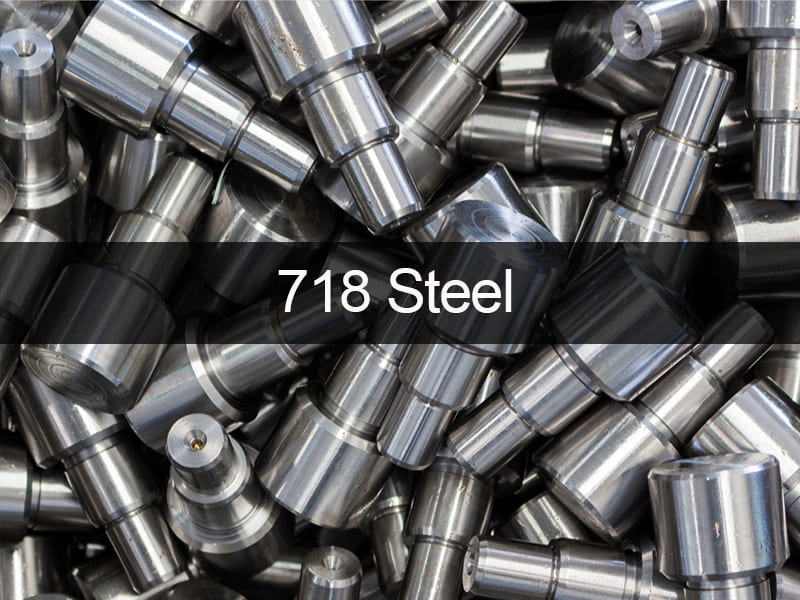
718 çeliği, genellikle plastik enjeksiyon kalıpları yapmak için kullanılan ön sertleştirilmiş bir alaşım çeliğidir; özellikle güçlü, tok ve boyut olarak kararlı olması gereken büyük ve orta boy kalıplar için. 718 çeliği, P20 tipi kalıp çeliklerinin geliştirilmiş bir versiyonudur. Daha iyi sertlik homojenliği, işlenebilirlik ve parlatma performansına sahiptir; bu da onu karmaşık ve yüksek hassasiyetli kalıp uygulamaları için en iyi seçim haline getirir.
Mühendislik açısından bakıldığında, 718 çeliği kalıp yapımında ortaya çıkan bir dizi sorunu çözer: ısıl işlem sırasındaki distorsiyonu azaltır, teslim sürelerini hızlandırır ve kalın kalıp bloklarının mekanik özelliklerini tutarlı tutar. Bu makale, 718 çeliğinin kimyasal yapısını, mekanik ve fiziksel özelliklerini, işlenebilirliğini, ısıl işlem davranışını ve yaygın mühendislik kullanımlarını inceler. Bu bilgiler, kalıp tasarımcılarının, takım mühendislerinin ve satın alma ekiplerinin sadece bir kalite seçmek yerine gerçek üretim ihtiyaçlarına göre malzeme seçmelerine yardımcı olacaktır.
718 Çeliği Nedir ve Nasıl Sınıflandırılır?
Malzeme Tanımı ve Sektördeki Konumu
718 çeliği, özellikle plastik enjeksiyon kalıplama endüstrisi için geliştirilmiş, ön sertleştirilmiş, düşük alaşımlı bir takım çeliğidir. Metalurjik açıdan, P20-modifiye ailesine aittir.
-
Temel Referans: Standart P20 (DIN 1.2311) küçük kalıplar için mükemmeldir ancak kalın blokların merkezinde (kesitler >400mm) “sertlik düşüşü” sorunu yaşar.
-
718 Çözümü: Yaklaşık 1% Nikel, eklenmesiyle 718 çeliği sertleşebilirliği. artırır. Bu, 600mm kalınlığındaki bir bloğun yüzeyden çekirdeğe kadar tutarlı bir mikro yapıya ve sertliğe sahip olmasını sağlar.
Yaygın Standartlar ve Tanımlamalar
Mühendisler ve satın alma yöneticileri 718 ile çeşitli uluslararası tanımlamalar altında karşılaşacaktır. Kimyasal olarak benzer olsalar da, spesifik haddeleme işlemi farklılık gösterebilir.
Tablo 1: 718 Kalıp Çeliği için Uluslararası Tanımlamalar
| Bölge / Standart | Tanımlama | Mühendislik Notları |
| Çin (GB) | 3Cr2NiMo | Kimyasal bileşim standardı. |
| Avrupa (DIN/EN) | 1.2738 | Büyük kalıp tabanları için birincil Avrupa standardı. |
| ABD (AISI) | P20 + Ni | Genellikle genel olarak “P20 artı Nikel” şeklinde belirtilir.” |
| Sektör Adı | 718 / 718H | “718” genellikle 28–34 HRC'yi ifade eder; “718H” 34–38 HRC'yi ifade eder. |
Mühendislik Paket Servisi: 718, kalıp çeliği seçiminde “ideal noktayı” işgal eder. Büyük veya parlak parçalar için P20'den daha iyi performans sunar ancak NAK80 gibi çökelme sertleştirmeli çeliklerden veya S136 gibi paslanmaz kalitelerden önemli ölçüde daha kolay işlenir ve daha ucuzdur.
Kimyasal Bileşim Nedir ve Alaşım Elementlerinin Rolü Nedir?
718 çeliğinin standart P20'ye göre performans avantajları, spesifik alaşım tasarımına dayanmaktadır. Sadece sertlik eklemekle ilgili değil, eklemekle ilgilidir tekdüzelik.
Tablo 2: Tipik Kimyasal Bileşim (ağırlıkça %)
| Element | Tipik Aralık | Birincil Mühendislik Rolü |
| Karbon (C) | 0.30 – 0.40 | Temel mukavemet sağlar ve martenzitik/bainitik yapıyı mümkün kılar. |
| Krom (Cr) | 1.40 – 2.00 | Sertleşebilirliği artırır ve orta düzeyde korozyon direnci sağlar. |
| Nikel (Ni) | 0.80 – 1.20 | Temel Farklılaştırıcı. Tokluğu ve derin sertleşebilirliği artırır. |
| Molibden (Mo) | 0.30 – 0.55 | Temper gevrekleşmesini önler ve sıcaklıkta mukavemeti korur. |
| Manganez (Mn) | 0.80 – 1.00 | Deoksidan; sertleşebilirliğe katkıda bulunur. |
| Silisyum (Si) | 0.20 – 0.40 | Deoksidizer. |
Kalıp Çeliğinde Nikel (Ni) Neden Önemlidir
Nikel ilavesi 718'in tanımlayıcı özelliğidir. Standart çeliklerde, büyük bir bloğun merkezindeki soğuma hızı, sert bir mikro yapı oluşturamayacak kadar yavaştır ve yumuşak noktalar oluşur.
-
Sertleşebilirlik: Nikel, soğuma sırasında daha yumuşak perlit fazlarının oluşumunu bastırır. Bu, istenen sert mikro yapının (martenzit/bainit) devasa bir bloğun yavaş soğuyan merkezinde bile oluşmasını sağlar.
-
Parlatılabilirlik: Homojen bir mikro yapı eşit şekilde parlatılır. P20 genellikle ayna parlatma sırasında “portakal kabuğu” veya dalgalanma oluşturan segregasyon bantlarına sahiptir. 718’in homojenliği bu riski önemli ölçüde azaltır.
Mekanik ve Fiziksel Özellikler Nelerdir?
For mold designers, the mechanical properties of 718 steel define the mold’s lifespan, resistance to clamping forces, and ability to withstand injection pressures.
Mechanical Properties (Pre-Hardened Condition)
718 is almost exclusively used in the quenched and tempered condition supplied by the mill.
Table 3: Typical Mechanical Properties (at Room Temperature)
| Mülkiyet | Değer (Tipik) | Mühendislik Yorumu |
| Sertlik | 32 – 38 HRC | Machinable with carbide tools; hard enough to resist general wear. |
| Çekme Dayanımı | ~1000 – 1150 MPa | High resistance to mold plate cracking under clamping pressure. |
| Akma Mukavemeti | ~850 – 950 MPa | Prevents plastic deformation of parting lines (flash). |
| Uzama | > 13% | Good toughness; resists cracking at sharp internal corners. |
| Impact Energy | > 20 J (Charpy V) | Sufficient shock resistance for rapid mold cycling. |
Physical Properties for Thermal Analysis
Understanding thermal properties is vital for calculating cooling cycle times and thermal expansion in multi-material molds (e.g., combining 718 with Beryllium Copper inserts).
-
Yoğunluk: 7,85 g/cm³
-
Termal İletkenlik: ~29.0 W/m·K (at 20°C). Note: This is moderate. For faster cycles, Cu-Be inserts are often added to 718 cores.
-
Coefficient of Thermal Expansion: ~12.5 µm/m·°C (20–200°C).
Is Heat Treatment Necessary for 718 Steel?
One of the most frequent questions from procurement teams is whether 718 requires heat treatment after machining. The general engineering answer is No.
The “As-Delivered” Advantage
718 is sold as “Pre-Hardened.” This is a massive logistical advantage.
-
No Distortion: Because the steel is already hardened, mold makers can machine pockets, drill water lines, and finish the mold to final tolerance without sending it out for heat treatment. There is no risk of the mold warping or cracking during a quench.
-
Immediate Polishing: Once machined, the mold is ready for EDM and polishing immediately.
Can You Re-Harden 718?
Technically, yes, but it is not recommended.
-
Risk: Heating 718 to austenitizing temperatures (approx. 850°C) and quenching it will destroy the precision dimensions achieved during machining.
-
Hardness Ceiling: Even with aggressive quenching, 718 will rarely exceed 50-52 HRC, and it becomes brittle. If higher hardness is required, engineers should select a different steel (like H13 or 8407) from the start.
Surface Hardening (Nitriding)
While bulk hardening is avoided, Nitrürleme is an excellent option for 718.
-
Süreç: Gas or Ion Nitriding at temperatures below the tempering point (approx. 500°C).
-
Sonuç: Creates a hard surface skin (~60-65 HRC equivalent) for wear resistance against abrasive glass-filled plastics, without distorting the core of the mold.
How Does 718 Perform in Machining and Polishing? (DFM)
For manufacturing engineers, the machinability of 718 is a critical factor in quoting and scheduling.
CNC Machining Characteristics
-
İşlenebilirlik Derecesi: Good. It machines similarly to P20 but requires slightly more power due to the higher toughness from Nickel.
-
Aletler: Coated carbide tools (TiAlN) are standard. High-Speed Steel (HSS) tools will wear rapidly.
-
Uniformity: The key benefit of 718 in machining is the lack of “hard spots.” The uniform structure allows for consistent cutting speeds and feeds, allowing lights-out machining reliability.
EDM (Elektriksel Deşarj İşleme)
718 performs excellently in EDM. The homogeneous structure produces a stable, even recast layer (white layer).
-
En İyi Uygulama: The recast layer must be removed via grinding or stoning, as it is brittle and can initiate cracks or fatigue failure on the mold surface.
Polishing and Photo-Etching
-
Parlatma: 718 creates a high-gloss finish (SPI A2 or A3) much easier than P20. The vacuum degassing and low sulfur content (typically <0.005%) prevent “pinholes” and “comet tails” during diamond polishing.
-
Texturing: The uniform grain structure allows for consistent acid etching performance. Textures come out crisp and uniform without the streaking found in lower-grade steels.
What Are the Typical Engineering Applications?
718 steel is the workhorse for applications where size, toughness, and finish intersect.
-
Large Plastic Injection Molds:
-
Automotive bumpers, dashboards, and door panels.
-
TV casings and large appliance housings (washing machines, AC units).
-
Why? Only 718 guarantees hardness at the center of these massive blocks.
-
-
High-Gloss Cosmetic Parts:
-
Consumer electronics housings, game consoles.
-
Why? Requires a polish better than P20 but cheaper than NAK80.
-
-
Compression Molds:
-
Rubber and SMC (Sheet Molding Compound) molds.
-
-
Mold Bases:
-
For extremely high-precision molds where standard structural steel (S50C) is too soft or unstable, 718 is used for the mold base plates to ensure rigidity.
-
718 Steel vs. Other Mold Steels: A Decision Matrix
Selecting the right mold steel is a trade-off analysis. Here is how 718 compares to its primary competitors.
718 vs. P20 (1.2311)
-
Difference: P20 lacks Nickel.
-
Performans: P20 loses hardness in the center of blocks thicker than 100-200mm. 718 maintains hardness up to 400mm+.
-
Selection: Use P20 for small, non-critical molds to save money. Use 718 for large molds or parts requiring a uniform textured/polished finish.
718 vs. NAK80
-
Difference: NAK80 is a precipitation-hardening steel (40 HRC) that is even cleaner and harder.
-
Performans: NAK80 polishes to a superior mirror finish (optical grade) but is harder to machine and significantly more expensive.
-
Selection: Use NAK80 for small, optical-grade inserts (lenses). Use 718 for the main mold body or larger housings where optical clarity isn’t required.
718 vs. S136 (420 Stainless)
-
Difference: S136 is stainless; 718 is not.
-
Performans: 718 will rust if exposed to moisture or corrosive plastics (PVC). S136 resists corrosion.
-
Selection: Use S136 for medical, food, or PVC molds. Use 718 for general plastics (ABS, PP, PE) where corrosion is not a major threat.
Table 4: Mold Steel Comparison Matrix
| Özellik | 718 (1.2738) | P20 (1.2311) | NAK80 | S136 |
| Sertlik (HRC) | 30 – 38 | 28 – 32 | 37 – 43 | 48 – 52 (Post-HT) |
| Through-Hardenability | Mükemmel | Poor (Thick sections) | Mükemmel | İyi |
| Polishability | Çok iyi | İyi | Best (Mirror) | Best (Mirror) |
| Korozyon Direnci | Düşük | Düşük | Düşük | High (Stainless) |
| İşlenebilirlik | İyi | Mükemmel | Adil | Adil |
| Maliyet | Orta | Düşük | Yüksek | Yüksek |
What Are the Limitations and Failure Modes?
Despite its versatility, 718 steel has clear engineering boundaries.
1. Not Corrosion Resistant
718 is not stainless steel.
-
Risk: If molding corrosive plastics like PVC (which releases hydrochloric acid) or POM, or if operating in a humid environment, 718 will rust. This ruins polished surfaces and causes part ejection issues.
-
Çözüm: Chrome plating the mold cavity or switching to S136.
2. Not for Abrasive Wear
While tough, 38 HRC is relatively soft compared to hardened tool steels (50+ HRC).
-
Risk: Molding glass-filled materials (e.g., PA66 + 30% GF) will wash out the gate areas and textures rapidly.
-
Çözüm: Use H13 hardened inserts in high-wear areas within a 718 mold base.
3. Weldability Challenges
Welding 718 for repairs (e.g., fixing a machining error or flash area) requires strict protocols.
-
Risk: The weld zone may harden differently than the base metal, leaving a “ghost line” or visible mark after texturing/polishing.
-
Çözüm: Use matching chemical filler rods, preheat the mold, and perform post-weld tempering.
Summary — Engineering Takeaways for 718 Steel
718 steel is the backbone of the large-scale plastic molding industry. It solves the critical problem of ensuring consistent hardness deep inside massive steel blocks, a feat standard P20 cannot match.
Key Recommendations:
-
Select 718 for medium-to-large molds (automotive bumpers, appliance housings) where size stability and toughness are paramount.
-
Upgrade from P20 if you need a high-gloss polish or uniform photo-etching texturing.
-
Do not re-harden. Use the material in its pre-hardened state to guarantee dimensional accuracy.
-
Watch the Environment. If corrosion (PVC/Humidity) or abrasion (Glass Fiber) is a factor, plate the mold or switch to specialized stainless/tool steels.
By aligning the material choice with the specific requirements of the mold size and the plastic resin, engineers can leverage 718 steel to reduce lead times and ensure consistent part quality.
Sıkça Sorulan Sorular
Q: Is 718 steel the same as Inconel 718?
A: Hayır. Inconel 718 is a nickel-based superalloy for jet engines, costing 20x more. “718 Mold Steel” is a low-alloy tool steel (DIN 1.2738). They share a number but nothing else.
Q: Can 718 steel be polished to a mirror finish?
A: Evet. It can achieve a high-gloss finish (approx. SPI A2). While not “optical grade” like NAK80 or S136, it is sufficient for most glossy consumer parts.
Q: Does 718 steel rust?
A: Evet. It contains very little chromium. It requires rust preventatives during storage and must be kept dry. Cooling channels should be treated to prevent internal rusting.
Q: What is the difference between 718 and 718H?
A: 718H is simply a variant heat-treated to a slightly higher hardness range (typically 34–38 HRC) compared to standard 718 (30–34 HRC). The “H” stands for Hard. 718H offers slightly better wear resistance and polishability.
Q: Is 718 suitable for die casting molds?
A: Hayır. 718 cannot withstand the thermal shock of molten aluminum or zinc (die casting). For die casting, use H13 (SKD61) hot-work tool steel.


