
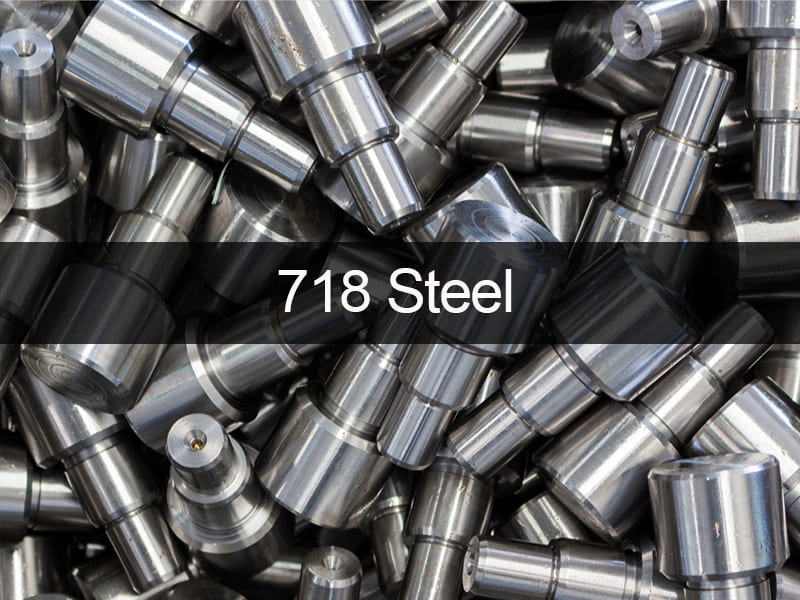
Сталь 718 — это предварительно закалённая легированная сталь, которую часто используют для изготовления пресс-форм для литья пластмасс, особенно для крупных и средних форм, которым необходимы прочность, вязкость и стабильность размеров. Сталь 718 является улучшенной версией штамповых сталей типа P20. Она обладает лучшей однородностью твёрдости, обрабатываемостью и полируемостью, что делает её оптимальным выбором для сложных и высокоточных применений в производстве пресс-форм.
С инженерной точки зрения сталь 718 решает ряд проблем, возникающих при изготовлении пресс-форм: она снижает деформацию при термической обработке, сокращает сроки производства и обеспечивает однородность механических свойств толстых блоков пресс-форм. В данной статье рассматриваются химический состав, механические и физические свойства, обрабатываемость, поведение при термической обработке и типовые инженерные применения стали 718. Эта информация поможет конструкторам пресс-форм, технологическим инженерам и отделам закупок выбирать материалы исходя из реальных производственных потребностей, а не просто по марке стали.
Что такое сталь 718 и как она классифицируется?
Определение материала и его место в отрасли
Сталь 718 — это предварительно закалённая низколегированная инструментальная сталь, разработанная специально для индустрии литья пластмасс под давлением. С металлургической точки зрения она принадлежит к модифицированному P20 семейству.
-
Базовый уровень: Стандартная P20 (DIN 1.2311) отлично подходит для небольших пресс-форм, но страдает от “падения твёрдости” в центре толстых блоков (сечением >400 мм).
-
Решение 718: За счёт добавления примерно 1% никеля, сталь 718 улучшает прокаливаемость. Это гарантирует, что блок толщиной 600 мм имеет однородную микроструктуру и твёрдость от поверхности до сердцевины.
Распространённые стандарты и обозначения
Инженеры и менеджеры по закупкам встречают сталь 718 под различными международными обозначениями. Хотя их химический состав схож, конкретная обработка на металлургическом заводе может различаться.
Таблица 1: Международные обозначения штамповой стали 718
| Регион / Стандарт | Обозначение | Инженерные примечания |
| Китай (GB) | 3Cr2NiMo | Стандарт химического состава. |
| Европа (DIN/EN) | 1.2738 | Основной европейский стандарт для крупных блоков пресс-форм. |
| США (AISI) | P20 + Ni | Часто указывается обобщённо как “P20 плюс никель”.” |
| Отраслевое название | 718 / 718H | “718” обычно относится к 28–34 HRC; “718H” относится к 34–38 HRC. |
Инженерные выводы: Сталь 718 занимает “оптимальную позицию” при выборе штамповой стали. Она обеспечивает лучшие характеристики, чем P20, для крупных или глянцевых деталей, но при этом значительно легче в обработке и дешевле, чем стали с дисперсионным твердением, такие как NAK80, или нержавеющие марки, такие как S136.
Каков химический состав и роль легирующих элементов?
Преимущества стали 718 по сравнению со стандартной P20 обусловлены её специфическим легированием. Речь идёт не просто о повышении твёрдости, а о повышении однородности.
Таблица 2: Типичный химический состав (масс.%)
| Элемент | Типичный диапазон | Основная инженерная роль |
| Углерод (C) | 0.30 – 0.40 | Обеспечивает базовую прочность и способствует образованию мартенситной/бейнитной структуры. |
| Хром (Cr) | 1.40 – 2.00 | Повышает прокаливаемость и обеспечивает умеренную коррозионную стойкость. |
| Никель (Ni) | 0.80 – 1.20 | Ключевое отличие. Повышает вязкость и глубокую прокаливаемость. |
| Молибден (Mo) | 0.30 – 0.55 | Предотвращает отпускную хрупкость и сохраняет прочность при повышенных температурах. |
| Марганец (Mn) | 0.80 – 1.00 | Раскислитель; способствует прокаливаемости. |
| Кремний (Si) | 0.20 – 0.40 | Раскислитель. |
Почему никель (Ni) важен в штамповой стали
Добавление никеля является определяющей особенностью стали 718. В стандартных сталях скорость охлаждения в центре крупного блока слишком низкая для образования твёрдой микроструктуры, что приводит к мягким пятнам.
-
Прокаливаемость: Никель подавляет образование более мягких перлитных фаз при охлаждении. Это позволяет желаемой твёрдой микроструктуре (мартенсит/бейнит) формироваться даже в медленно охлаждающемся центре массивного блока.
-
Полируемость: Однородная микроструктура полируется равномерно. P20 часто имеет полосы ликвации, которые создают “апельсиновую корку” или волнистость при зеркальном полировании. Однородность стали 718 значительно снижает этот риск.
Каковы механические и физические свойства?
Для конструкторов пресс-форм механические свойства стали 718 определяют срок службы формы, сопротивление усилиям зажима и способность выдерживать давление впрыска.
Mechanical Properties (Pre-Hardened Condition)
718 is almost exclusively used in the quenched and tempered condition supplied by the mill.
Table 3: Typical Mechanical Properties (at Room Temperature)
| Недвижимость | Значение (типичное) | Инженерная интерпретация |
| Твердость | 32 – 38 HRC | Machinable with carbide tools; hard enough to resist general wear. |
| Прочность на разрыв | ~1000 – 1150 MPa | High resistance to mold plate cracking under clamping pressure. |
| Предел текучести | ~850 – 950 MPa | Prevents plastic deformation of parting lines (flash). |
| Удлинение | > 13% | Good toughness; resists cracking at sharp internal corners. |
| Impact Energy | > 20 J (Charpy V) | Sufficient shock resistance for rapid mold cycling. |
Physical Properties for Thermal Analysis
Understanding thermal properties is vital for calculating cooling cycle times and thermal expansion in multi-material molds (e.g., combining 718 with Beryllium Copper inserts).
-
Плотность: 7,85 г/см³
-
Теплопроводность: ~29.0 W/m·K (at 20°C). Note: This is moderate. For faster cycles, Cu-Be inserts are often added to 718 cores.
-
Coefficient of Thermal Expansion: ~12.5 µm/m·°C (20–200°C).
Is Heat Treatment Necessary for 718 Steel?
One of the most frequent questions from procurement teams is whether 718 requires heat treatment after machining. The general engineering answer is No.
The “As-Delivered” Advantage
718 is sold as “Pre-Hardened.” This is a massive logistical advantage.
-
No Distortion: Because the steel is already hardened, mold makers can machine pockets, drill water lines, and finish the mold to final tolerance without sending it out for heat treatment. There is no risk of the mold warping or cracking during a quench.
-
Immediate Polishing: Once machined, the mold is ready for EDM and polishing immediately.
Can You Re-Harden 718?
Technically, yes, but it is not recommended.
-
Риск: Heating 718 to austenitizing temperatures (approx. 850°C) and quenching it will destroy the precision dimensions achieved during machining.
-
Hardness Ceiling: Even with aggressive quenching, 718 will rarely exceed 50-52 HRC, and it becomes brittle. If higher hardness is required, engineers should select a different steel (like H13 or 8407) from the start.
Surface Hardening (Nitriding)
While bulk hardening is avoided, Азотирование is an excellent option for 718.
-
Процесс: Gas or Ion Nitriding at temperatures below the tempering point (approx. 500°C).
-
Результат: Creates a hard surface skin (~60-65 HRC equivalent) for wear resistance against abrasive glass-filled plastics, without distorting the core of the mold.
How Does 718 Perform in Machining and Polishing? (DFM)
For manufacturing engineers, the machinability of 718 is a critical factor in quoting and scheduling.
CNC Machining Characteristics
-
Оценка обрабатываемости: Good. It machines similarly to P20 but requires slightly more power due to the higher toughness from Nickel.
-
Инструменты: Coated carbide tools (TiAlN) are standard. High-Speed Steel (HSS) tools will wear rapidly.
-
Uniformity: The key benefit of 718 in machining is the lack of “hard spots.” The uniform structure allows for consistent cutting speeds and feeds, allowing lights-out machining reliability.
Электроэрозионная обработка (EDM)
718 performs excellently in EDM. The homogeneous structure produces a stable, even recast layer (white layer).
-
Лучшая практика: The recast layer must be removed via grinding or stoning, as it is brittle and can initiate cracks or fatigue failure on the mold surface.
Polishing and Photo-Etching
-
Полировка: 718 creates a high-gloss finish (SPI A2 or A3) much easier than P20. The vacuum degassing and low sulfur content (typically <0.005%) prevent “pinholes” and “comet tails” during diamond polishing.
-
Texturing: The uniform grain structure allows for consistent acid etching performance. Textures come out crisp and uniform without the streaking found in lower-grade steels.
Каковы типичные области применения в инженерии?
718 steel is the workhorse for applications where size, toughness, and finish intersect.
-
Large Plastic Injection Molds:
-
Automotive bumpers, dashboards, and door panels.
-
TV casings and large appliance housings (washing machines, AC units).
-
Why? Only 718 guarantees hardness at the center of these massive blocks.
-
-
High-Gloss Cosmetic Parts:
-
Consumer electronics housings, game consoles.
-
Why? Requires a polish better than P20 but cheaper than NAK80.
-
-
Compression Molds:
-
Rubber and SMC (Sheet Molding Compound) molds.
-
-
Mold Bases:
-
For extremely high-precision molds where standard structural steel (S50C) is too soft or unstable, 718 is used for the mold base plates to ensure rigidity.
-
718 Steel vs. Other Mold Steels: A Decision Matrix
Selecting the right mold steel is a trade-off analysis. Here is how 718 compares to its primary competitors.
718 vs. P20 (1.2311)
-
Difference: P20 lacks Nickel.
-
Производительность: P20 loses hardness in the center of blocks thicker than 100-200mm. 718 maintains hardness up to 400mm+.
-
Selection: Use P20 for small, non-critical molds to save money. Use 718 for large molds or parts requiring a uniform textured/polished finish.
718 vs. NAK80
-
Difference: NAK80 is a precipitation-hardening steel (40 HRC) that is even cleaner and harder.
-
Производительность: NAK80 polishes to a superior mirror finish (optical grade) but is harder to machine and significantly more expensive.
-
Selection: Use NAK80 for small, optical-grade inserts (lenses). Use 718 for the main mold body or larger housings where optical clarity isn’t required.
718 vs. S136 (420 Stainless)
-
Difference: S136 is stainless; 718 is not.
-
Производительность: 718 will rust if exposed to moisture or corrosive plastics (PVC). S136 resists corrosion.
-
Selection: Use S136 for medical, food, or PVC molds. Use 718 for general plastics (ABS, PP, PE) where corrosion is not a major threat.
Table 4: Mold Steel Comparison Matrix
| Особенность | 718 (1.2738) | P20 (1,2311) | NAK80 | S136 |
| Твердость (HRC) | 30 – 38 | 28 – 32 | 37 – 43 | 48 – 52 (Post-HT) |
| Through-Hardenability | Отлично | Poor (Thick sections) | Отлично | Хорошо |
| Возможность полировки | Очень хорошо | Хорошо | Best (Mirror) | Best (Mirror) |
| Коррозионная стойкость | Низкий | Низкий | Низкий | High (Stainless) |
| Обрабатываемость | Хорошо | Отлично | Ярмарка | Ярмарка |
| Стоимость | Средний | Низкий | Высокий | Высокий |
Каковы ограничения и возможные причины отказа?
Despite its versatility, 718 steel has clear engineering boundaries.
1. Not Corrosion Resistant
718 is not stainless steel.
-
Риск: If molding corrosive plastics like PVC (which releases hydrochloric acid) or POM, or if operating in a humid environment, 718 will rust. This ruins polished surfaces and causes part ejection issues.
-
Решение: Chrome plating the mold cavity or switching to S136.
2. Not for Abrasive Wear
While tough, 38 HRC is relatively soft compared to hardened tool steels (50+ HRC).
-
Риск: Molding glass-filled materials (e.g., PA66 + 30% GF) will wash out the gate areas and textures rapidly.
-
Решение: Use H13 hardened inserts in high-wear areas within a 718 mold base.
3. Weldability Challenges
Welding 718 for repairs (e.g., fixing a machining error or flash area) requires strict protocols.
-
Риск: The weld zone may harden differently than the base metal, leaving a “ghost line” or visible mark after texturing/polishing.
-
Решение: Use matching chemical filler rods, preheat the mold, and perform post-weld tempering.
Summary — Engineering Takeaways for 718 Steel
718 steel is the backbone of the large-scale plastic molding industry. It solves the critical problem of ensuring consistent hardness deep inside massive steel blocks, a feat standard P20 cannot match.
Key Recommendations:
-
Select 718 for medium-to-large molds (automotive bumpers, appliance housings) where size stability and toughness are paramount.
-
Upgrade from P20 if you need a high-gloss polish or uniform photo-etching texturing.
-
Do not re-harden. Use the material in its pre-hardened state to guarantee dimensional accuracy.
-
Watch the Environment. If corrosion (PVC/Humidity) or abrasion (Glass Fiber) is a factor, plate the mold or switch to specialized stainless/tool steels.
By aligning the material choice with the specific requirements of the mold size and the plastic resin, engineers can leverage 718 steel to reduce lead times and ensure consistent part quality.
Часто задаваемые вопросы
Q: Is 718 steel the same as Inconel 718?
A: Нет. Inconel 718 is a nickel-based superalloy for jet engines, costing 20x more. “718 Mold Steel” is a low-alloy tool steel (DIN 1.2738). They share a number but nothing else.
Q: Can 718 steel be polished to a mirror finish?
A: Да. It can achieve a high-gloss finish (approx. SPI A2). While not “optical grade” like NAK80 or S136, it is sufficient for most glossy consumer parts.
Q: Does 718 steel rust?
A: Да. It contains very little chromium. It requires rust preventatives during storage and must be kept dry. Cooling channels should be treated to prevent internal rusting.
Q: What is the difference between 718 and 718H?
A: 718H is simply a variant heat-treated to a slightly higher hardness range (typically 34–38 HRC) compared to standard 718 (30–34 HRC). The “H” stands for Hard. 718H offers slightly better wear resistance and polishability.
Q: Is 718 suitable for die casting molds?
A: Нет. 718 cannot withstand the thermal shock of molten aluminum or zinc (die casting). For die casting, use H13 (SKD61) hot-work tool steel.


