
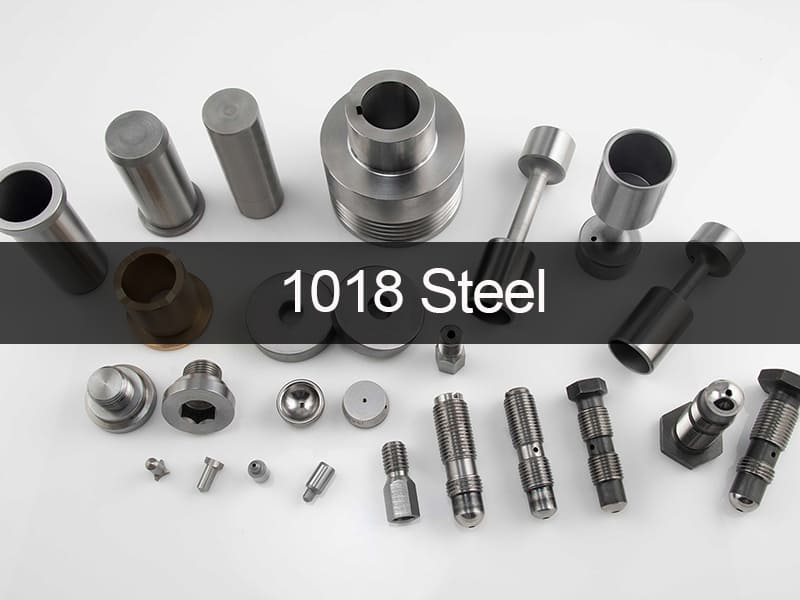
Mühendisler ve üreticiler öngörülebilir, ucuz ve her şeyle uyumlu bir malzemeye ihtiyaç duyduklarında genellikle 1018 çeliğini tercih ederler. 1018, düşük karbonlu bir çeliktir (genellikle yumuşak çelik olarak adlandırılır). Öne çıkmasını sağlayan tek bir uç özelliğe sahip olduğu için değil, çok çeşitli endüstriyel ihtiyaçları karşılayan işlenebilirlik, kaynaklanabilirlik ve mekanik tutarlılığın iyi bir karışımına sahip olduğu için seçilir.
Üretim söz konusu olduğunda, 1018 karbon çeliği CNC işleme, delme, tornalama ve frezeleme için iyi çalışır. Düşük karbon içeriğine sahiptir; bu, talaşların kararlı bir şekilde oluştuğu, takımların daha yavaş aşındığı ve özel takımlara veya agresif kesme ayarlarına ihtiyaç duymadan iyi bir yüzey kalitesi elde edildiği anlamına gelir. Aynı zamanda MIG ve TIG gibi yaygın yöntemlerle kolayca kaynaklanabilir, bu nedenle montajlar, çerçeveler ve işleme sonrası birleştirilmesi gereken parçalar için kullanılabilir.
1018“in ”genel" veya özensiz bir malzeme seçimi olmadığını unutmamak önemlidir. Mühendisler yüksek mukavemet, aşırı sertlik veya gelişmiş alaşım performansına ihtiyaç duymadıklarında bunu bilinçli olarak seçerler. 1018 çeliği, maliyet kontrolü, boyutsal tutarlılık ve üretim verimliliğinin en yüksek mekanik özelliklerden daha önemli olduğu miller, braketler, plakalar ve yapısal parçalar için daha uygundur.
Bu kılavuz 1018 çeliğini üç farklı açıdan ele almaktadır: malzemenin temelleri, üretim sırasındaki davranışı ve mühendislik projeleri için seçilmesinin arkasındaki mantık. Bu, tasarımcıların, mühendislerin ve satın alma ekiplerinin yalnızca ne olduğunu değil, aynı zamanda ne zaman ve neden kullanılmasının mantıklı olduğunu anlamalarına yardımcı olacaktır.
1018 Çeliği Nedir? — Sınıflar için Standartlar ve Tanımlar
Dünyada en yaygın soğuk haddelenmiş çelik sınıfı 1018 çeliğidir. AISI/SAE karbon çeliği sınıflandırma sisteminin bunun için bir tanımı vardır.
-
“10”: Bu, çeliğin sade karbon çeliği olduğu ve herhangi bir önemli alaşım elementi içermediği anlamına gelir.
-
“18” karbon içeriğinin yaklaşık %0,18% olduğu anlamına gelir.
1018 kesinlikle yumuşak çeliktir çünkü karbon seviyesi çok düşüktür. “Yumuşak çelik” mühendislik alanında düşük kalite anlamına gelmez. Bunun yerine, sünek, şekillendirilebilir ve kaynaklanabilir kalması için üretilen çelikleri ifade eder; bu, kırılgan olan yüksek karbonlu sınıflar için geçerli değildir.
Küresel Standartlar ve Eşdeğerleri
1018, uluslararası tedarik için bu standartlara benzerdir:
-
UNS: G10180
-
ASTM: A108 (Soğuk işlenmiş çelik çubuklar, karbon ve alaşım standardı)
-
EN / DIN: C15E / 1.1141
-
JIS: S15C veya S20C
Mühendislik İçgörüsü: 1018, A36 gibi yapısal çelik sınıflarından farklıdır çünkü onu tanımlayan şey akma dayanıcıdır. Bu, davranışı daha kararlı ve öngörülebilir olduğu için dar toleranslı parçaların işlenmesini kolaylaştırır.
1018 çeliğinin kimyasal yapısı ve bunun mühendislik için anlamı
1018“in neden bu şekilde davrandığını anlamak için kimyayı bilmeniz gerekir. İşlemenin her zaman aynı olmasını sağlamak için az safsızlık içeren ”temiz" bir kimya gerektirir.
Tablo 1: Yaygın Kimyasal Bileşim (ağırlıkça%)
| Element | Ortalama Miktar | Mühendislik Rolü |
| Karbon (C) | 0.15–0.20 | Ana sertleştirici. Süneklik ve kaynaklanabilirliği garanti etmek için düşük tutulur. |
| Manganez (Mn) | 0.60–0.90 | Sertleşebilirliği ve çekme dayanımını artırır; deoksidasyona yardımcı olur. |
| Fosfor (P) | ≤ 0,040 | Safsızlık. Kırılganlığı önlemek için düşük seviyede tutulur. |
| Sülfür (S) | ≤ 0,050 | Safsızlık. Kaynaklanabilirliği korumak için düşük tutulur (ancak biraz daha yüksek kükürt işlemeye yardımcı olur). |
| Demir (Fe) | Denge | Metal esası. |
Düşük karbon içeriğine sahip olmanın neden önemli olduğu
%0,18% karbon içeriği çoğu üretim türü için “Goldilocks” bölgesidir:
-
Kaynak için harika: Düşük karbon, Isıdan Etkilenen Bölgede (HAZ) kırılgan martenzit oluşma olasılığını azaltır, bu nedenle ön ısıtmaya gerek yoktur.
-
Kırılmadan bükülebilecek, haddelenebilecek veya dövülebilecek kadar sünektir.
-
Sementasyon Potansiyeli: Tamamen sertleştirilemez (su verme ve temperleme), ancak karbürleme için mükemmel bir adaydır; bu, tok bir çekirdeği korurken aşınmaya direnen sert bir dış kabuk oluşturur.
Ferrit–Perlit Mikroyapısı Nedir?
1018 çeliğinin mikroyapısı, bir mühendis olarak nasıl davrandığını anlamanın en iyi yoludur.
1018, oda sıcaklığında aşağıdakilerden oluşur:
-
Ferrit: (Açık taneler) Saf olan demir. Yumuşak, esnek ve manyetiktir. Matrisin çoğunu bu oluşturur.
-
Perlit: (Koyu taneler) Sementit (demir karbür) ve ferrit katmanları. Bu ona mukavemet kazandırır.
Karbon düşük olduğu için fazla perlit yoktur. Çoğunlukla ferritten oluşan bu yapı, 1018'in neden
-
Serbest işlenebilir: Yumuşak ferrit, talaşların kolayca oluşmasını sağlar.
-
Kırılgan değil: Instead of spreading, cracks tend to dull in the soft ferrite.
Drawing in the cold vs. rolling in the hot
The processing method affects how the grain structure works:
-
Hot Rolled 1018: The grains are all the same size (random). Less stress, but more room for error in dimensions.
-
Cold Drawn 1018: The grains get longer in the direction of drawing. This strain-hardening makes the yield strength and surface hardness much higher and makes the dimensions more accurate (straightness and diameter). Cold drawn bars are what most people use for machining.
Physical Properties of 1018 Steel
Engineers don’t often choose 1018 for jobs that put a lot of stress on it. It is chosen because it is reliable in jobs with low to medium stress.
Common Values for Mechanical Properties (Cold Drawn)
Table 2: Properties of Mechanics
| Mülkiyet | Değer (Tipik) | Interpretation of Engineering |
| Çekme Dayanımı | ~440–485 MPa (64–70 ksi) | Good enough for general structural use. |
| Akma Mukavemeti | ~370 MPa (54 ksi) | Cold work makes it much stronger than Hot Rolled (about 30 ksi). |
| Esneme hareketleri | 15–20% | Good ductility; it will bend before it breaks. |
| Sertlik | about 126 HB (Brinell) | Soft enough for machining at very high speeds. |
| İşlenebilirlik | about 70% (B1112 = 100%) | This is what people think of as the standard for “good” machinability in steel. |
Important Design Point: Cold drawing makes the yield strength almost 50% higher than hot rolling. Always specify Cold Finished (CF) 1018 if you are making a shaft that needs to be strong against bending.
Fiziksel Özellikler
-
Yoğunluk: 7,87 g/cm³
-
Modulus of elasticity: 200 GPa (29,000 ksi). Keep in mind that 1018 is just as stiff as high-strength alloy steels. Changing the shape of the steel will not reduce deflection; only using a stronger steel will.
How easy it is to machine and how it works with CNC
A lot of people think that 1018 is one of the easiest steels to work with. It is the steel that most people use to compare other steels to.
Why 1018 Is Simple to Machine
-
Stable Chip Formation: The ferrite-pearlite structure makes chips break fairly well, but they can be “gummy” compared to leaded steels like 12L14.
-
Not abrasive: so it doesn’t wear out tools quickly. Standard high-speed steel (HSS) or uncoated carbide tools last a long time.
-
Tutarlılık: Unlike A36, this grade is chemically defined, so machinists don’t run into “hard spots” in the material.
Guidelines for CNC Machining
-
Dönüyorum: Works well at medium speeds. If the finish is tearing because it’s too sticky, raise the surface speed (SFM) and make sure the tool nose radius is sharp.
-
Drilling: It drills very easily. For deep holes, it is best to use peck drilling to get rid of the chips that keep coming back.
-
Soğutma sıvısı: A regular water-soluble coolant is enough to keep the heat down and get rid of chips.
Stability of Dimensions Note: Cold-drawn 1018 has residual stresses from the drawing process. If you cut a keyway into a long shaft, the shaft might bend as the stresses are released. Think about stress-relieved stock or turning between centers for shafts that need to be very precise.
Things to think about when welding and making
1018 is the “friend of the welder.” Some people say that it is the most weldable carbon steel on the market.
Why It Sticks Together So Well
The low carbon content (<0.20%) stops the weld zone from forming hard, brittle martensite as the metal cools.
-
Preheat: Not usually needed for parts that are less than 2 inches thick.
-
Not needed: Post-Weld Heat Treat (PWHT).
-
Processes: Works great for MIG (GMAW), TIG (GTAW), Stick (SMAW), and oxy-acetylene welding.
Tips for Making
-
Bending: It’s harder to bend cold drawn 1018 than hot rolled. Use hot rolled or annealed stock to keep the outer radius from cracking when you need tight radius bends.
-
Welding adds heat, which changes the shape. Heavy welding on one side of a plate can cause it to warp because 1018 is often used in forms that don’t relieve stress.
Different Ways to Heat Treat 1018 Steel
1018 can’t be “hardened” in the usual way (by quenching and tempering) to get a strong core, but it is the best material for Surface Hardening.
Carburizing (hardening the case)
1018 doesn’t have enough carbon to harden on its own, so carbon needs to be added to the surface.
-
Süreç: Heat the part in an atmosphere that is rich in carbon. Carbon spreads out into the case’s outer layer.
-
Quench: Cool the part down quickly. The case, which has a lot of carbon in it, gets very hard (Rc 55-60), but the core, which has less carbon in it, stays tough and flexible.
Kullan: Gears, pins, and wear plates where a hard surface resists wear and a tough core keeps the part from breaking when it hits something.
Normalizing vs. Annealing
-
Annealing: This makes the steel as soft as it can be for shaping.
-
Normalizing: Makes the grain structure more even by refining it. This is often done to 1018 forgings to make sure that the machining is always the same.
Common Uses of 1018 Steel in Manufacturing
1018 is the “utility player” of metals.
-
Shafts and pins are the most common uses for Cold Drawn 1018 bar. Shafts for pumps, motors, and locating pins.
-
Fixtures and jigs: These are used a lot in machine shops to make base plates, clamps, and setup blocks.
-
Low-strength bolts, studs, and tie rods are examples of fasteners.
-
Structural Brackets: Mounting brackets that are welded together for machines.
-
Carburized Parts: Cheap ratchets, gears, and sprockets.
Which one should you pick, 1018 steel or A36?
This is the most common mistake. A36 is the standard for structural shapes like I-beams and angles, while 1018 is the standard for bar stock.
Table 3: A36 vs. 1018 Comparison
| Özellik | 1018 Çeliği | A36 Steel | Choice Definition of Logic |
| Tanım | Chemical Makeup | Yield is a mechanical property. | 1018 guarantees chemistry, and A36 guarantees strength. |
| Finish on the Surface | Cold Drawn: Smooth and Shiny | Rough and scaly (hot rolled) | Use 1018 for parts that need to be precise or seen. |
| İşlenebilirlik | Consistent, good | inconsistent (“hard spots”) | Use 1018 for CNC parts. |
| Form Availability | Bar, rod, wire | plate, beam, and angle | A36 is the most common type of structural shape. |
| Price | A Little Higher | En düşük | A36 is steel for bulk construction. |
The Rule for Making Decisions:
-
Are you machining a part that needs to be very precise, like a shaft or bolt? -> Pick 1018.
-
Are you welding a table or building frame? -> Pick A36.
When NOT to Use 1018 Steel: Design Limitations
1018 is flexible, but it has its limits.
-
High Strength Needed: If you need a high yield strength but don’t want a lot of bulk, switch to 1045 (medium carbon) or 4140 (alloy steel). 1018 will just bend.
-
Through-Hardening: 1018 can’t make the whole part hard, only the surface. Use tool steel or 4140.
-
Resistance to Corrosion: 1018 rusts right away in humid conditions. If you can’t paint or plate it, use 304 stainless steel or aluminum instead.
-
High Fatigue Loads: 1018 is not a good choice for cyclic parts that are under a lot of stress (like crankshafts) because it has less strength and more impurities.
Summary: What engineers should know about 1018 steel
1018 steel is the safe and cheap standard for engineering design.
-
İşlenebilirlik: It is the standard for CNC turning and milling that can be counted on.
-
Fabrication: It is easy to weld without any complicated steps.
-
Surface Hardening: Carburizing makes parts that are very resistant to wear.
-
Fiyat: It is one of the least expensive metals you can buy.
En İyi Uygulama: For shafts, pins, and other machined parts, use 1018 Cold Drawn bar. Use 1018 Hot Rolled only if the surface finish doesn’t matter or if you plan to do a lot of welding. If you need more strength, use 1045 or 4140.
Sıkça Sorulan Sorular
Q: Can you weld 1018 steel?
A: Yes, very good. Because it has a low carbon content, it is one of the easiest steels to weld. For most uses, it doesn’t need to be heated before or after welding.
Q: Does 1018 steel get rusty?
A: Yes, very quickly. It doesn’t resist rust. To keep it from rusting, it needs to be painted, powder-coated, zinc-plated, or oiled.
Q: What’s the difference between 1018 and 1045?
A: The amount of carbon. There is about 0.18% carbon in 1018 and about 0.45% carbon in 1045. 1045 is stronger and can be hardened all the way through, but it is harder to weld and work with.
Q: Is it possible to harden 1018 steel?
A: You can’t through-harden it (quench and temper) because it doesn’t have enough carbon. You can only case harden (carburize) it to make the outside hard while keeping the inside soft.
Q: Is 1018 better than A36?
A: Yes, 1018 is cleaner and more consistent for machining. A36 is usually cheaper and good enough for structural welding, like making a rack.


