
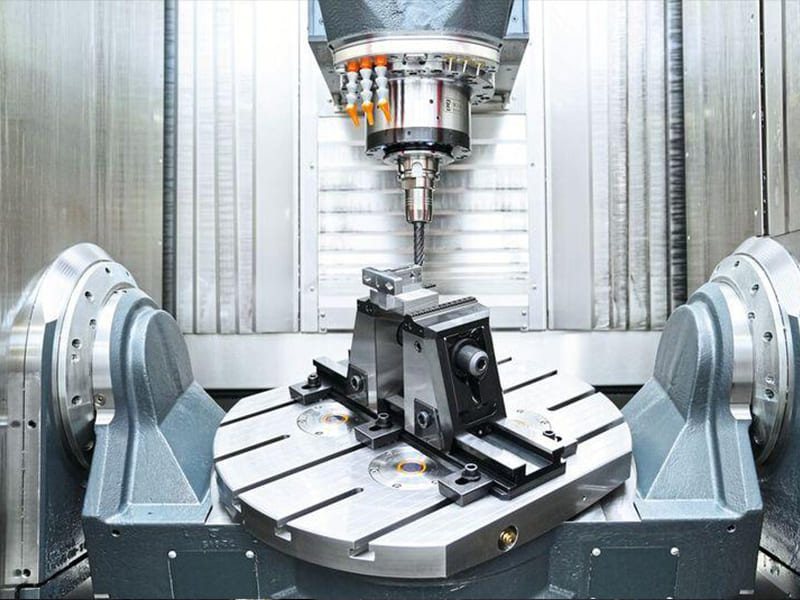
CNC machining is a digitally controlled approach to precision material removal that directly translates CAD data into repeatable, high-accuracy parts. This tight link between design and automated execution is what sets CNC machining apart from manual processes and makes it central to modern manufacturing.
Beyond producing precise geometry, CNC machining shapes engineering and sourcing decisions by affecting material choice, tolerances, lead time, and cost. Understanding how CNC machining influences manufacturability and production risk helps teams decide when it is the right process and how to use it effectively for custom and scalable production.
What Is CNC Machining? Definition and Core Principles
CNC machining refers to a manufacturing process in which machine tools are controlled by digital instructions generated from computer-based models. From an engineering perspective, CNC (Computer Numerical Control) is not simply automation, but a closed-loop system that converts design data into precise, repeatable physical motion. Tool position, feed rate, spindle speed, and cutting paths are all defined numerically, minimizing variability introduced by manual operation.
At its core, CNC machining belongs to subtractive manufacturing, meaning material is selectively removed from a solid workpiece to achieve the desired geometry. Unlike formative or additive processes, CNC machining starts with stock material—such as bar, plate, or billet—and removes excess material through controlled cutting. This approach makes CNC machining particularly well suited for tight tolerances, well-defined datums, and functional interfaces where dimensional accuracy directly affects assembly and performance.
From a manufacturing standpoint, the defining advantage of CNC machining lies in the separation of human judgment from execution. Engineers define intent in CAD and CAM software; machines execute that intent with consistent precision. This distinction has significant downstream effects: process repeatability improves, quality becomes more measurable, and production risk shifts from operator skill to engineering decisions such as tool selection, fixturing, and programming strategy.
The following sections break down the core principles behind CNC machining, starting with how computer numerical control works in practice, and why subtractive manufacturing remains critical despite the rise of alternative production technologies.
Computer Numerical Control Explained
Computer numerical control uses coded instructions (commonly G-code) to command machine movements along multiple axes. Each motion is defined numerically, enabling precise interpolation, synchronization, and automation that are not achievable through manual control alone.
Subtractive Manufacturing vs Other Processes
As a subtractive process, CNC machining prioritizes dimensional control and surface integrity. Compared with additive or forming methods, it offers superior tolerance consistency, predictable material properties, and greater flexibility for custom parts with complex functional requirements.
How Does CNC Machining Work? From CAD to Finished Parts
CNC machining is often described as a linear workflow—CAD to CAM to machine—but in practice it is a closed engineering system where design intent, process planning, and machine behavior continuously interact. Understanding this chain is critical for engineers and buyers because most cost, lead-time, and quality risks originate not at the machine, but upstream in digital decisions.
The workflow begins with a digital model, but the finished part is the result of how effectively that model is translated into controlled cutting motion. Every tolerance, surface requirement, and geometric feature must survive multiple interpretation layers: software, post-processing, machine dynamics, tooling, and fixturing. CNC machining succeeds when these layers are aligned.
CAD Modeling and Design Intent
In CNC machining, CAD is not just geometry—it encodes конструкторский замысел. Wall thickness, fillet radii, hole depths, datum selection, and tolerance schemes directly influence tool accessibility and machining stability. For example, a sharp internal corner may be easy to draw but impossible to machine without secondary operations. Well-prepared CAD models anticipate subtractive constraints, reducing downstream rework and programming complexity.
CAM Programming and Toolpath Generation
CAM software converts geometry into toolpaths, defining how material is removed step by step. This is where engineering judgment dominates: tool selection, cutting strategy, step-over, depth of cut, and sequencing all affect surface quality, cycle time, and tool wear. Two CAM programs can machine the same CAD model with very different outcomes in terms of accuracy and cost, even on the same machine.
G-Code Execution and Machine Control
The CAM output is translated into G-код, which the CNC machine executes through coordinated axis motion. At this stage, machine rigidity, axis interpolation accuracy, spindle performance, and control algorithms determine how closely real cutting matches the digital plan. Tooling, fixturing, and machine calibration complete the system, turning numerical commands into physical parts.
This CAD–CAM–G-code chain explains why CNC machining is not merely automated cutting, but an engineering-driven manufacturing process where digital decisions directly shape real-world results.
Types of CNC Machines and Typical Machining Operations
CNC machining is not a single capability but a family of machine configurations, each with distinct geometric strengths and limitations. Selecting the appropriate machine type directly affects part feasibility, accuracy, cycle time, and overall cost. For engineers and procurement teams, understanding these differences is essential when evaluating manufacturability and supplier capability.
Фрезерные станки с ЧПУ
CNC milling machines remove material using rotating cutting tools, typically acting on stationary workpieces. Standard 3-axis milling allows movement along X, Y, and Z axes, making it suitable for prismatic parts with planar features, pockets, slots, and complex surface profiles. Milling excels at producing flat surfaces and complex contours, but internal features are constrained by tool diameter and access direction. As geometric complexity increases, multiple setups may be required, introducing alignment risk and additional cost.
CNC Turning and Lathes
CNC turning operates on a fundamentally different principle: the workpiece rotates while cutting tools remain stationary. This configuration is ideal for axisymmetric parts such as shafts, bushings, and threaded components. Turning delivers excellent concentricity and surface finish on cylindrical features with high efficiency. However, its geometry is inherently rotational, and non-axisymmetric features often require secondary milling operations or live tooling.
Multi-Axis Machining Centers
Multi-axis machining centers—4-axis and 5-axis systems—extend capability by allowing the tool or workpiece to rotate during cutting. This enables simultaneous multi-directional access, reducing setups and improving positional accuracy for complex geometries. Five-axis machining is particularly valuable for parts with compound angles, deep cavities, or tight tolerance relationships across multiple faces. The trade-off is higher programming complexity and machine cost, which must be justified by part geometry and volume.
In practice, machine selection defines the upper boundary of achievable geometry, making it a critical engineering decision rather than a purely equipment choice.
CNC Machining Workflow: What Happens on the Shop Floor
While CNC machining is digitally driven, actual part quality is determined on the shop floor. This is where programming decisions meet physical realities such as machine rigidity, tooling behavior, and workholding stability. Many manufacturing issues attributed to “machining errors” originate from setup and process control rather than code.
Machine Setup and Fixturing
Fixturing defines how a part is constrained during machining and directly impacts dimensional accuracy. A rigid, repeatable setup ensures that cutting forces are absorbed by the fixture rather than the part itself. Each additional setup increases cumulative tolerance stack-up and alignment risk, while also adding labor time. From an engineering standpoint, reducing the number of setups improves positional accuracy; from a procurement perspective, it shortens lead time and lowers cost. Complex parts often justify advanced fixturing or multi-axis machining to minimize re-clamping.
Cutting Parameters: Feeds, Speeds, and Depth of Cut
Feeds, speeds, and depth of cut govern how material is removed and how heat and cutting forces are managed. Conservative parameters improve surface finish and tool life but extend cycle time; aggressive parameters reduce machining time but increase vibration, tool wear, and dimensional drift. Optimal settings are material-specific and depend on tool geometry, coating, and machine stiffness. Poor parameter selection can compromise tolerance even when programming is correct.
Repeatability and Process Control
Before production, a first article inspection (FAI) validates that the setup and program produce parts within specification. Stable processes then rely on tool wear monitoring, offset adjustments, and in-process checks to maintain consistency. For batch production, repeatability—not absolute precision—is often the defining success factor. Controlled workflows ensure that parts produced today match those produced weeks later.
This shop-floor workflow explains why CNC machining quality is ultimately a process discipline, not just a digital capability.
Material Considerations in CNC Machining
Material selection in CNC machining is not a purely mechanical choice—it directly affects cutting behavior, process stability, tool life, and final part quality. Two parts with identical geometry can require completely different machining strategies depending on material, which is why material-related risks are often underestimated in early design and sourcing decisions.
Metals vs Plastics: Machinability Differences
Metals and plastics respond to cutting forces in fundamentally different ways. Metals deform plastically and generate significant cutting forces and heat, requiring rigid fixturing and controlled chip evacuation. Plastics, by contrast, are more elastic and sensitive to heat; excessive cutting temperature can cause melting, burr formation, or dimensional instability due to stress relaxation. From an engineering standpoint, metals prioritize force and heat management, while plastics demand sharp tools, lower cutting temperatures, and careful support to prevent deformation.
Common CNC Materials and Their Challenges
-
Алюминиевые сплавы offer excellent machinability, high cutting speeds, and low tool wear, making them ideal for complex custom parts. However, soft alloys can smear or gall if chip evacuation is poor.
-
Углеродистые и легированные стали provide strength and dimensional stability but generate higher cutting forces and accelerate tool wear, especially at tighter tolerances.
-
Нержавеющие стали introduce additional challenges due to work hardening, requiring precise feeds and speeds to avoid surface damage and tool failure.
-
Титановые сплавы combine high strength with low thermal conductivity, concentrating heat at the cutting edge and demanding conservative parameters and premium tooling.
-
Инженерные пластмассы such as POM, Nylon, or PEEK machine cleanly when supported correctly but are sensitive to heat buildup and clamping distortion.
Heat, Tool Wear, and Surface Integrity
Cutting heat influences tool wear rates, surface finish, and residual stress. Poor heat management can lead to micro-cracking, surface tearing, or dimensional drift after machining. Engineering decisions—such as selecting coatings, coolants, and cutting strategies—are often material-driven. For procurement teams, understanding these factors explains why certain materials carry higher machining costs despite similar raw material prices.
При обработке CNC, material properties define the process window, making early material-process alignment essential for predictable quality and cost control.
Design for CNC Machining (DFM): Key Guidelines for Engineers
Design for CNC machining is less about simplifying parts and more about aligning geometry with real machining constraints. Many cost and lead-time issues attributed to “supplier limitations” are actually rooted in early design decisions that overlook how tools, machines, and fixtures interact. Effective DFM reduces manufacturing risk before a part ever reaches the shop floor.
Geometry Limits and Tool Accessibility
Every CNC-cut feature must be reachable by a cutting tool. Deep cavities, narrow slots, and sharp internal corners often force the use of long, small-diameter tools, which are prone to deflection and vibration. This directly impacts tolerance control, surface finish, and cycle time. From an engineering perspective, increasing internal corner radii or reducing cavity depth-to-width ratios can significantly improve stability and reduce machining time without affecting function.
Wall Thickness, Holes, and Internal Features
Thin walls may meet design requirements but behave poorly under cutting forces, leading to chatter or dimensional distortion. As a general guideline, thinner walls demand lighter cuts and additional finishing passes, increasing cost. Hole design also matters: standard drill sizes machine more efficiently than custom diameters, and blind holes with flat bottoms often require secondary operations. Aligning hole depths and diameters with standard tooling improves consistency and reduces setup complexity.
Design Choices That Reduce Cost and Risk
Small design adjustments can deliver outsized manufacturing benefits. Avoiding unnecessary tight tolerances, grouping features on common planes, and selecting materials compatible with intended geometry all improve throughput. For procurement teams, DFM-driven designs translate into more predictable pricing, shorter lead times, and higher supplier acceptance rates.
При обработке CNC, design intent defines manufacturability. Engineering decisions made at the CAD stage ultimately determine whether a part is efficient to produce—or inherently costly to machine.
Tolerances, Surface Finish, and Quality Control
In CNC machining, tolerance and surface finish are not isolated specifications—they are direct cost and risk drivers. Over-specification is one of the most common causes of unnecessary machining expense, while under-specification can lead to functional failure or assembly issues. Understanding this balance is essential for both engineers and buyers.
Dimensional Tolerances in CNC Machining
Dimensional tolerances define the allowable variation in part geometry. Standard CNC machining commonly achieves ±0.05 mm without special measures; tighter tolerances require slower cutting speeds, additional finishing passes, thermal control, and sometimes specialized equipment. Each incremental tightening of tolerance increases cycle time, inspection effort, and scrap risk. From an engineering standpoint, tolerances should reflect functional necessity rather than theoretical precision. For procurement, realistic tolerances improve supplier yield and pricing stability.
Surface Finish and Functional Requirements
Surface finish affects more than appearance—it influences friction, sealing performance, fatigue life, and corrosion behavior. Typical CNC-machined surfaces fall in the Ra 1.6–3.2 µm range, suitable for most mechanical interfaces. Finer finishes demand secondary operations such as polishing or grinding, which add cost and extend lead time. Specifying surface roughness only where function requires it avoids unnecessary processing.
Inspection and Quality Assurance
Quality control closes the loop between design intent and manufacturing reality. Coordinate measuring machines (CMMs), optical systems, and in-process gauging verify that parts meet specifications consistently. First article inspection establishes process capability, while ongoing checks ensure batch-to-batch repeatability. For regulated industries, documented inspection is as critical as machining itself.
При обработке CNC, tolerance, finish, and inspection must be considered together. Thoughtful specification reduces manufacturing risk while preserving functional performance.
Applications of CNC Machining Across Industries
CNC machining is widely adopted across industries where dimensional accuracy, repeatability, and material integrity are non-negotiable. Its ability to translate digital design intent into consistent physical parts makes it especially valuable in sectors with strict performance and regulatory requirements.
В аэрокосмической отрасли, CNC machining is used for structural components, housings, brackets, and precision interfaces where tight tolerances and traceability are mandatory. Parts often feature complex geometries, high strength-to-weight materials, and low allowable variation. CNC machining supports these demands through stable processes, multi-axis capability, and predictable quality control.
В medical device manufacturing, CNC machining enables the production of implants, surgical instruments, and equipment components that require biocompatible materials, fine surface finishes, and documented inspection. Small batch sizes and frequent design iterations make CNC machining well suited for both prototyping and regulated production environments.
Сайт automotive industry relies on CNC machining for powertrain components, fixtures, tooling, and low-to-medium volume precision parts. While high-volume components may use casting or forming, CNC machining remains critical for parts requiring tight tolerances, rapid design changes, or validation builds.
В industrial equipment and automation, CNC machining supports custom parts, replacement components, and precision assemblies where reliability and interchangeability are essential. Here, CNC machining offers flexibility without sacrificing accuracy.
Across these industries, CNC machining is valued not for speed alone, but for its ability to deliver controlled, repeatable manufacturing outcomes under demanding engineering constraints.
CNC Machining vs Other Manufacturing Processes
CNC machining is often evaluated alongside alternative manufacturing processes, particularly additive manufacturing и form-based methods such as casting or injection molding. The optimal choice depends on volume, tolerance, material requirements, and lifecycle stage of the part.
Compared with 3D-печать, CNC machining offers superior dimensional accuracy, surface integrity, and material properties. While additive manufacturing excels at rapid iteration and complex internal geometries, it typically delivers looser tolerances and anisotropic material behavior. CNC machining remains the preferred option when functional surfaces, tight fits, or load-bearing performance are critical.
When compared to casting or injection molding, CNC machining serves a different production window. Forming processes achieve low per-part cost at high volumes but require significant upfront tooling investment and long lead times. For low to medium volumes, design validation, or frequent revisions, CNC machining provides faster turnaround and greater flexibility without tooling constraints.
| Процесс | Точность | Первоначальная стоимость | Лучший пример использования |
| Обработка на станках с ЧПУ | Высокий | Низкий | Custom parts, low–medium volume |
| 3D-печать | Средний | Очень низкий | Prototyping, complex internal features |
| Casting / Molding | Средний | Высокий | Крупносерийное производство |
From an engineering and sourcing perspective, CNC machining occupies a critical middle ground—combining accuracy and flexibility without the commitment of dedicated tooling.
Emerging Trends in CNC Machining and Smart Manufacturing
CNC machining is evolving from isolated machine automation toward data-driven, interconnected manufacturing systems. These trends are reshaping how precision parts are produced, particularly in environments that demand high mix, low-to-medium volume production.
One key development is automated material handling, including robotic loading and unloading systems. Automation reduces manual intervention, stabilizes cycle times, and allows machines to operate continuously. For manufacturers, this improves utilization; for buyers, it translates into more predictable lead times and reduced labor-driven variability.
Another major shift is real-time process monitoring. Modern CNC machines increasingly integrate sensors that track spindle load, vibration, temperature, and tool wear. This data enables early detection of anomalies before defects occur, improving yield and reducing scrap. In regulated industries, digital traceability also strengthens quality documentation and compliance.
Advances in intelligent programming and digital manufacturing are further narrowing the gap between design and production. AI-assisted CAM software can optimize toolpaths, select cutting parameters, and simulate machining outcomes before cutting begins. When combined with digital twins and shop-floor connectivity, CNC machining becomes part of an Industry 4.0 ecosystem rather than a standalone process.
These trends do not replace fundamental machining principles—they enhance process stability, transparency, and scalability, reinforcing CNC machining’s role in modern smart manufacturing strategies.
Резюме
CNC machining is not just a production method but a decision-making tool that links design intent to repeatable manufacturing results. Geometry, tolerances, materials, and process choices are tightly connected, and many cost or quality issues originate early in the design stage rather than on the shop floor.
Applying manufacturability thinking and process control from the start reduces risk and improves consistency. When engineers and buyers understand CNC machining logic early, they achieve more predictable quality, cost, and delivery in custom parts production.
Часто задаваемые вопросы
What tolerances can CNC machining achieve?
Standard CNC machining typically achieves ±0,05 мм without special controls, which is sufficient for most mechanical parts. Tighter tolerances—such as ±0.01 mm or below—are achievable but require additional considerations, including controlled machining parameters, stable fixturing, temperature management, and more extensive inspection. From a cost perspective, tighter tolerances increase cycle time, tooling wear, and scrap risk, so they should be specified only where functionally necessary.
Is CNC machining suitable for low-volume production?
Yes. CNC machining is particularly well suited for low- to medium-volume production, including prototypes, pilot runs, and bridge manufacturing. Because it does not require dedicated tooling like molds or dies, setup costs remain relatively low. This makes CNC machining ideal when designs are still evolving or when flexibility and short lead times are more important than minimum unit cost.
How do materials affect machining cost?
Material choice significantly influences machining cost beyond raw material price. Factors such as cutting forces, heat generation, tool wear, and cycle time vary widely between materials. For example, aluminum machines quickly with low tool wear, while stainless steel and titanium require slower cutting speeds and more frequent tool changes. Engineering plastics may need special fixturing to avoid deformation. These differences explain why parts of similar size and geometry can have very different machining costs.
When should CNC be chosen over 3D printing?
CNC machining should be preferred when parts require tight tolerances, good surface integrity, isotropic material properties, or functional mating surfaces. While 3D printing excels at rapid prototyping and complex internal geometries, it often falls short in dimensional accuracy and mechanical consistency. CNC machining is typically the better choice for functional components, load-bearing parts, and production-intent designs.
How does 5-axis machining reduce setups?
Five-axis machining allows the cutting tool or workpiece to rotate during machining, enabling simultaneous access to multiple faces. This often reduces the number of setups required to complete a part. Fewer setups mean less cumulative alignment error, better positional accuracy between features, and shorter overall lead times. Although programming and machine costs are higher, 5-axis machining can reduce total manufacturing risk for complex geometries.


