
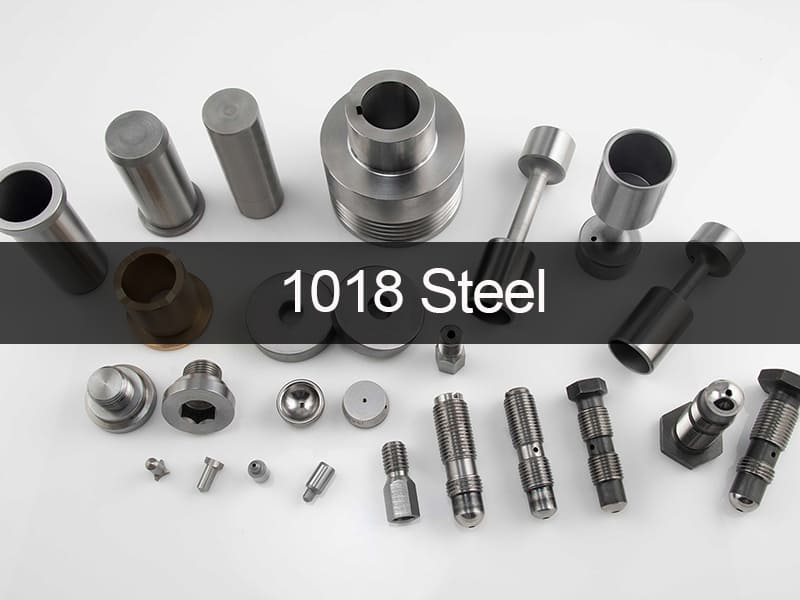
Когда инженерам и производителям нужен материал, который предсказуем, дешев и совместим со всем, они обычно выбирают сталь 1018. 1018 — это низкоуглеродистая сталь (часто называемая мягкой сталью). Ее выбирают не потому, что она обладает каким-то одним выдающимся свойством, а потому, что она хорошо сочетает обрабатываемость, свариваемость и механическую стабильность, отвечая широкому спектру промышленных потребностей.
Что касается производства, углеродистая сталь 1018 хорошо подходит для обработки на станках CNC, сверления, точения и фрезерования. Она имеет низкое содержание углерода, что означает стабильное стружкообразование, меньший износ инструмента и хорошее качество поверхности без необходимости в специальном инструменте или агрессивных режимах резания. В то же время она легко сваривается распространенными методами, такими как MIG и TIG, поэтому может использоваться для сборок, рам и деталей, которые нужно соединить после механической обработки.
Важно помнить, что 1018 — это не “универсальный” или необдуманный выбор материала. Инженеры выбирают его осознанно, когда им не нужны высокая прочность, экстремальная твердость или характеристики сложных сплавов. Сталь 1018 лучше подходит для валов, кронштейнов, плит и конструкционных деталей, где контроль затрат, стабильность размеров и эффективность производства важнее пиковых механических свойств.
Это руководство рассматривает сталь 1018 с трех разных сторон: основы материала, его поведение при производстве и логика выбора для инженерных проектов. Это поможет дизайнерам, инженерам и отделам закупок понять не только то, что это такое, но и когда и почему имеет смысл ее использовать.
Что такое сталь 1018? — Стандарты и определения марок
Самая распространенная марка холоднокатаной стали в мире — это сталь 1018. В системе классификации углеродистой стали AISI/SAE для нее есть определение.
-
“10”: Это означает, что сталь является обычной углеродистой сталью и не содержит значительных легирующих элементов.
-
“18” означает, что содержание углерода составляет около 0,18%.
1018, безусловно, является мягкой сталью, поскольку у нее такой низкий уровень углерода. “Мягкая сталь” в области инженерии не означает низкое качество. Напротив, это относится к сталям, которые созданы, чтобы оставаться пластичными, формуемыми и свариваемыми, чего нельзя сказать о высокоуглеродистых марках, которые хрупкие.
Международные стандарты и их эквиваленты
1018 соответствует следующим стандартам для международных закупок:
-
UNS: G10180
-
ASTM: A108 (стандарт для холоднотянутых стальных прутков, углеродистых и легированных)
-
EN / DIN: C15E / 1.1141
-
JIS: S15C или S20C
Инженерный взгляд: 1018 отличается от конструкционных марок стали, таких как A36, тем, что ее определяет предел текучести. Это облегчает обработку деталей с жесткими допусками, поскольку ее поведение более стабильно и предсказуемо.
Химический состав стали 1018 и что он означает для инженерии
Чтобы понять, почему 1018 ведет себя именно так, нужно знать химию. Для обеспечения постоянства обработки необходим “чистый” химический состав с малым количеством примесей.
Таблица 1: Общий химический состав (wt%)
| Элемент | Среднее содержание | Роль инженера |
| Углерод (C) | 0.15–0.20 | Основной упрочнитель. Поддерживается на низком уровне для гарантии пластичности и свариваемости. |
| Марганец (Mn) | 0.60-0.90 | Повышает прокаливаемость и предел прочности при растяжении; способствует раскислению. |
| Фосфор (P) | ≤ 0,040 | Примесь. Поддерживается на низком уровне для предотвращения хрупкости. |
| Сера (S) | ≤ 0,050 | Примесь. Поддерживается на низком уровне для сохранения свариваемости (но немного повышенное содержание серы улучшает обрабатываемость). |
| Железо (Fe) | Баланс | Основа металла. |
Почему важно низкое содержание углерода
Содержание углерода 0,18% — это “зона Златовласки” для большинства видов производства:
-
Отлично подходит для сварки: Низкое содержание углерода снижает вероятность образования хрупкого мартенсита в зоне термического влияния (ЗТВ), поэтому предварительный подогрев не требуется.
-
Она все еще достаточно пластична, чтобы ее можно было гнуть, прокатывать или обжимать без разрушения.
-
Потенциал цементации: Ее нельзя закалить насквозь (закалка и отпуск), но она отлично подходит для цементации, которая создает твердую внешнюю оболочку, устойчивую к износу, сохраняя при этом вязкую сердцевину.
Что такое феррито-перлитная микроструктура?
Микроструктура стали 1018 — лучший способ понять, как она ведет себя с инженерной точки зрения.
При комнатной температуре 1018 состоит из следующего:
-
Феррит: (Светлые зерна) Чистое железо. Оно мягкое, гибкое и магнитное. Это большая часть матрицы.
-
Перлит: (темные зерна) Слои цементита (карбида железа) и феррита. Это придает прочность.
Перлита немного, потому что углерода мало. Эта структура, состоящая в основном из феррита, объясняет, почему 1018 является
-
Свободнорежущей: Мягкий феррит облегчает стружкообразование.
-
Не хрупкой: Вместо распространения трещины, как правило, затухают в мягком феррите.
Холодное волочение против горячей прокатки
Метод обработки влияет на работу зеренной структуры:
-
Hot Rolled 1018: The grains are all the same size (random). Less stress, but more room for error in dimensions.
-
Cold Drawn 1018: The grains get longer in the direction of drawing. This strain-hardening makes the yield strength and surface hardness much higher and makes the dimensions more accurate (straightness and diameter). Cold drawn bars are what most people use for machining.
Physical Properties of 1018 Steel
Engineers don’t often choose 1018 for jobs that put a lot of stress on it. It is chosen because it is reliable in jobs with low to medium stress.
Common Values for Mechanical Properties (Cold Drawn)
Table 2: Properties of Mechanics
| Недвижимость | Значение (типичное) | Инженерная интерпретация |
| Прочность на разрыв | ~440–485 MPa (64–70 ksi) | Good enough for general structural use. |
| Предел текучести | ~370 MPa (54 ksi) | Cold work makes it much stronger than Hot Rolled (about 30 ksi). |
| Растяжка | 15–20% | Good ductility; it will bend before it breaks. |
| Твердость | about 126 HB (Brinell) | Soft enough for machining at very high speeds. |
| Обрабатываемость | about 70% (B1112 = 100%) | This is what people think of as the standard for “good” machinability in steel. |
Important Design Point: Cold drawing makes the yield strength almost 50% higher than hot rolling. Always specify Cold Finished (CF) 1018 if you are making a shaft that needs to be strong against bending.
Физические характеристики
-
Плотность: 7,87 г/см³
-
Modulus of elasticity: 200 GPa (29,000 ksi). Keep in mind that 1018 is just as stiff as high-strength alloy steels. Changing the shape of the steel will not reduce deflection; only using a stronger steel will.
How easy it is to machine and how it works with CNC
A lot of people think that 1018 is one of the easiest steels to work with. It is the steel that most people use to compare other steels to.
Why 1018 Is Simple to Machine
-
Stable Chip Formation: The ferrite-pearlite structure makes chips break fairly well, but they can be “gummy” compared to leaded steels like 12L14.
-
Not abrasive: so it doesn’t wear out tools quickly. Standard high-speed steel (HSS) or uncoated carbide tools last a long time.
-
Согласованность: Unlike A36, this grade is chemically defined, so machinists don’t run into “hard spots” in the material.
Рекомендации по обработке на станках с ЧПУ
-
Поворот: Works well at medium speeds. If the finish is tearing because it’s too sticky, raise the surface speed (SFM) and make sure the tool nose radius is sharp.
-
Drilling: It drills very easily. For deep holes, it is best to use peck drilling to get rid of the chips that keep coming back.
-
Охлаждающая жидкость: A regular water-soluble coolant is enough to keep the heat down and get rid of chips.
Stability of Dimensions Note: Cold-drawn 1018 has residual stresses from the drawing process. If you cut a keyway into a long shaft, the shaft might bend as the stresses are released. Think about stress-relieved stock or turning between centers for shafts that need to be very precise.
Things to think about when welding and making
1018 is the “friend of the welder.” Some people say that it is the most weldable carbon steel on the market.
Why It Sticks Together So Well
The low carbon content (<0.20%) stops the weld zone from forming hard, brittle martensite as the metal cools.
-
Предварительно разогрейте: Not usually needed for parts that are less than 2 inches thick.
-
Not needed: Post-Weld Heat Treat (PWHT).
-
Процессы: Works great for MIG (GMAW), TIG (GTAW), Stick (SMAW), and oxy-acetylene welding.
Tips for Making
-
Гибка: It’s harder to bend cold drawn 1018 than hot rolled. Use hot rolled or annealed stock to keep the outer radius from cracking when you need tight radius bends.
-
Welding adds heat, which changes the shape. Heavy welding on one side of a plate can cause it to warp because 1018 is often used in forms that don’t relieve stress.
Different Ways to Heat Treat 1018 Steel
1018 can’t be “hardened” in the usual way (by quenching and tempering) to get a strong core, but it is the best material for Surface Hardening.
Carburizing (hardening the case)
1018 doesn’t have enough carbon to harden on its own, so carbon needs to be added to the surface.
-
Процесс: Heat the part in an atmosphere that is rich in carbon. Carbon spreads out into the case’s outer layer.
-
Quench: Cool the part down quickly. The case, which has a lot of carbon in it, gets very hard (Rc 55-60), but the core, which has less carbon in it, stays tough and flexible.
Используйте: Gears, pins, and wear plates where a hard surface resists wear and a tough core keeps the part from breaking when it hits something.
Normalizing vs. Annealing
-
Annealing: This makes the steel as soft as it can be for shaping.
-
Нормализация: Makes the grain structure more even by refining it. This is often done to 1018 forgings to make sure that the machining is always the same.
Common Uses of 1018 Steel in Manufacturing
1018 is the “utility player” of metals.
-
Shafts and pins are the most common uses for Cold Drawn 1018 bar. Shafts for pumps, motors, and locating pins.
-
Fixtures and jigs: These are used a lot in machine shops to make base plates, clamps, and setup blocks.
-
Low-strength bolts, studs, and tie rods are examples of fasteners.
-
Structural Brackets: Mounting brackets that are welded together for machines.
-
Carburized Parts: Cheap ratchets, gears, and sprockets.
Which one should you pick, 1018 steel or A36?
This is the most common mistake. A36 is the standard for structural shapes like I-beams and angles, while 1018 is the standard for bar stock.
Table 3: A36 vs. 1018 Comparison
| Особенность | 1018 Steel | A36 Steel | Choice Definition of Logic |
| Определение | Chemical Makeup | Yield is a mechanical property. | 1018 guarantees chemistry, and A36 guarantees strength. |
| Finish on the Surface | Cold Drawn: Smooth and Shiny | Rough and scaly (hot rolled) | Use 1018 for parts that need to be precise or seen. |
| Обрабатываемость | Consistent, good | inconsistent (“hard spots”) | Use 1018 for CNC parts. |
| Form Availability | Bar, rod, wire | plate, beam, and angle | A36 is the most common type of structural shape. |
| Цена | A Little Higher | Самый низкий | A36 is steel for bulk construction. |
The Rule for Making Decisions:
-
Are you machining a part that needs to be very precise, like a shaft or bolt? -> Pick 1018.
-
Are you welding a table or building frame? -> Pick A36.
When NOT to Use 1018 Steel: Design Limitations
1018 is flexible, but it has its limits.
-
High Strength Needed: If you need a high yield strength but don’t want a lot of bulk, switch to 1045 (medium carbon) or 4140 (alloy steel). 1018 will just bend.
-
Through-Hardening: 1018 can’t make the whole part hard, only the surface. Use tool steel or 4140.
-
Resistance to Corrosion: 1018 rusts right away in humid conditions. If you can’t paint or plate it, use 304 stainless steel or aluminum instead.
-
High Fatigue Loads: 1018 is not a good choice for cyclic parts that are under a lot of stress (like crankshafts) because it has less strength and more impurities.
Summary: What engineers should know about 1018 steel
1018 steel is the safe and cheap standard for engineering design.
-
Обрабатываемость: It is the standard for CNC turning and milling that can be counted on.
-
Fabrication: It is easy to weld without any complicated steps.
-
Surface Hardening: Carburizing makes parts that are very resistant to wear.
-
Price: It is one of the least expensive metals you can buy.
Лучшая практика: For shafts, pins, and other machined parts, use 1018 Cold Drawn bar. Use 1018 Hot Rolled only if the surface finish doesn’t matter or if you plan to do a lot of welding. If you need more strength, use 1045 or 4140.
Часто задаваемые вопросы
Q: Can you weld 1018 steel?
A: Yes, very good. Because it has a low carbon content, it is one of the easiest steels to weld. For most uses, it doesn’t need to be heated before or after welding.
Q: Does 1018 steel get rusty?
A: Yes, very quickly. It doesn’t resist rust. To keep it from rusting, it needs to be painted, powder-coated, zinc-plated, or oiled.
Q: What’s the difference between 1018 and 1045?
A: The amount of carbon. There is about 0.18% carbon in 1018 and about 0.45% carbon in 1045. 1045 is stronger and can be hardened all the way through, but it is harder to weld and work with.
Q: Is it possible to harden 1018 steel?
A: You can’t through-harden it (quench and temper) because it doesn’t have enough carbon. You can only case harden (carburize) it to make the outside hard while keeping the inside soft.
Q: Is 1018 better than A36?
A: Yes, 1018 is cleaner and more consistent for machining. A36 is usually cheaper and good enough for structural welding, like making a rack.


