
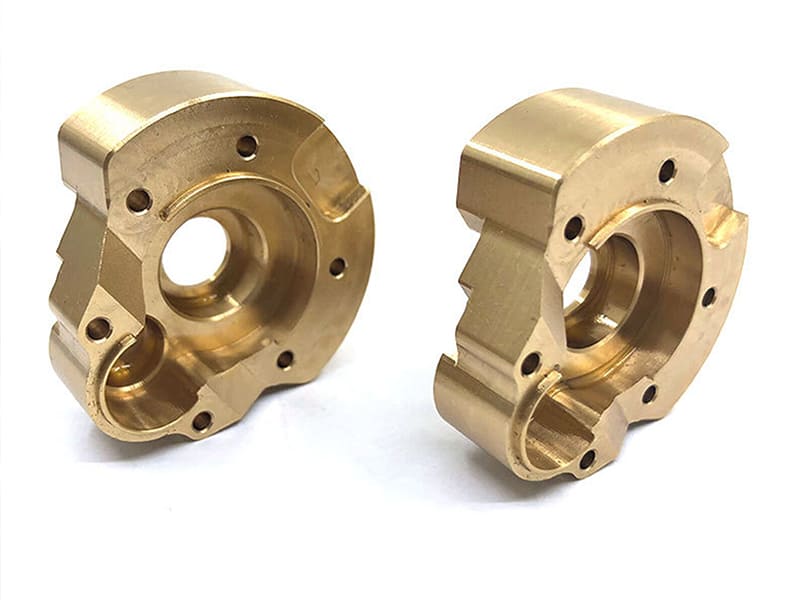
C93200 bronze, also called SAE 660 bearing bronze, is a leaded tin bronze alloy that is often used for plain bearings, bushings, and parts that need to be resistant to wear. It is highly regarded for its ability to be embedded, conform, and resist seizing. This makes it ideal for situations where there are moderate loads, sliding contact, and poor lubrication.
This article looks at the chemical makeup, mechanical and physical properties, and common uses of C93200 bronze in engineering. It helps engineers and designers understand why it is still a popular choice for bearings and wear applications where reliability, machinability, and cost-effectiveness must be balanced.
What Is C93200 Bronze? Material Definition and Classification
Basic Definition of C93200
People often call C93200 leaded tin bronze by names like SAE 660, C93200, or just bearing bronze. It was made specifically for sliding and bearing applications, not for environments where it needs to support heavy loads or resist corrosion. It has a relatively high lead content that is spread out in a copper-tin matrix. This directly affects how it behaves in terms of friction and wear, not its strength.
C93200 is different from high-strength bronzes in that it focuses on anti-seizure performance, embeddability, and conformability. These traits let it handle shaft misalignment, surface imperfections, and poor lubrication, which are all common in real-world machines but not often seen in idealized design assumptions.
Position Within the Bronze Alloy Family
C93200 is in a unique middle ground within the larger bronze family:
-
It is much weaker than aluminum bronzes, but it is much easier to slide and machine.
-
It gives up fatigue strength to make it easier to embed and more tolerant of debris than phosphor bronzes.
-
It has better seizure resistance under boundary lubrication than lead-free tin bronzes, but it can hold less weight.
Because of this, C93200 is better described as a general-purpose bearing material than a high-performance or extreme-duty alloy. People choose it when reliability, forgiving tribological behavior, and ease of manufacture are more important than strength, corrosion resistance, or temperature capability.
From an engineering point of view, C93200 is not the “best” bronze in every way. It is, however, the most balanced choice for standard bushings and sliding parts that work under moderate loads and speeds, where real-world conditions call for strength over peak material properties.
Chemical Composition and Alloy Function
Typical Chemical Composition of C93200
C93200 bronze is an alloy of copper, tin, and lead that is designed to balance load capacity, friction behavior, and machinability. A typical composition range is shown below:
| Element | Tipik İçerik (ağırlıkça %%) | Birincil Mühendislik Rolü |
| Bakır (Cu) | ~81–85% | The base matrix, thermal conductivity, and corrosion resistance |
| Tin (Sn) | ~6–8% | Makes things stronger and more resistant to wear |
| Kurşun (Pb) | ~6–8% | Lubricity, embeddability, machinability |
| Çinko (Zn) | 1–4% | Helps with casting fluidity and keeping costs down |
| Fe / Sb / Ni | Eser miktarda | Microstructural control (kept very tight) |
This composition is not meant to be as strong as possible. Instead, it is tuned to give stable sliding performance in real-world bearing situations.
Role of Tin (Sn) in Strength and Wear Resistance
The main thing that makes C93200 stronger is tin. Dissolved in the copper matrix, Sn:
-
Makes the alloy harder and able to carry more weight, which means it won’t change shape when bearing pressure is applied.
-
Increases the wear resistance of the adhesive, which stops material from moving to the mating shaft.
-
Keeps the bronze matrix stable so that soft lead phases can work well without hurting the structure.
From an engineering point of view, tin is the mechanical backbone that lets C93200 work under moderate loads without too much creep or collapse.
Role of Lead (Pb) in Machinability and Friction
Lead is what makes C93200 a bearing bronze.
-
Lead is a soft, separate phase that is spread out throughout the microstructure instead of dissolving in the copper matrix.
-
These lead pockets work as solid lubricants, which means they lower friction and make it less likely that the machine will seize up during boundary or mixed lubrication.
-
Lead helps chips break up during machining, which makes tools last longer and gives surfaces a better finish than lead-free bronzes.
C93200 is still a good choice for making a lot of bushings because it works well in both tribological performance and machinability.
Effect of Minor Alloying Elements
Minor elements are important, even though they are only present in small amounts:
-
Çinko (Zn) makes the melt flow better and makes it easier to cast, which makes it possible to consistently cast bearing blanks using centrifugal or continuous methods.
-
It is very important to control impurities like Fe, Sb, and Ni. Too much of these can make hard inclusions that speed up shaft wear and shorten the life of bearings.
Mühendislik çıkarımı: The composition of C93200 is purposely uneven, with a strong Cu–Sn matrix holding up a soft Pb phase. This design puts wear compatibility, seizure resistance, and ease of manufacturing ahead of peak strength. This is why it has been used as a general-purpose bearing bronze for so long.
Microstructure and Metallurgical Mechanisms
Phase Distribution in Leaded Tin Bronze
C93200 is a leaded tin bronze that has a microstructure that is not uniform on purpose. The alloy is made up of a copper-tin matrix that gives it strength and resistance to wear, and a separate lead phase that doesn’t mix with the copper lattice. Instead, lead is made up of small, soft particles that are spread out along grain boundaries and throughout the matrix.
-
Bu Cu–Sn matrix can hold mechanical loads and won’t bend or break.
-
Bu Pb phase stays soft and can be changed shape, even when pressure is applied, which lets stress be relieved at the sliding interface.
This phase separation is not a flaw; it is the main function of bearing bronze.
How Microstructure Controls Tribological Behavior
The tribological performance of C93200 is determined by the interaction of these phases during sliding contact:
-
When there is boundary or mixed lubrication, the soft lead phase is more likely to be on the surface.
-
Lead is a solid lubricant that lowers friction coefficients and cuts down on metal-to-metal contact.
-
When the machine is running, lead can smear across the contact interface, creating a protective film that keeps the adhesive from wearing out and seizing up.
-
The tin-strengthened copper matrix also stops the bearing body from bending too much. This balance is why C93200 is better at handling shaft misalignment, rough surfaces, and debris than many other bronze alloys that are harder. Wear usually happens slowly and steadily, not all at once.
Cast Structure and Grain Effects
Most of the time, C93200 is made by continuous or centrifugal casting. The quality of the casting has a direct effect on performance:
-
A uniform grain structure helps spread the load more evenly and lowers stress concentrations in specific areas.
-
If solidification isn’t controlled well, it can cause lead segregation or coarse grains, which make things less resistant to fatigue and shorten the life of bearings.
C93200 isn’t meant for applications with a lot of cycles of fatigue, but if you cast it correctly, you can expect it to work well with moderate loads.
Mühendislik çıkarımı: C93200 works well as a bearing bronze because it has a strong Cu–Sn framework that supports a soft Pb lubricating phase. This metallurgical design, not just one property value, is what makes conventional bearings work well and last a long time.
Mechanical and Physical Properties
Mechanical Properties Relevant to Bearings
C93200 bronze is made for sliding and bearing duty, so the most important properties are those that affect load support, conformity, and wear compatibility, not maximum tensile strength.
| Mülkiyet | Normal Aralık | What It Means for Design |
| Çekme mukavemeti | ~240–300 MPa | Good for bushings and bearing shells, but not for structural members. |
| Akma mukavemeti | ~140–170 MPa | This lets the material bend in a controlled way to fit into place. |
| Basma dayanımı | High (bearing-relevant) | Supports contact pressure without breaking. |
| Sertlik | ~65–85 HB | Soft enough to hold debris but hard enough to last a long time. |
Interpretation by engineers:
For bearings, tensile and yield strengths are not as important as compressive behavior and surface compatibility. The low hardness is by design, which makes it easier to embed (catch small abrasive particles) and lessens damage to the shaft.
Fatigue and Load-Carrying Considerations
C93200 works best when the load and speed are moderate:
-
Good for sliding all the time with loads that stay the same or change slowly.
-
Its leaded microstructure makes it less durable than harder, lead-free bronzes when it is under high-cycle, high-stress fatigue.
-
Too much contact pressure or sudden changes in load can speed up damage to the subsurface and shorten the life of the service.
Design limit: C93200 is not meant to handle very high bearing pressures or very fast oscillatory loads. When fatigue life is very important, you should look at aluminum bronze or high-strength tin bronzes.
Physical Properties
Physical properties affect how heat is released and how clearance is designed, both of which are very important in bearing systems.
| Mülkiyet | Normal Değer | Design Implication |
| Yoğunluk | ~8,9 g/cm³ | Heavier than brass; stable mass for bearing housings |
| Isı iletkenliği | ~50–60 W/m·K | Helps get rid of heat from friction. |
| Coef. of thermal expansion | ~18–19 × 10⁻⁶ /K | This means that changes in clearance due to temperature must be taken into account. |
Mühendislik çıkarımı: The mechanical and physical properties of C93200 are carefully balanced for bearing reliability, not peak strength. Successful designs take into account the alloy’s moderate load capacity, great debris tolerance, and predictable thermal expansion. They make sure that clearances and loads are in line with the alloy’s intended operating window.
Wear, Friction, and Lubrication Behavior
Performance Under Boundary and Mixed Lubrication
C93200 bronze is designed to work well under boundary and mixed lubrication conditions, which are more common in real-world bearing systems than ideal hydrodynamic conditions.
-
Start-stop operation: Full fluid-film lubrication is not always present when the machine starts or stops. The dispersed lead phase in C93200 becomes exposed at the contact surface, which lowers friction and keeps metal-to-metal contact to a minimum during these important times.
-
Low-speed/high-load conditions: When the sliding speed is low, the lubricant film gets thinner. The soft lead phase of C93200 keeps the friction stable by providing lubrication where it’s needed, while the Cu–Sn matrix supports the load.
Engineering outcome: These traits are why C93200 is still a popular choice for bushings and thrust bearings in pumps, conveyors, and other machines where it is hard to control the quality of lubrication.
Abrasive vs. Adhesive Wear Mechanisms
The wear behavior of C93200 is significantly affected by its heterogeneous microstructure.
-
Reducing adhesive wear: When asperities weld and tear during sliding, this is called adhesive wear. The lead phase in C93200 cuts easily and spreads across the surface, acting as a solid lubricant that stops adhesion and lowers the risk of seizing.
-
Tolerance for abrasive wear: Hard particles that get in through contamination can cause abrasive wear. The bronze matrix is relatively soft, which means that small particles can get stuck in the bearing surface instead of cutting the shaft. This protects the steel part that fits together with it, but it does mean that the bearing will wear out more quickly.
Engineering trade-off: C93200 gives up some wear resistance to protect shafts and keep wear behavior predictable and not catastrophic.
When C93200 Is NOT the Right Choice
C93200 has some clear limits on how it can be used, even though it has some benefits:
-
High-speed bearings where hydrodynamic lubrication is the main type of lubrication and a lot of heat is made.
-
High-temperature settings, where lead softening makes it harder to carry loads.
-
Very heavy loads or dry-running conditions that are too much for the Cu–Sn matrix to handle.
Selection advice: C93200 is the best choice when friction tolerance, seizure resistance, and forgiveness are more important than speed or load. If the conditions of use go beyond this range, you should think about using bearing alloys that are stronger or don’t contain lead.
Manufacturing and Machining Considerations
Casting Methods for C93200
Most of the time, C93200 bronze is sent out in cast form. The way it is cast affects the microstructural uniformity, porosity, and, in the end, the bearing’s service life.
-
Sand casting: Because it is flexible and cheap to make, sand casting is a popular method for making C93200. It works for bearing parts that are either big or small. Cooling rates are, however, fairly slow. If process control isn’t good, this can cause coarser grains and less even lead distribution. To keep shrinkage porosity from shortening the life of a bearing, it is important to design the riser correctly and keep the melt clean.
-
Centrifugal casting: This is a popular method for making high-quality bushings and sleeves. The centrifugal force makes the density and segregation control better by pushing impurities inward and making the lead phase more evenly spread out. This makes the load-carrying consistency better, the porosity lower, and the fatigue resistance better in service.
-
Permanent mold casting: This gives you better dimensional repeatability and surface finish than sand casting. Cooling faster makes the microstructure better, which can make it a little stronger. But mold design needs to take into account how lead separates so that there aren’t any soft spots.
Mühendislik çıkarımı: Centrifugal casting is usually the best choice for critical bearing applications because it has better structural integrity and predictable tribological performance.
Machinability and CNC Machining Notes
C93200 is a moderately machinable bearing bronze, with a machinability rating of about 70% compared to free-cutting brass (C36000 = 100).
-
Turning, drilling, boring, and reaming are all operations that work well. Lead makes chip breakage less likely than lead-free bronzes, which makes cutting behavior more stable.
-
Parameters and tools: To avoid smearing the lead phase, use sharp carbide tools with positive rake angles. Moderate cutting speeds and steady feeds help keep the surface in good shape.
-
Control of surface roughness: Bearings often require controlled surface finishes instead of mirror polishing. Too smooth of a finish can make it harder for lubricants to stay in place, while too rough of a surface can make wear happen faster. Engineers should choose the right amount of roughness for the surface based on the type of lubrication and the material of the shaft.
Joining and Repair Constraints
-
Sert Lehimleme: When the right fluxes and temperature control are used, brazing is usually possible for C93200. You need to be careful not to heat things up too much, as this can cause lead to separate.
-
Welding restrictions: Fusion welding is not a good idea. The high lead content causes hot cracking, porosity, and weak joints. Most of the time, mechanical methods or localized brazing are the best ways to fix things.
Takeaway from manufacturing: C93200 works best when it is treated as a cast-and-machined bearing material, with joining kept to a minimum and casting quality prioritized early on in the manufacturing process.
Typical Engineering Applications
Common Components
When sliding and bearing-related parts need to have predictable friction and reliable load support, C93200 bronze (SAE 660) is the most common choice.
-
Plain bearings and journal bearings are commonly used in rotating machinery that experiences moderate loads, intermittent motion, and boundary or mixed lubrication conditions.
-
Bushings and sleeves are common in construction, farming, and industrial machines. Bushings C93200 can handle shaft misalignment and embed small debris without damaging the shaft too much.
-
Thrust washers and thrust pads are chosen to support axial loads in gearboxes, pumps, and mechanical assemblies where preventing galling is more important than having the strongest possible strength.
-
Pump and hydraulic parts are used for wear rings, bushings, and guide parts in pumps and low- to medium-pressure hydraulic systems, especially when it’s important that they don’t get stuck when they start up.
Why C93200 Is Chosen in Practice
Engineers keep choosing C93200 bronze not because it is the strongest or most advanced bearing alloy, but because it is a good engineering solution.
-
Cost–performance balance: C93200 has a good load capacity and is much cheaper to make and use than aluminum bronzes or high-performance polymer bearings.
-
The lead phase acts as a solid lubricant under boundary lubrication, which reduces friction and lowers the risk of catastrophic seizure during start-stop operation.
-
C93200 is easy to machine to tight bearing tolerances and is widely available in standard cast forms. This makes it easier to get and lowers the risk of delays in getting it.
-
In real life, it is more forgiving than harder, less flexible bearing materials. It can handle small shaft surface flaws, contamination, and lubrication inconsistencies better.
Engineering summary: C93200 bronze works best in general-purpose bearings and bushings where moderate loads, sliding contact, and practical manufacturing concerns are the most important factors in the design decision.
C93200 vs Other Bearing Bronzes
It’s not so much about finding the “strongest” alloy when choosing a bearing bronze as it is about matching the load, speed, lubrication, and manufacturing realities. Here is a comparison of C93200 (SAE 660) and other common bearing bronzes that focuses on engineering.
C93200 vs C95400 (Aluminum Bronze)
| Özellik | C93200 (SAE 660) | C95400 (Alüminyum Bronz) |
| Base system | Cu–Sn–Pb | Cu–Al–Fe |
| Yük kapasitesi | Orta | Çok yüksek |
| Friction behavior | Great with boundary lubrication | Higher friction and less forgiving |
| İşlenebilirlik | İyi | Zayıf |
| Shaft friendliness | Yüksek | Lower (can wear shafts) |
| Tipik kullanım | General-purpose bushings | Heavy-duty, high-load bearings |
When load capacity and wear resistance are the most important factors, C95400 is the best choice. However, it needs good lubrication and careful selection of shaft materials. C93200 is still the best choice for general machinery, start-stop operation, and situations where seizure resistance and machinability are more important than maximum strength.
C93200 vs C86300 (Manganese Bronze)
| Özellik | C93200 | C86300 (Mn Bronze) |
| Alloy type | Leaded tin bronze | High-strength brass/bronze |
| Güç | Orta | Yüksek |
| Embedded lubrication | Yes (Pb phase) | Hayır |
| İşlenebilirlik | İyi | Adil |
| Typical lubrication | Boundary/mixed | Full-film is preferred |
| Common uses | Thrust washers and bushings | Heavy mechanical bushings |
Mühendisler için çıkarım: C86300 is better for high static loads with constant lubrication, while C93200 works better in dirty environments with bad lubrication. C93200 gives many industrial bearings a safer, more forgiving design margin.
C93200 vs Lead-Free Tin Bronzes
| Özellik | C93200 | Lead-Free Tin Bronzes |
| Lead content | ~6–8% Pb | Yok |
| Sürtünme | Good for resisting friction and seizing | Moderate for seizing |
| İşlenebilirlik | Daha iyi | Daha düşük |
| Çevresel | Limited (Pb) | RoHS and lead-free compliant |
| Maliyet | Daha düşük | Daha yüksek |
| Typical drivers | Performance and cost | Rules and cleanliness |
From an engineering point of view, lead-free tin bronzes are becoming more common because of environmental or regulatory reasons. However, C93200 still has better boundary-lubrication performance and is easier to machine.
Engineering Selection Summary
-
For general-purpose bearings, moderate loads, start-stop motion, and designs that need to be cheap, choose C93200 (SAE 660).
-
Pick C95400 for very high loads and wear resistance, but only if you can control the lubrication.
-
Pick C86300 for heavy mechanical loads where friction isn’t as important.
-
When rules are more important than performance trade-offs, choose lead-free tin bronzes.
In short, C93200 is still the standard for bearing bronze in engineering. This is not because it does well on one extreme metric, but because it strikes a better balance between friction behavior, manufacturability, cost, and real-world reliability than most other options.
Summary — Key Engineering Takeaways
C93200 bronze, also called SAE 660 bearing bronze, is a leaded tin bronze that is made for tribological performance rather than maximum strength. Its main feature is that it has a strong Cu–Sn matrix and finely distributed soft lead phases that make it naturally slippery, resistant to seizing, and able to handle boundary and mixed lubrication conditions very well.
From a practical point of view, C93200 is best for bearings that carry medium loads and move at low to moderate speeds, especially when they are starting and stopping, when the shafts are not aligned, or when the quality of the lubrication can’t be perfectly controlled. Bushings, thrust washers, and parts for pumps or hydraulics are some common examples. Aluminum bronzes or other high-strength alloys work better for bearings that need to work at very high speeds, for long periods of time at high temperatures, or under very heavy loads.
From the point of view of design and manufacturing, important things to think about are controlling the finish on the shaft surface, keeping the right amount of space between the bearings to allow for thermal expansion, and choosing the right casting method to make sure the microstructure is uniform. In short, C93200 is still a useful engineering benchmark because it balances cost, reliability, manufacturability, and friction behavior instead of optimizing just one property.
Sıkça Sorulan Sorular
What do people use C93200 bronze for?
SAE 660 bronze, also known as C93200, is mostly used for plain bearings and wear parts that don’t have to handle too much weight or speed. These include bushings, sleeve bearings, thrust washers, and parts in pumps and other industrial machinery. It works well with boundary or mixed lubrication and can handle being out of alignment and starting and stopping a lot.
Can C93200 be used for bearings that carry a lot of weight?
No. C93200 is meant to be used in situations with medium loads. When there are very high loads or shock loads, people usually choose stronger alloys like aluminum bronze (for example, C95400).
What makes C93200 and C95400 different from each other?
C93200 is a leaded tin bronze that works best when there is little friction, it can be embedded, and it can be machined. C95400 is an aluminum bronze that is much stronger and can hold more weight, but it has more friction and is less flexible. C93200 is used for bearings that are used for a lot of different things, while C95400 is used for bearings that need to be very strong.
Is C93200 bronze good for CNC machining?
Yes. Because it contains lead, C93200 is easy to machine and works well for CNC turning and boring bearing parts, as long as the right tools and cutting settings are used.
Does C93200 need to be lubricated all the time?
Not really. C93200 can handle short-term loss of lubrication because of its lead phase, but proper lubrication is still recommended to make it last longer and resist wear.


