
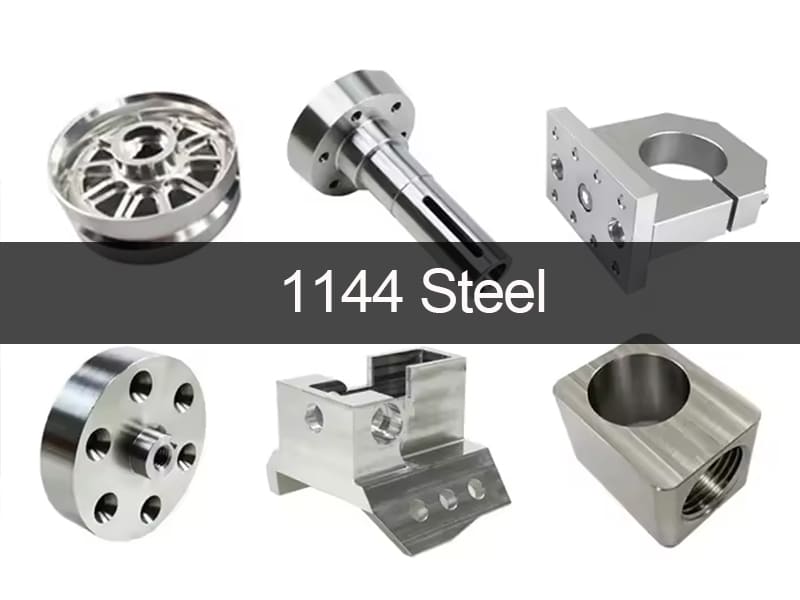
1144 çeliği, günlük üretimde çok özel ve sıklıkla yanlış anlaşılan bir role sahiptir. Genel bir yapısal karbon çeliği değildir ve ağır imalat veya kaynaklı parçalar için tercih edilmez. Bunun yerine, ticarette sıklıkla Stressproof® olarak adlandırılan 1144, tek bir ana amaç için üretilmiştir: az distorsiyonla yüksek hassasiyetli işlemede kullanılmak.
Mühendislik açısından bakıldığında 1144, işlenmesi kolay ve yüksek mukavemet-ağırlık oranına sahip orta karbonlu bir çeliktir. 1144 genellikle soğuk çekilmiş, gerilim giderilmiş halde teslim edilir; 1018 gibi işlenmesi kolay ancak malzeme kaldırıldıktan sonra hareket edebilen düşük karbonlu kalitelerin aksine. Bu iç gerilim kontrolü, kaba ve ince işleme sonrasında boyut, yuvarlaklık ve düzlüğün aynı kalması gereken dar toleranslı CNC parçalar için çok önemlidir.
1144, 1045 çeliğinden farklı bir değere sahiptir. 1045 iyi bir sertleşebilme malzemesidir, ancak diğer malzemeler kadar kararlı olabilmesi için genellikle işleme sonrası ısıl işlem gibi ek proseslere ihtiyaç duyar. 1144 ise “teslim alındığı gibi” işlenmek üzere üretilmiştir; bu da ikincil operasyonları, çevrim süresini ve genel üretim riskini azaltır.
Bu kılavuz, 1144 çeliğine mühendislik açısından bakmaktadır. Bunu, kükürt ile güçlendirilmiş kimyasal yapısını inceleyerek, işleme avantajlarını ölçerek ve ne zaman kullanılacağına dair net bir çerçeve sunarak yapmaktadır.
1144 çeliği nedir? — Malzemenin tanımı ve sınıflandırılması
1144 çeliği, yalnızca hassas işleme için üretilmiş orta karbonlu, yeniden kükürtlendirilmiş bir karbon çeliğidir.
-
Standartlar: AISI/SAE 1144 ve UNS G11440 bu isimlerdir.
-
“Stressproof” Faktörü: İş dünyasında 1144, Niagara LaSalle'nin tescilli ticari markası olan “Stressproof” ile aynıdır. Bunun nedeni, yoğun soğuk işleme ve ardından gerilim giderme işleminden oluşan benzersiz bir süreçten geçmesidir. Bu, su verme ve temperleme yapmadan size yüksek mukavemet (yaklaşık 100 ksi akma) sağlar.
1144'ün Diğer Karbon Çeliklerine Göre Durumu
1144, karbon içeriği 1018 ile 1045 arasında olan karbon çeliği ailesinin ortasında yer alır. Ancak farklı davranır.
-
1144, 1018'den çok daha güçlü ve serttir.
-
1045 ile karşılaştırıldığında 1144, daha iyi işlenebilirlik ve daha az kalıntı gerilim lehine bir miktar süneklik ve kaynaklanabilirlikten feragat eder.
1144, birçok şey için kullanılabilecek yapısal bir çelik değildir. Kaynak ve şekillendirme için uygun değildir. Net bir amacı vardır: yüzey kalitesi ve düzlüğün çok önemli olduğu CNC tornalama için en uygun hassas mil malzemesi olmak.
Kimyasal Bileşimde Kükürt ve Manganez Neden Önemlidir
1144'ün mühendislik değeri, planlanmış bir kimyasal dengesizlikten gelir. Mukavemeti korurken kesmeye yardımcı olan elementler ekler.
Tablo 1: Normal Kimyasal Bileşim (wt%)
| Element | Tipik Aralık | Mühendislik Fonksiyonu |
| Karbon (C) | 0.40–0.48% | Çok güçlü ve sert olma potansiyeline sahiptir (orta karbon). |
| Manganez (Mn) | 1.35–1.65% | Sertleşmeye yardımcı olur ve kükürt ile karıştığında inklüzyonlar oluşturur. |
| Sülfür (S) | 0.24–0.33% | En Önemli Fark. Talaşları kırmak için MnS inklüzyonları oluşturur. |
| Fosfor (P) | ≤ 0,04% | Kontrollü safsızlık. |
| Demir (Fe) | Denge | Temel matris. |
Kükürt ve MnS İnklüzyonlarının İşlevi
Yüksek kükürt içeriği (yaklaşık 0.30%) onu farklı kılan şeydir. Kükürt ve manganez birleşerek katılaşma sırasında çelik matrisi boyunca yayılan Manganez Sülfür (MnS) inklüzyonları oluşturur.
-
Chip Breaking: Bu inklüzyonlar talaş içindeki gerilimi artırarak uzun şeritler yerine küçük, yönetilebilir kıvrımlar halinde kırılmasını sağlar.
-
Yağlama: Isı ve sürtünmeyi azaltarak takım ile talaş arasında işlerin sorunsuz ilerlemesine yardımcı olurlar.
-
Ödünleşim: Bu inklüzyonlar çeliğin sürekliliğini bozarak tokluğunu, sünekliğini ve kaynaklanabilirliğini genel olarak çok daha düşük hale getirir.
Mekanik Özellikler: Isıtmadan Mukavemet
1144'ün mekanik profili, hemen çok güçlü olacak şekilde üretildiğini göstermektedir.
Normal Mekanik Özellikler (Soğuk Çekilmiş ve Gerilim Giderilmiş)
Tablo 2: Mekanik Özelliklerin Karşılaştırılması
| Mülkiyet | 1144 (Stressproof) | 1045 (Soğuk Çekilmiş) | 1018 (Soğuk Çekilmiş) |
| Akma Dayanımı | ~100 ksi (690 MPa) | ~77 ksi (530 MPa) | ~54 ksi (370 MPa) |
| Çekme Dayanımı | ~115 ksi (795 MPa) | ~91 ksi (625 MPa) | ~64 ksi (440 MPa) |
| Sertlik | yaklaşık 23 ila 30 HRC | ~180 HB (Yumuşak) | ~126 HB (Yumuşak) |
| Uzama | 10–20% | 12 ila 15% | 15 ila 20% |
| İşlenebilirlik | 83% | 55% | 70% |
Not: Bu değerler 1 inçlik çubuk stok için normaldir. 1144'ün akma mukavemeti 1018'in neredeyse iki katıdır.
Bunun mühendislik açısından anlamı
-
Isıl işlem gerekmez; 1144 genellikle olduğu gibi kullanılır. Parçaları su verme ve temperleme için dışarı göndermeniz gerekmez; bu da zamandan ve paradan tasarruf sağlar ve parçaların ısıdan dolayı çarpılmasını önler.
-
Aşınma Direnci: It has a hardness of about 25 HRC, which means it can handle some wear on shafts and journals without needing to be surface hardened (though it can be induction hardened).
1144 Steel’s Machinability—A CNC Favorite
A lot of people think that 1144 is one of the easiest carbon steels to machine.
Why It Is Great
-
Çip Kontrolü: The MnS inclusions make sure that chips break into small pieces. This is very important for automated CNC lathes and Swiss machines because bird-nesting chips can stop production.
-
Yüzey İşlemi: It cuts cleanly with little tearing, leaving very good surface finishes (Ra) right off the tool.
-
Alet Ömrü: Compared to 1045, carbide inserts last a lot longer because they have lower cutting forces and internal lubrication.
CNC İşleme Kuralları
-
Hız: You can run 1144 at higher surface speeds (SFM) than regular carbon steels.
-
Feeds: It can handle fast feed rates without losing finish.
-
Soğutma sıvısı: Regular water-soluble coolants are good for flushing chips.
Properties of Heat Treatment and Stress Relief
1144 has enough carbon in it to be heat-treated, but the main reason it is valuable is because of the stress-relief process that takes place at the mill.
The “Stressproof” Benefit
The drawing process leaves a lot of residual stress in standard cold-drawn steel. These stresses let go when you machine a keyway into a cold-drawn shaft, which makes the shaft bend or twist.
1144 (Stressproof) goes through a special heavy draft and then an anneal to relieve stress.
-
Sonuç: The bar is still very strong, but it has very little residual stress.
You can machine complicated shapes, heavy cuts that aren’t symmetrical, or long keyways, and the part will stay straight and within tolerance.
Can you heat treat 1144?
-
Not recommended: Through Hardening. The high sulfur content in quenching can cause cracks.
-
Surface Hardening: Very good. Induction Hardening works very well on 1144. The high carbon content makes the surface tough enough to withstand wear and tear, while the core stays tough. This is perfect for linear motion parts and motor shafts.
Choosing between 1144 and 1045 Steel for Engineering
The most common problem when designing a shaft is deciding between 1144 and 1045.
Table 3: Decision Matrix for 1144 vs. 1045
| Özellik | 1144 Steel | 1045 Çelik | Choice Logic |
| İşlenebilirlik | Mükemmel | İyi | For CNC parts that are big or hard to make, use 1144. |
| Stabilite | Yüksek | Orta | For long shafts that need to be straight, use 1144. |
| Strength (As Received) | Very high (around 100 ksi) | Moderate (about 77 ksi) | Use 1144 to avoid having to heat treat. |
| Kaynaklanabilirlik | İyi değil (Uzak durun) | Adil | Use 1045 for welded parts. |
| Price | Premium | Standart | 1045 is cheaper per pound than 1144. |
The Rule of Decision:
-
Pick 1144 if you need high strength and accuracy right off the machine and you aren’t welding. Getting rid of heat treatment and straightening operations makes up for the extra cost of the material.
-
If you need to weld the part or plan to heat treat it yourself to get certain properties, choose 1045.
Common Uses for 1144 Steel
1144 is the best material for parts of rotating machines.
-
Motor Shafts: It’s very important that they are strong and straight.
-
Linear guide rods: They are often hardened by induction to make them last longer against bearings.
-
Lead Screws: Thread profiles need to be machined with great care.
-
Pins and bushings: When the load capacity is higher than 1018’s.
-
Pump Shafts: They don’t vibrate because they stay the same size.
Limitations in design and the environment
1144 has hard limits, even though it works well.
1. Weldability: The Biggest Problem
Don’t weld 1144.
Because it has a lot of sulfur, it causes “hot shortness” (cracking in the weld bead) and porosity. The mechanical properties in the heat-affected zone (HAZ) will get a lot worse. Use 1045 or 1018 if you need to weld.
2. Resistance to rust
1144, like all carbon steels, does not resist corrosion on its own.
-
Risk: It will rust right away in humid conditions.
-
Çözüm: You need to protect the parts by oiling, black oxide, zinc plating, or painting them. Be aware that the sulfur inclusions can sometimes get in the way of high-quality plating finishes.
3. Strength when tired
The sulfide inclusions are strong, but they act as stress risers, which lowers the fatigue limit a little bit compared to cleaner steels like 4140.
Özet-Önemli Mühendislik Dersleri
1144 steel is a special material that fixes the problems of making things cheaply and accurately.
Önemli Noktalar:
-
Don’t weld it, machine it: Great for cutting, bad for welding.
-
Ready to Use: Gives about 100 ksi yield strength without needing to be heated.
-
Stays Straight: The stress-relieved state reduces warping during machining.
-
Yüzeyden Sertleştirilebilir: Can be hardened by induction for surfaces that wear.
Engineers can often skip whole steps in the process (like heat treating, straightening, and grinding) when they specify 1144. This lowers the total cost of the part, even though the raw materials are more expensive.
Sıkça Sorulan Sorular
Q: Is “Stressproof” steel the same as 1144 steel?
A: Yes, in a way. “Stressproof” is a brand name for a certain kind of 1144 cold-drawn, stress-relieved bar that is protected by trademark. You can buy generic 1144, but Stressproof guarantees certain mechanical properties, like a yield strength of 100 ksi.
Q: Is it possible to weld 1144 steel?
A: No. Because of the high sulfur content, it is thought to be non-weldable because it can crack. If you have to join it, use screws, press fits, or glue.
Q: Will 1144 rust?
A: Yes. There is no chromium in this carbon steel. It needs oil, plating, or paint to keep it from rusting.
Q: Is 1144 stronger than 1018?
A: Yes, a lot. The yield strength of 1144 is usually around 100,000 psi, while that of 1018 is around 54,000 psi. It is almost twice as strong.
Q: Is it possible to case harden 1144?
A: Yes, but most of the time it is induction hardened instead. It already has 0.44% carbon, so it has enough carbon to harden on its own without adding more (carburizing).


