
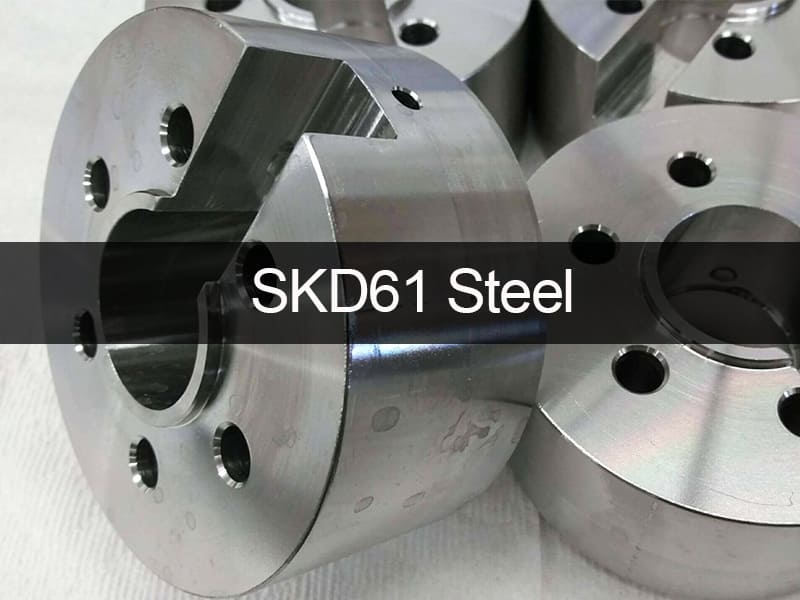
Сталь SKD61 является одной из самых популярных штамповых сталей для горячей деформации, поскольку она обладает проверенным балансом прочности при высоких температурах, стабильности при высоких температурах и надёжной реакцией на термическую обработку. Это хромомолибденованадиевая легированная сталь, которая легко обрабатывается и не слишком дорога. Она также не размягчается при нагреве и не трескается при нагреве. В этой статье рассматриваются свойства материала, принципы термической обработки и распространённые области применения стали SKD61 в горячей обработке. Она помогает инженерам и производителям понять, когда этот материал является наилучшим выбором, а когда другие материалы могут оказаться лучше.
Что такое сталь SKD61? — Что это такое, как она классифицируется и какие существуют правила
Японские промышленные стандарты (JIS) устанавливают стандарт для стали SKD61, которая является хромомолибденованадиевой (Cr-Mo-V) штамповой сталью для горячей деформации. Она разработана для инструментов, которые должны выдерживать высокие температуры, термические циклы и повторяющиеся механические нагрузки без быстрого размягчения или растрескивания. В реальной практике SKD61 выбирают для задач, где инструменты нагреваются, охлаждаются и снова нагреваются тысячи раз в течение срока службы.
Классификация материалов и семейство штамповых сталей для горячей деформации
SKD61 относится к типу штамповых сталей для горячей деформации, которые принадлежат к семейству инструментальных сталей. Она известна способностью сохранять прочность и вязкость при высоких температурах. Её система легирования Cr-Mo-V обеспечивает:
-
Прочность при высоких температурах и сопротивление размягчению при нагреве
-
Сопротивление термической усталости, которое предотвращает образование термических трещин при циклическом нагреве
-
Способность закаливаться на воздухе, что помогает контролировать размеры крупных штампов
Это позиционирование сильно отличается от холодноштамповых сталей, таких как SKD11. SKD11 более износостойкая и твёрдая при комнатной температуре, тогда как SKD61 жертвует частью износостойкости ради термической стабильности и сопротивления растрескиванию. Это необходимый компромисс в условиях горячей обработки, таких как литьё под давлением и горячая штамповка.
Международные стандарты и аналоги стали
Многие считают, что SKD61 идентична ряду международных марок:
-
AISI H13 (в США)
-
DIN / EN 1.2344 (в Европе)
-
GB 4Cr5MoSiV1 (Китай)
Эти марки имеют схожие цели по дизайну сплавов и диапазону применения, но эквивалентность не означает одинаковую производительность. Вязкость, срок службы при термической усталости и стабильность могут зависеть от различий в диапазонах состава, чистоте стали, практике выплавки и стандартных рекомендациях по термической обработке.
Примечание для инженеров и снабженцев: При глобальных закупках важно указывать не только марку, но и состояние термической обработки, уровень качества и возможности поставщика. Это необходимо для того, чтобы SKD61 обеспечивала ожидаемую производительность в условиях горячей обработки.
Химический состав стали SKD61 и функции её легирующих элементов
Производительность стали SKD61 в приложениях горячей обработки обусловлена тщательно сбалансированной системой легирования Cr–Mo–V, которая придаёт ей прочность, сопротивление термической усталости и вязкость при повторяющихся термических и механических нагрузках. Состав SKD61 разработан для предотвращения размягчения и растрескивания при высоких температурах, а не для достижения максимальной твёрдости при комнатной температуре.
Типичный диапазон химического состава SKD61 (вес.%)
| Элемент | Обычный диапазон (%) | Основная функция |
| Углерод (C) | 0.35–0.42 | образует мартенсит и обеспечивает базовую прочность |
| Хром (Cr) | 4.8–5.5 | прокаливаемость и сопротивление окислению |
| Молибден (Mo) | 1.1–1.5 | жаропрочность и сопротивление отпуску |
| Ванадий (V) | 0.8–1.2 | баланс между измельчением карбидов и износостойкостью |
| Кремний (Si) | 0.8–1.2 | помогает предотвратить перегрев и чрезмерное окисление. |
| Марганец (Mn) | 0.2–0.6 | Способствует прокаливаемости |
Диапазоны немного различаются в зависимости от стандарта и поставщика.
Как легирующие элементы обеспечивают прочность и вязкость при высоких температурах
Хром (Cr) — Твёрдость и жаростойкость Хром обеспечивает равномерную закалку крупных сечений штампов и помогает им сопротивляться окислению при высоких температурах.
-
Влияние на микроструктуру: Поддерживает стабильность отпущенного мартенсита и способствует образованию хромсодержащих карбидов.
-
Значение в инженерии: крупные инструменты для литья под давлением и штамповки, которые имеют предсказуемую твёрдость и менее склонны к деформации.
Молибден (Mo) — Высокотемпературная прочность и сопротивление размягчению Молибден очень важен для сохранения прочности при повторяющихся термических циклах.
-
Влияние на микроструктуру: Замедляет укрупнение карбидов и размягчение при отпуске.
-
В инженерном смысле, это означает, что материал прослужит дольше, прежде чем начнёт трескаться от нагрева и терять твёрдость.
Ванадий (V) — Измельчение карбидов и баланс вязкости Ванадий образует мелкие, стабильные карбиды, которые уменьшают размер зерна.
-
Влияние на микроструктуру: Мелкие карбиды VC распределяют нагрузку и сопротивляются износу, не становясь слишком хрупкими.
-
В инженерном смысле, это означает лучшую стойкость к термической усталости и способность препятствовать распространению трещин при изменении нагрузки.
Углерод, кремний и марганец — Структурная поддержка Углерод обеспечивает базовую прочность, кремний повышает жаростойкость, а марганец способствует закалке. Они работают вместе, создавая стабильную структуру отпущенного мартенсита, которая оптимальна для горячей обработки.
Вывод для инженеров: Состав стали SKD61 следует чёткой схеме: элемент → микроструктура → производительность → применение. Она имеет систему Cr–Mo–V, которая настроена не на максимальную твёрдость, а на вязкость, сохранение жаропрочности и сопротивление термической усталости. Именно эти качества обеспечивают надёжность инструментов для литья под давлением, горячей штамповки и экструзии.
The mechanism of microstructure and thermal fatigue resistance
The reliability of SKD61 steel in hot work tooling comes from a microstructure that was designed to resist thermal fatigue instead of just wear. The ability to delay crack formation and slow crack growth is much more important than peak hardness when heating and cooling repeatedly.
Микроструктура после термообработки
After being properly austenitized, air quenched, and tempered, SKD61 develops a microstructure of tempered martensite that is strengthened by finely dispersed alloy carbides.
Some of the most important features are:
-
A tempered martensitic matrix gives strength and toughness at high temperatures.
-
Dispersed carbides, mostly vanadium- and molybdenum-rich, were spread out evenly instead of in clusters.
-
Controlled grain size, with vanadium carbide pinning during heat treatment to help
This consistency is very important. In hot work dies, local microstructural inconsistency is a good place for thermal stress to build up. The relatively uniform structure of SKD61 helps spread thermal strain more evenly across the tool surface, which directly increases the tool’s thermal fatigue life.
Why SKD61 Works Well When the Temperature Changes
Thermal fatigue, which is often seen as heat checking, happens when the surface layer expands and contracts over and over again in response to changing temperatures. Each cycle puts stress on the material in both directions, and over time, microcracks start at the surface and spread inward.
There are a few ways that SKD61 fights this process:
-
Stable tempered martensite: Keeps its strength at high temperatures, which lowers plastic strain while heating and stops stress from building up while cooling.
-
Fine, evenly spaced carbides: They stop cracks from spreading instead of starting them. SKD61’s carbide population doesn’t make stress concentrations as bad as coarse carbides do in high-carbon cold work steels.
-
Balanced hardness-toughness profile: Moderate hardness levels let thermal strain bend and stretch the material without breaking it, which makes it less likely to crack.
From an engineering point of view, SKD61 doesn’t get rid of thermal fatigue; it just slows down its start and growth, which makes tools last longer when they are exposed to extreme temperature changes.
Выводы для инженеров: The microstructure of SKD61 steel is designed to handle cyclic thermal stress. The fact that it is made of tempered martensite and finely spread carbides is what makes it a standard material for die casting, hot forging, and extrusion tooling that is exposed to repeated thermal shock.
The thermal and mechanical properties of SKD61 steel
The mechanical and thermal properties of SKD61 steel are designed to handle high temperatures, repeated mechanical stress, and cyclic thermal loading. Cold work tool steels are made to wear down at room temperature, but SKD61 is made to keep a balanced hardness-toughness profile while still being strong as the temperature rises.
Balance of Hardness, Strength, and Toughness
| Недвижимость | Нормальный диапазон | Инженерное значение |
| Working hardness | 48–55 HRC | right balance between hot strength and crack resistance. |
| Compressive strength | Высокий | can handle loads from die casting and forging |
| Вязкость разрушения | Moderate to high (for hot work steel) | resists cracking and thermal shock |
| Износостойкость | Умеренный | not as good as thermal fatigue resistance. |
Инженерная логика: SKD61 is not made to be very hard on purpose. The steel can handle thermal and mechanical stress without breaking when it is in the 48–55 HRC range. Hardening beyond this point may make the material more resistant to wear in the short term, but it usually shortens its thermal fatigue life and raises the risk of heat-checking. For designers, this means giving up some wear in exchange for tools that are less likely to crack, which is the most common way that hot work tools fail.
Performance at High Temperatures and Hardness in Red
One of the most important things about SKD61 is that it can keep its strength and hardness even when the temperature rises. In hot work settings, this is often called “red hardness.”
-
Retention of hot hardness: The Cr–Mo–V alloy system slows down temper softening, which means that SKD61 can keep its structural strength even after being exposed to hot metal or molten alloy over and over again.
-
Термическая стабильность: Fine carbides and stable tempered martensite keep die surfaces from softening and deforming too quickly.
-
Service temperature implication: SKD61 doesn’t have the same extreme red hardness as high-speed steels, but it works well within the temperature range that is normal for die casting, hot forging, and extrusion tooling.
Effects on the life and upkeep of molds:
-
Slower softening slows down the rate of surface cracking and heat checking.
-
Stable hardness makes it possible to wait longer between re-polishing, welding repair, or re-hardening.
-
Predictable property retention makes it possible to plan maintenance cycles instead of replacing tools when they break.
Выводы для инженеров: The properties of SKD61 steel are a deliberate compromise between moderate hardness and high toughness and thermal stability. This balance is what makes SKD61 better than harder steels in hot work environments that are cycled through heat, giving tools a longer, more reliable service life where cracking, not wear, is what causes tool failure.
Designing and improving the process for heat treating SKD61 steel
The heat treatment of SKD61 steel is what makes it work so well as a hot work tool. Hardness is the most important thing in cold work steels, but in SKD61 heat treatment, hot strength, toughness, thermal fatigue resistance, and dimensional stability all have to be balanced. Small changes in the design of a process can make dies last much shorter by cracking or softening too soon.
Standard Sequence for Heat Treatment
A standard SKD61 heat treatment path goes through a controlled, multi-step process:
-
Отжиг выполняется после ковки или перед большой механической обработкой.
-
Цель: Lower hardness, mix up the carbides, and relieve stress that is still there.
-
Value in engineering: makes it easier to machine and lowers the risk of distortion during hardening.
-
-
Preheating (often in more than one step)
-
Цель: Reduce thermal shock and stop thick or complicated dies from cracking.
-
Reason: The alloy content of SKD61 makes it sensitive to big changes in temperature.
-
-
Аустенитизация is done at high temperatures to turn alloying elements into austenite.
-
Objective: Attain adequate solubility of Cr, Mo, and V for elevated strength and secondary hardening.
-
Control point: Too high of a temperature makes grains grow, which makes the material less tough and shortens its thermal fatigue life.
-
-
When you quench SKD61, it usually hardens in the air. You can choose between still air, forced gas cooling, or vacuum quenching.
-
Logic for making a choice:
-
Air/gas cooling: Less distortion, good for big dies
-
Vacuum quenching: surfaces that are clean, cooling that is controlled, and better dimensional stability
-
-
-
Tempering (multiple cycles) is done right after quenching, usually two or three times.
Main Factors That Affect Performance
Temperature and grain size for austenitizing
-
Higher temperatures make alloys dissolve more easily, but they also make coarse grains more likely, which makes impact toughness lower and thermal fatigue cracking happen faster.
-
Choosing the right temperature strikes a balance between strength and crack resistance.
The temperature and number of cycles for tempering
Tempering helps the martensitic structure stay stable and relieves the stresses that come from quenching.
Several tempering cycles are necessary for:
-
Lower the amount of retained austenite
-
Make toughness more consistent
-
Make it harder to check for heat
The temperature at which tempering takes place has a direct effect on the balance between hardness and toughness, which is more important for thermal fatigue life than peak hardness values.
Risks of Heat Treatment That Are Common
-
Thermal cracking: This happens when the metal isn’t heated enough before it is quenched or when it is quenched too quickly. Смягчение последствий: Preheating in more than one stage and cooling rates that are controlled.
-
Деформация happens when the heating is uneven, the geometry is not symmetrical, or the support is not right during hardening. Stress relief before hardening and vacuum/gas quenching are ways to lessen the effects.
-
Imbalance between hardness and toughness: Over-hardening may make things last longer in the short term, but it shortens their thermal fatigue life. To reduce the risk, focus on application-driven hardness instead of maximum HRC.
The engineering lesson is that the best way to heat treat SKD61 steel is not to make it as hard as possible, but to make it as stable, tough, and grainy as possible. SKD61 consistently performs well in die casting, forging, and extrusion tooling that is subjected to extreme thermal cycling when the process parameters are in line with the service conditions.
Things to think about when it comes to machinability and fabrication
SKD61 steel is a hot work tool steel, which means that it is easy to work with when it is annealed but hard to work with when it is hardened. To control residual stress, surface integrity, and final geometry, effective fabrication requires sequencing operations.
Machining while in an annealed state
It is best to machine SKD61 when it is annealed, because this makes it softer and easier to cut.
How to turn and mill:
-
Do all of the roughing and semi-finishing before heat treatment, leaving even stock for finishing after the heat treatment.
-
Avoid sharp corners inside; big fillets lower stress concentration and the risk of cracking later.
Parameters and tooling:
-
Coated carbide tools are better because they have positive rake angles that help lower cutting forces.
-
To keep heat from getting in and work hardening, use moderate cutting speeds and stable feeds.
-
Consistent delivery of coolant makes tools last longer and improves the quality of the surface.
This method cuts down on distortion during hardening and the amount of grinding needed to fix mistakes afterwards.
Machining and grinding after heat treatment
After hardening (usually between 48 and 55 HRC), SKD61 should be mostly finished by grinding.
Things to think about when grinding:
-
SKD61 is sensitive to grinding burn because it gets too hot in one spot, which makes it less tough and speeds up heat checking.
-
To keep the surface intact, use fine-grain wheels, light passes, frequent dressing, and plenty of coolant.
EDM and machining that is hardened:
-
EDM works well for complicated cavities and sharp edges, but it leaves a recast layer that needs to be removed or stress-relieved to stop early thermal fatigue cracking.
-
Hard machining (light milling/turning) can be used for features that aren’t very important, but it can’t replace grinding on surfaces that need to be very precise.
Выводы для инженеров: To make SKD61 successfully, you need to do front-loaded annealed machining first, then controlled grinding after heat treatment. To keep thermal fatigue resistance and get predictable tool life in hot work applications, it’s important to control the heat input and surface condition during finishing.
Common Uses for SKD61 Steel in Hot Work
SKD61 steel is made for tools that will be exposed to high temperatures, repeated thermal shock, and heavy mechanical stress. Not only does it resist wear, but it also resists thermal fatigue cracking and softening over long periods of use.
Molds for die casting, forging, and extrusion
SKD61 is a common choice for die casting dies, hot forging dies, and extrusion tooling. These tools are heated and cooled many times by molten metal or hot billets.
Why SKD61 is a good choice:
-
Keeps its strength and toughness even when it’s hot.
-
Doesn’t get softer when heated and cooled over and over again
-
A good distribution of fine carbide slows the start of heat checks and the growth of cracks.
In die casting and forging, tools don’t usually break because they wear out. Thermal fatigue (heat checking), surface cracking, and deformation are the main causes of failure. SKD61’s balanced hardness and toughness profile lets it handle some thermal strain in an elastic-plastic way, which lowers the number of cracks and makes dies last longer.
SKD61’s hot strength and dimensional stability help keep the profile accurate in extrusion dies even when they are under a lot of stress and heat all the time.
Other Parts of High-Temperature Tooling
You can also find SKD61 in hot shear blades, hot punches, cores, and inserts that work in high-temperature settings.
-
Shear blades that are hot:
-
Why SKD61? It keeps its edge strength better at red heat than cold work steels and is less likely to crack than harder grades.
-
-
Hot punches and cores:
-
Why SKD61? It has both compressive strength and resistance to thermal shock, which means it won’t chip or crack as easily when it comes into contact with hot workpieces over and over again.
-
These parts benefit from SKD61’s ability to slow down the start of cracks instead of just resisting wear, which is very important for cyclic hot work service.
Point of View on Engineering Selection
-
When to choose SKD61:
-
The main ways that things break are thermal fatigue and cracking.
-
It’s impossible to avoid heating and cooling over and over again.
-
The life of a tool depends more on how well it can resist cracks than on how hard it is at its peak.
-
Выводы для инженеров: SKD61 steel works best in hot work situations where tool life is based on how well it can handle thermal cycling. Its worth is in putting off heat checking and keeping the structure strong even when it’s hot and heavy—conditions where cold work tool steels fail quickly.
Limitations in design and failure modes of SKD61 steel
SKD61 steel is a standard hot work tool steel, but its performance is limited by clear ways it can fail and trade-offs between materials. To avoid using these limits incorrectly and having unrealistic expectations about life, you need to know what they are.
Cracking from thermal fatigue
Thermal fatigue cracking is the most common way that SKD61 fails in service. This is often seen as heat checking on the surfaces of dies.
-
The root cause is that heating and cooling the same thing over and over again creates cyclic tensile and compressive stresses near the surface. Over time, these stresses cause microcracks to form that move inward.
-
Why it still happens in SKD61: SKD61 is better at resisting thermal fatigue than most tool steels, but it can’t get rid of it completely, especially when there are big temperature changes, bad cooling design, or too much surface hardness.
-
Влияние на конструкцию: It is just as important to choose the right materials as it is to make sure that the cooling is even, the surface temperatures are controlled, and the parts don’t get too hard.
Trade-Off Between Wear and Toughness
SKD61 is designed with a toughness-first approach, which makes it less resistant to wear.
-
Прочность: It doesn’t crack or break easily because it is moderately hard and has a fine carbide distribution.
-
Ограничение: Not as good at resisting wear from abrasives as high-carbon cold work steels or PM hot work grades.
-
Инженерное следствие: In situations where there is a lot of sliding wear or erosive molten alloys, surface wear may become the main factor that limits the life of the material before it cracks.
Instead of making the base harder, designers often deal with this trade-off by using surface treatments, coatings, or replaceable inserts.
When SKD61 Is Not the Best Choice
When you should think about SKD61 again:
-
Abrasive wear is more important than thermal fatigue when it comes to tool life.
-
The temperatures at which they work are relatively low, which makes cold work steels cheaper.
-
Extreme hot hardness is needed outside of SKD61’s stable range.
-
A premium hot work steel is not worth the extra money if the tools are sensitive to cost.
In these situations, other materials, like higher-alloy hot work steels, powder metallurgy grades, or cold work steels, may work better or cost less overall.
Выводы для инженеров: SKD61 is great when toughness and resistance to thermal fatigue are what make it successful. When wear, extreme heat, or cost are the most important factors, its balanced design is more of a problem than an advantage.
SKD61 vs Other Tool Steels: A Guide for Engineers
To choose the right tool steel, you need to make sure that the material can handle the most important service conditions. The comparisons below look at more than just nominal hardness; they also look at failure modes, temperature exposure, and lifecycle cost.
SKD61 and SKD11: Hot Work and Cold Work by Design
| Характеристика | SKD61 (Hot Work) | SKD11 (Cold Work) |
| Primary service temperature | elevated/cyclic | room temperature |
| Common failure modes | thermal fatigue and cracking | abrasive wear and chipping |
| Typical hardness | ~48–55 HRC | ~58-62 HRC |
| Твердость | Нижний | Выше |
| Износостойкость | Умеренный | very high |
Conclusion from engineering:
-
When tools get hot and cold over and over again, get SKD61. This happens when you die cast or forge.
-
When tools work in the cold and wear is a big problem (blanking, shearing), choose SKD11. When you use SKD11 in hot work, it usually cracks quickly. When you use SKD61 in cold work that wears down quickly, it wears down too soon.
SKD61 and H13 / 1.2344 are the same grades, but they have some practical differences.
SKD61, AISI H13, and DIN/EN 1.2344 are all hot work steels that are thought to be the same because they all use the same Cr–Mo–V alloy ideas. But practical differences can be important:
| Компонент | SKD61 | H13 / 1.2344 |
| Standard origin | JIS | AISI or DIN |
| Composition ranges | A little narrower (JIS) | A little wider |
| Typical quality | depends on the region and the supplier. | depends on the region and the supplier. |
| Heat treatment practice | Air/gas quenching is common | vacuum/gas quenching is also common. |
Note for engineers: The differences in performance are usually due to the cleanliness of the steel, the melting route, and the control of the heat treatment, not the name itself. Don’t just rely on grade equivalence for critical dies; instead, list the quality level, heat treatment targets, and inspection criteria.
Engineers’ Selection Matrix
Use the matrix below to help you choose based on how the system will be used:
| Selection Driver | Suggested Direction |
| High operating temperature | SKD61/H13 |
| Thermal cycling | SKD61/H13 |
| Dominant abrasive wear (cold) | SKD11 |
| Need for high toughness | SKD61 |
| Lowest initial cost | SKD11 |
| Predictable hot-work lifecycle | SKD61 / H13 |
Logic of cost vs. life:
-
SKD61 usually costs more up front than cold work steels, but it costs less per part in thermally cycled service because it lasts longer without cracking.
-
SKD11 is often more cost-effective for tooling that works at low temperatures.
Final Engineering Lesson
-
Use SKD61 when failure is caused by temperature and thermal cycling.
-
When cold wear causes failure, use SKD11.
-
Only consider SKD61, H13, and 1.2344 to be functionally the same when the quality level and heat treatment are both kept the same.
One rule: Don’t match the steel to the hardness number; match it to the way it breaks.
Summary: What engineers should know about SKD61 steel
SKD61 steel is made to resist thermal fatigue more than it is to resist extreme wear hardness. It has a balanced hardness range of about 48–55 HRC, which means it stays strong and tough even when it gets hot and cools down many times. This lowers the chance of heat checking and cracking. A stable tempered martensitic microstructure with fine carbides makes it possible for predictable performance in tough hot work conditions like die casting, forging, and extrusion.
SKD61’s performance depends a lot on how well it is heat-treated, which includes controlled hardening and several tempering cycles. It is a great choice for hot work tools that are exposed to heat and stress cycles when used correctly. But it doesn’t work as well for cold, wear-dominated applications, situations where extreme hot-hardness is needed, or situations where the main concern is keeping costs as low as possible.
Часто задаваемые вопросы
What is SKD61 steel used for?
SKD61 is mainly used for hot work tooling such as die casting dies, hot forging dies, extrusion dies, cores, punches, and hot shear blades. It is chosen when thermal fatigue, heat checking, and softening—rather than room-temperature wear—limit tool life.
Is SKD61 the same as H13?
SKD61 is generally equivalent to AISI H13 (also 1.2344 / 4Cr5MoSiV1), but real performance depends on steel cleanliness, melting practice, and heat treatment quality, not just the grade name.
What hardness does SKD61 typically use?
After proper heat treatment, SKD61 usually works at about 48–55 HRC. Lower hardness favors toughness and crack resistance, while higher hardness improves wear resistance but can shorten thermal fatigue life.
Why is SKD61 good at resisting thermal fatigue?
Its tempered martensitic structure, fine carbides, and moderate hardness help absorb thermal strain and slow crack initiation and growth during repeated heating and cooling.
SKD61 or SKD11—how to choose?
Choose SKD61 for high-temperature tools affected by thermal cycling and cracking. Choose SKD11 for room-temperature tools where abrasive wear and edge life are the main concerns.


