
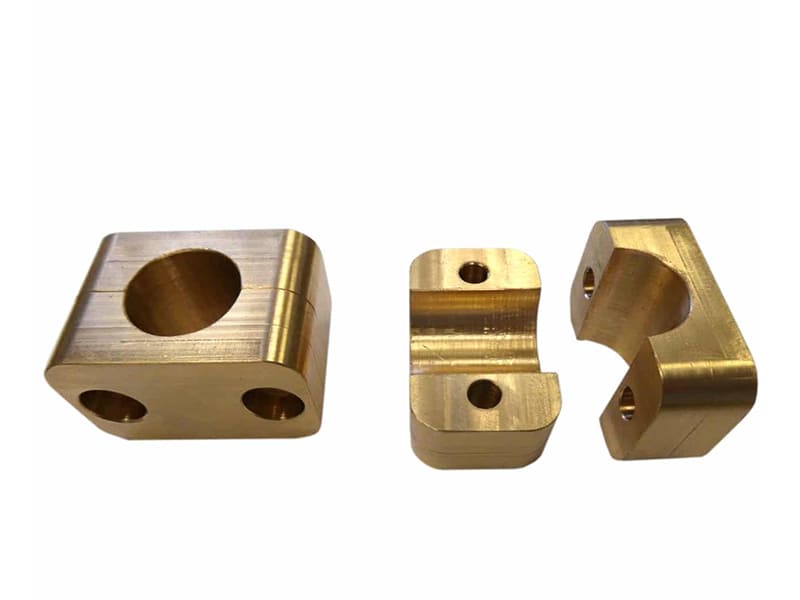
C95400 алюминиевая бронза — уникальный и важный представитель семейства медных сплавов. C95400 алюминиевая бронза отличается от обычных автоматных латуней или традиционных оловянных бронз, поскольку она создана для работы в очень тяжёлых механических условиях. Это лучший материал для деталей, которые должны выдерживать высокие статические нагрузки, повторяющиеся удары, скользящий износ и агрессивные коррозионные среды без преждевременного разрушения.
Инженеров и менеджеров по закупкам не интересует, насколько легко обрабатывать C95400. Их интересует уникальное сочетание высокой прочности на растяжение, ударной вязкости и долговечности поверхности. C95400 часто используется вместо подшипниковой бронзы C93200 или конструкционной стали, когда требования к сроку службы превышают возможности стандартных материалов. Это связано с тем, что его механические свойства близки к свойствам низкоуглеродистых сталей, и он лучше противостоит схватыванию.
Как классифицируется и стандартизируется алюминиевая бронза C95400?
Определение и классификация материалов
C95400 — это прочный литейный медный сплав, находящийся на верхней границе шкалы прочности. Его часто называют “бронзой”, но он сильно отличается от оловянных бронз. Алюминиевые бронзы получают свою прочность в основном за счёт добавления алюминия и образования железосодержащих фаз, а не за счёт добавления олова или цинка.
С металлургической точки зрения C95400 представляет собой сплав с α (𝛼) + β (𝛽) фазовой структурой (в зависимости от нагрева) или структуру с преобладанием альфа-фазы с интерметаллическими выделениями, которые повышают его прочность. Эта структура обеспечивает:
-
Значительно лучшую несущую способность по сравнению с оловянными бронзами (такими как C93200).
-
Более высокую стойкость к адгезионному износу и схватыванию по сравнению с латунью.
-
Лучшую коррозионную стойкость, особенно в морских средах и средах с высоким содержанием хлоридов.
С инженерной точки зрения C95400 следует рассматривать как конструкционную бронзу. Это не универсальный сплав для простых фитингов; это высокоэффективный материал, созданный для тяжёлой промышленной трибологии и обеспечения конструкционной целостности.
Стандарты и аналогичные спецификации
C95400 — это очень стандартизированный сплав, что означает его одинаковое поведение в цепочках поставок по всему миру. Чаще всего он поставляется в виде литья (песочное, центробежное или непрерывное литьё).
| Название стандартной системы | Инженерные примечания |
| UNS C95400 | Унифицированная система нумерации для Северной Америки. |
| ASTM B505 / B271 / B148 | Спецификации для непрерывного литья, центробежного литья и литья в песчаные формы. |
| SAE J461 / J462 | Стандарты для материалов, используемых в автомобилях и тяжёлой технике. |
| Военный MIL-B-16033 Class 3 | Старое обозначение высокопрочной бронзы. |
Каков химический состав C95400?
Именно конкретная химия алюминиевой бронзы C95400 обеспечивает её рабочие свойства. Это сплав меди, алюминия и железа, созданный для прочности, а не для лёгкости формообразования.
Типичный химический состав (весовые проценты)
| Элемент | Нормальный диапазон (вес.%) | Роль в инженерии |
| Медь (Cu) | Баланс (около 83–86 вес.%) | Структурная матрица, которая обеспечивает теплопроводность и прочность. |
| Алюминий (Al) | 10.0–11.5% | Основной элемент, повышающий прочность; образует защитную оксидную плёнку. |
| Железо (Fe) | 3.0–5.0% | Важен для измельчения зерна и повышения долговечности (через интерметаллиды). |
| Никель (Ni) | ≤ 1,5 вес.% | Повышает ударную вязкость и стабилизирует прочность; предотвращает фазовое разделение. |
| Марганец (Mn) | ≤ 0,5 вес.% | Действует как раскислитель и помогает контролировать микроструктуру. |
Роль легирующих элементов
-
Алюминий (упрочнитель): Алюминий — наиболее распространённый легирующий элемент, составляющий 10–11,5 вес.% от общего количества. Он образует прочный твёрдый раствор с медью, что значительно повышает предел текучести. Он очень важен, поскольку обеспечивает быстрое образование самовосстанавливающегося оксида алюминия (Al₂O₃). Эта поверхностная плёнка придаёт C95400 его превосходную коррозионную стойкость.
-
Железо (модификатор зерна): Железо не является примесью; оно необходимо. Оно способствует образованию мелких, твёрдых интерметаллических фаз (каппа-фаз), которые действуют как “арматура” в медной матрице. Это значительно повышает стойкость к абразивному износу и способность выдерживать тяжёлые нагрузки.
Инженерные выводы: C95400 полагается на железо и алюминий для обеспечения конструкционной целостности, тогда как автоматные латуни полагаются на свинец для обрабатываемости. Поскольку в нём нет свинца, он имеет большее трение, но значительно прочнее.
Каковы механические и физические свойства?
Типичные значения механических свойств
Когда “стандартная” бронза недостаточно прочна, выбирают C95400. Его механический профиль больше похож на среднеуглеродистую сталь, чем на красную латунь. Приведённые ниже значения показывают типичные условия для непрерывного или песочного литья.
| Недвижимость | Нормальный диапазон | Значение для инженерии |
| Прочность на разрыв | 620–760 МПа (90–110 ksi) | Аналогично стали AISI 1045; способен выдерживать значительные нагрузки при эксплуатации. |
| Предел текучести (0,2%) | 275–345 MPa (40–50 ksi) | Very resistant to permanent deformation when heavy static loads are applied. |
| Удлинение | 10–15% | Moderate ductility; enough to keep it from breaking when hit. |
| Твердость по Бринеллю | 170 to 210 HB | Hard enough to resist wear from abrasives, but soft enough to keep hardened shafts from getting scratched. |
Physical and Thermal Properties
The physical properties of C95400, in addition to its strength, make it a good choice for bushings and bearings.
-
Плотность: ~7.53 g/cm³ (About 4% less than steel).
-
Теплопроводность: about 59 W/m·K.
-
Significance: It gets rid of frictional heat much better than stainless steel or tool steel, which stops localized welding (galling) in bearing applications.
-
-
Thermal Expansion Coefficient: ~16.2 × 10⁻⁶ /K.
-
Importance: Predictable dimensional change makes it possible to design with tight tolerances in high-temperature settings.
-
-
Магнитная проницаемость: about 1.2.
-
It is slightly magnetic because it contains iron.
-
How Does the Microstructure Define Performance?
Engineers need to look at the microstructure of C95400 to understand why it works better than other alloys. It is not a single-phase material like brass for cartridges.
The Structure of Alpha + Kappa
C95400 has its own special properties because it has a microstructure that is not uniform and is made up of:
-
Alpha (𝛼) Phase: A solid solution that is ductile and has a lot of copper in it. This matrix makes things tough and resistant to corrosion.
-
Kappa (𝜅) Phases: Intermetallic compounds that are hard and rich in iron. These precipitates are spread out very thinly throughout the matrix.
Mechanism for Strengthening
C95400 uses precipitation hardening (through the iron-rich phases), while tin bronzes mostly use solid-solution hardening.
-
Износостойкость: The hard 𝜅 phases serve as bearing points, preventing wear and plastic deformation during sliding contact.
-
Усталостная прочность: The refined grain structure, which is stabilized by iron, stops cracks from spreading. This makes C95400 better than leaded bronzes for gears and cyclic loading.
Performance in Wear, Corrosion, and Environmental Conditions
Wear Behavior Under Load
C95400 is engineered for load-bearing wear, not high-speed, low-load sliding.
-
Adhesive Wear: It excels against hardened steel shafts (recommended hardness > HRC 50). The alloy resists galling (cold welding) under high contact pressure.
-
Abrasive Wear: The intermetallic phases allow it to tolerate dirty environments better than softer bronzes, as it resists scoring from foreign particles.
-
Tribological Limits: Because it lacks lead (a solid lubricant), C95400 requires reliable lubrication (grease or oil). It is not a self-lubricating bearing material.
Коррозионная стойкость
C95400 can make a passive oxide layer that heals itself because it has aluminum in it.
-
Marine Service: It is very good at not corroding or getting biofouled in salt water. It won’t “dezincify,” which is what happens to yellow brasses in salt water.
-
Химическая стойкость: It works well with acids that don’t oxidize and fluids used in industrial processes.
-
Окисление: It stays intact at higher temperatures (up to ~300°C) better than copper-tin alloys.
Manufacturing: Casting, Machining, and Welding
Machinability Challenges
C95400 is machinable, but it presents challenges distinct from free-cutting alloys.
-
Оценка обрабатываемости: ~60% (relative to Free-Cutting Brass = 100%).
-
Инструменты: Requires carbide tooling (C5 or C6 grade) with negative rake angles.
-
The Challenge: The alloy is strong and abrasive. It produces short, broken chips but generates significant heat. Dull tools will work-harden the surface instantly, leading to chatter and tool failure. Rigid setups and flood coolant are mandatory for precision tolerances.
Casting Methods
-
Continuous Casting: The preferred method for bars and tubes. It yields a dense, uniform microstructure with minimal porosity, ideal for CNC machining.
-
Centrifugal Casting: Used for large rings and bushings. It forces impurities to the bore (which is machined away), ensuring a defect-free structure.
-
Sand Casting: Used for complex shapes. Requires expert gating design to prevent aluminum oxide inclusions from folding into the metal.
Сварка и изготовление
Unlike many bronzes, C95400 is weldable.
-
Методы: MIG (GMAW) and TIG (GTAW) are standard.
-
Наполнитель: Matching aluminum bronze filler metals (e.g., ERCuAl-A2) are used.
-
Precaution: Due to high thermal conductivity, preheating is often required to prevent cracking in thick sections.
Каковы типичные области применения в инженерии?
C95400 is selected where standard brasses fail due to deformation and standard bronzes fail due to wear.
-
Heavy-Duty Bearings and Bushings
Used in heavy presses, landing gear, and off-road equipment. Bushings C95400 can handle heavy static loads and impact shocks that would deform a softer C93200 (SAE 660) bearing. -
Power Transmission Components
-
Worm Gears: The alloy’s low coefficient of friction against steel, combined with high strength, makes it ideal for worm wheels in gearboxes.
-
Wear Plates: Used in mold tooling and sliding machinery ways.
-
-
Valve and Pump Components
-
Valve Seats & Guides: In high-pressure pumps and internal combustion engines, C95400 resists wear at elevated temperatures.
-
Fluid Handling: Pump impellers and bodies handling brackish water or industrial chemicals.
-
-
Marine Hardware
Propeller hubs, fasteners, and shipboard hardware that require the strength of steel but the corrosion immunity of bronze.
Comparison: C95400 vs. Other Copper Alloys
Selecting the right alloy is a balance of Load, Speed, and Cost.
| Особенность | C95400 Aluminum Bronze | C93200 (SAE 660) Bearing Bronze | C36000 Free-Cutting Brass |
| Primary Alloy | Cu – Al – Fe | Cu – Sn – Pb | Cu – Zn – Pb |
| Сила | High (Steel-like) | Средний | Low to Medium |
| Несущая способность | Excellent (Heavy/Shock) | Умеренный | Light |
| Смазка | Requires Grease/Oil | Semi-Self-Lubricating (Lead) | Not for sliding wear |
| Обрабатываемость | Difficult (60%) | Good (80%) | Excellent (100%) |
| Коррозия | Отличная (морская) | Хорошо | Poor (Dezincification risk) |
| Наилучшее применение | Heavy gears, wear plates, marine | General purpose bushings | Fittings, fasteners, decoration |
Selection Rule of Thumb:
-
Выбрать C93200 for general-purpose shafts running at moderate speeds.
-
Выбрать C95400 when the load is heavy, shock is present, or the environment is corrosive.
Failure Modes and Limitations (When NOT to Use C95400)
Despite its strengths, C95400 is not a universal solution. Engineers should avoid it in the following scenarios:
-
High-Speed, Low-Load Sliding: At high surface speeds (>750 fpm), C95400 can generate excessive heat if lubrication fails. Leaded bronzes are safer for high-speed shafts.
-
Soft Mating Shafts: Because C95400 is hard (~170 HB), it will wear down soft steel shafts. Mating parts should be hardened to HRC 50–60.
-
Complex, Low-Cost Machining: If the part is a simple plumbing fitting with no structural load, C95400 is overkill and will unnecessarily drive up machining costs.
Summary — Engineering Takeaways
C95400 aluminum bronze stands as a premier engineering material, bridging the gap between the corrosion resistance of copper and the mechanical strength of steel. Its unique microstructure, reinforced by iron and aluminum phases, allows it to excel in environments where shock loading, heavy compression, and corrosive attack usually lead to component failure.
For the manufacturing industry, C95400 is the strategic choice for heavy-load gears, wear plates, and marine components. While it demands more rigorous machining protocols and carries a higher raw material cost than standard brass, the return on investment is realized through extended service life and reduced downtime in critical equipment. Effective selection requires balancing these performance benefits against the need for proper lubrication and hardened mating components.
Часто задаваемые вопросы
Q1: Is C95400 stronger than standard tin bronze?
Yes, significantly. C95400 aluminum bronze typically has a tensile strength of 90–110 ksi, whereas C93200 (standard bearing bronze) averages 35–45 ksi. This makes C95400 approximately twice as strong, allowing it to handle much heavier shock loads and static pressures.
Q2: Can C95400 be used as a bearing material?
Yes, but it is a “hard” bearing material. It is ideal for high-load, low-speed applications (like pivot bushings or landing gear). Unlike leaded bronzes, it does not have self-lubricating properties, so it requires a reliable supply of grease or oil and a hardened steel mating shaft to prevent scoring.
Q3: Is C95400 magnetic?
C95400 is generally considered non-magnetic in the context of lifting magnets, but it has a magnetic permeability slightly higher than 1.0 due to its iron content (3–5%). In highly sensitive electronic applications, this slight magnetism should be considered.
Q4: How does C95400 resist corrosion in seawater?
The aluminum in the alloy reacts with oxygen to form a thin, tough, and invisible layer of aluminum oxide (Al₂O₃) on the surface. This layer is chemically stable and self-healing. If scratched, it instantly reforms, protecting the underlying metal from the chloride attack that typically degrades brasses.
Q5: What is the difference between C95400 and C95500?
Both are aluminum bronzes. C95400 (Aluminum Bronze 9C) contains Iron and Aluminum. C95500 (Nickel Aluminum Bronze) adds a higher percentage of Nickel. C95500 is even stronger and offers slightly better corrosion resistance in extreme environments, but it is more expensive and difficult to machine than C95400.


