
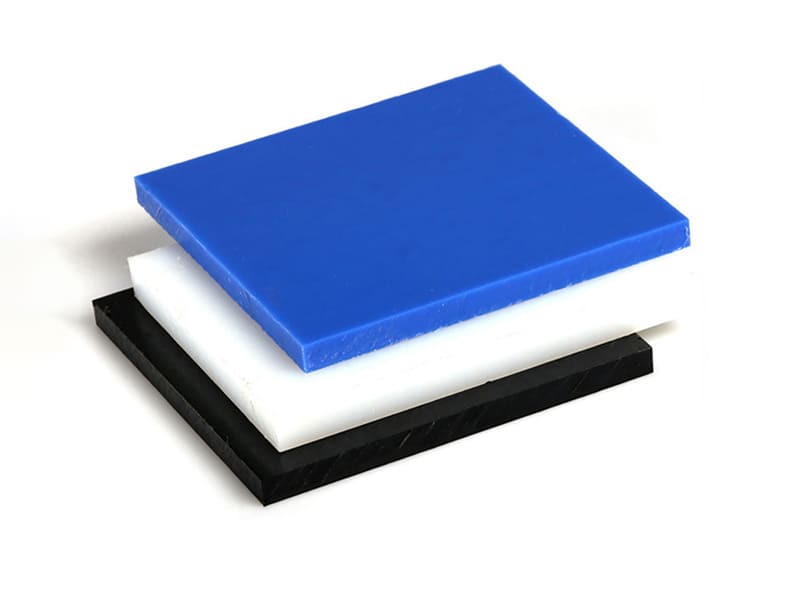
Acrylonitrile Butadiene Styrene (ABS) plastic is one of the most common engineering thermoplastics used in modern manufacturing. It is popular because it has a good balance of mechanical strength, impact resistance, and processing flexibility. It fills the gap between cheap commodity plastics and high-performance engineering polymers, making it a reliable choice for structural housings, enclosures, and moderately stressed parts. ABS is the “workhorse” choice because it is dimensionally stable, has a good cosmetic finish, and can be easily machined, molded, or bonded. This is different from materials chosen for their extreme thermal or load-bearing properties.
From an engineering point of view, ABS works well because it behaves in a predictable way when it is dropped, shaken, or put together. But to use it successfully, you need to know a lot about its three-phase polymer structure and how hot it can get. This article gives a full technical analysis of ABS plastic, including its physical properties, how well it can be made, and important design limits. This will help engineers lower the risk of failure and improve the performance of parts.
What Makes Up the Composition and Polymer Structure of ABS Plastic?
When engineers ask, “What is ABS plastic?” the technical answer is that it is a terpolymer designed to combine two properties that are opposite of each other: stiffness and toughness. ABS is a thermoplastic copolymer that is not see-through. Its performance comes from the way three different monomers work together. Instead of maximizing one property, the polymerization process balances these parts to make the manufacturing process more efficient and the structure more reliable.
The Function of the Three Monomers
The engineering value of ABS is determined by the ratio and interaction of its parts:
-
Acrylonitrile (15–35%): This makes the surface hard, resists chemicals, and stays stable at high temperatures. It makes it more resistant to oils, greases, and weak acids, and it raises the heat deflection temperature compared to pure polystyrene.
-
Butadiene (5–30%): This is the rubbery part that is spread out in the rigid matrix. This part is what gives the material its toughness and strength against impacts. It absorbs energy during shock loading to avoid breaking easily, even at low temperatures.
-
Styrene (40–60%): Adds rigidity, makes it easier to work with, and improves the surface finish. It makes the material easy to flow during injection molding and gives it the shiny, smooth surface that is typical of consumer electronics.
Manufacturers can change these ratios to make certain grades, like high-impact, high-heat, or high-flow, work better for certain uses, like LEGO bricks or car trim.
Amorphous Structure and Its Effects on Engineering
An amorphous polymer, ABS doesn’t have a crystalline melting point and its mechanical properties are the same in all directions.
-
Устойчивость размеров: ABS doesn’t crystallize when it cools, so it shrinks evenly and slowly (usually 0.4–0.7%), which lowers the chance of warping in large, flat parts.
-
Thermal Behavior: Instead of melting quickly, it slowly softens above its glass transition temperature (Tg). This does make the processing window bigger, but it also sets a strict upper limit for service temperature because the material’s stiffness drops quickly once it enters its transition zone.
What are the most important physical and mechanical properties?
When choosing materials, ABS plastic is defined more by its overall property profile than by its peak tensile strength. It has enough stiffness to keep structures strong and is very resistant to impacts, which is very important for handheld devices and protective cases.
Normal Property Ranges (at Room Temperature)
The table below shows the normal values for general-purpose ABS. Please note that the exact values will depend on the grade and the maker.
| Недвижимость | Нормальный диапазон | Значение для инженерии |
| Плотность | 1.03–1.06 g/cm³ | Lightweight; perfect for car trim and portable electronics. |
| Прочность на разрыв | 40–50 МПа | Good for enclosures and snap-fits, but not for structural beams that carry a lot of weight. |
| Модуль упругости при растяжении | 1.8–2.4 GPa | This means that the material is moderately stiff, which makes parts that are rigid but limits how much weight they can hold. |
| Удлинение при разрыве | 10–30% | Good ductility makes it easier to snap-fit parts together and absorb impacts. |
| Notched Izod Impact | 150–300 J/m | Key Advantage: Very good at not breaking when hit suddenly. |
| Твёрдость (по Роквеллу R) | 95–115 | This is hard enough to keep surfaces that people touch from getting scratched. |
| Heat Deflection (HDT) | 85–100 °C (@0.45 MPa) | Sets the highest temperature at which a structure can safely hold a load. |
The Balance of Strength and Toughness
The most important thing about ABS is that it can put toughness ahead of absolute stiffness. The rubber-modified butadiene phase absorbs kinetic energy, which stops cracks from spreading when they hit something. For parts that need to pass drop tests, ABS is better than stiffer materials like acrylic or glass-filled nylon.
But engineers have to follow the rules about the modulus. When heavy loads are put on ABS for a long time, it will start to creep. It is also much less stiff than reinforced engineering plastics. It is best for shells, covers, and internal parts that don’t have to bear a lot of weight.
How do the thermal properties of ABS limit its uses?
A lot of ABS parts fail because they don’t handle heat well. Because it is an amorphous thermoplastic, ABS acts differently than semi-crystalline polymers like Nylon or Polypropylene.
The melting point and the glass transition point
There is no real melting point for ABS plastic. Instead, it changes from a hard, glassy state to a thick, rubbery liquid at its glass transition temperature (Tg) usually between 105 °C and 110 °C.
-
Under Tg: The material stays stiff and keeps its shape.
-
Coming up Tg: The modulus (stiffness) drops quickly, and the creep rates speed up.
-
Processing Window: ABS can be processed over a wide range of temperatures (typically 220–260 °C for molding) because it softens slowly. This gives manufacturers a lot of room for error.
Designing with Heat Deflection Temperature (HDT)
Engineers should use the Heat Deflection Temperature (HDT) instead of the softening point to make sure that structures are safe. Depending on the load, standard ABS grades have an HDT of about 85 to 100 °C.
-
Design Risk: If a part is put near a heat source (like a motor or power supply) and put under stress during assembly, it can change shape at temperatures much lower than 100 °C.
In conclusion, ABS works well in environments with normal temperatures, but it is dangerous to use it under load in high-heat situations. Polycarbonate (PC) or PC/ABS blends are better choices for higher thermal needs.
How resistant is ABS to chemicals and the environment?
ABS is resistant to some chemicals. It is not chemically stable, and how long it lasts depends on the environment it is in.
Compatibility of Chemicals
-
Resistant: It doesn’t react with acids, bases, concentrated hydrochloric and phosphoric acids, alcohols, or animal, vegetable, or mineral oils. This makes it good for kitchen appliances and general industrial housing.
-
Vulnerable: Aromatic and chlorinated hydrocarbons, esters, and ketones can hurt it. Solvents such as acetone, MEK (methyl ethyl ketone), and ethyl acetate will quickly attack the styrenic matrix, causing it to swell, soften, or dissolve right away.
Инженерный взгляд: Environmental Stress Cracking (ESC) can easily happen to ABS. If a part is under residual tensile stress (from molding or metal inserts) and comes into contact with a chemical agent (even mild cleaners or plasticizers in cables), it can crack badly over time.
Stability in UV light and weathering
Standard ABS does not hold up to UV light. When butadiene rubber is exposed to sunlight, it oxidizes and breaks down, which causes:
-
Yellowing: A big change in the color of the skin.
-
Embrittlement: A big drop in impact strength that causes micro-cracking.
When using materials outside, engineers must choose UV-stabilized grades, add protective coatings (like painting or plating), or choose a different material like ASA (Acrylonitrile Styrene Acrylate), which replaces butadiene with a UV-stable acrylic elastomer.
How is ABS plastic made and processed?
One of the best things about ABS is that it can be used to make a lot of different things. It works well with almost all standard thermoplastic methods.
1. Molding with an injection
The most common way to make a lot of ABS parts is through injection molding.
-
Параметры: The usual temperatures for melting are between 220 and 260 °C, and for molds, they are between 40 and 80 °C.
-
Hygroscopic Nature: ABS can take in water (up to 0.3%). It needs to be dried (usually for 2–4 hours at 80–90 °C) before molding to keep splay marks and hydrolytic degradation from happening.
-
Design Note: The walls should all be the same thickness to keep the cooling even and reduce internal stress, which lowers the risk of warping or ESC in the future.
2. Обработка на станках с ЧПУ
ABS is one of the easiest plastics to work with.
-
Поведение: It cuts cleanly and leaves behind chips instead of dust. It lets you tap, turn, and mill with great accuracy.
-
Инструменты: Standard high-speed steel (HSS) or carbide tools work well. It is best to use coolant to keep the material from getting too hot, which can make it stick together or change shape.
-
Post-Machining: Stress-relief annealing is suggested for parts with high tolerances to stop dimensional drift after material removal.
3. 3D printing with FDM
Fused Deposition Modeling (FDM) first used ABS as a material.
-
Проблемы: ABS needs a heated bed (90–110 °C) and an enclosed chamber to keep it from warping and layer delamination when it cools too quickly.
-
Use Case: Great for functional prototypes and jigs that need to be tough and able to handle moderate heat.
Finishing, Joining, and Post-Processing
ABS is unique in that it is easy to work with after it has been made, which lets engineers make high-end cosmetic finishes and complicated assemblies.
-
Bonding: Solvent cements (like MEK or acetone) can easily bond ABS. These chemicals fuse the surfaces together, making a bond as strong as the bulk material. Structural adhesives like epoxies and cyanoacrylates also stick well.
-
Ultrasonic welding: Is a great choice for ABS because it has an amorphous structure and a high stiffness-to-melt ratio. This makes it possible to quickly and easily put together large numbers of parts without using any fasteners.
-
Surface Finishing: Because it has a lot of surface energy, ABS takes paint, sanding, and printing very well.
-
Гальваника: ABS is the standard base for “chrome-plated plastic,” which is used in things like showerheads and car grilles. A certain chemical etching process takes off the butadiene rubber particles from the surface. This makes tiny pits that hold the metal plating layers in place.
Which is Better: ABS Plastic or PVC?
Both ABS and PVC (Polyvinyl Chloride) are common amorphous thermoplastics, but they are used in different ways in engineering.
| Особенность | ABS Plastic | Жёсткий ПВХ |
| Primary Strength | Toughness and impact resistance | Stiffness and chemical inertness |
| Плотность | Less dense (about 1.04 g/cm³) | More dense (about 1.4 g/cm³) |
| Thermal Limit | HDT ~95 °C | HDT ~65–70 °C |
| Processability | Excellent (Molding/Machining) | Difficult (Risk of Thermal Degradation) |
| Стоимость | Умеренный | Низкий |
| Типичное использование | Consumer housings, auto trim | Pipes, conduit, construction profiles |
Selection Logic: Выбрать ПВХ for places where it won’t move and where chemicals are strong, like pipes, where stiffness and cost are important. Choose АБС for applications that need impact resistance, complex shapes, and a better look.
Common Uses and Engineering Use Cases
People don’t often choose ABS for “extreme” environments; instead, it works best in the middle ground where cost, appearance, and durability must all be considered.
1. Interior and trim for cars
Dashboards, center consoles, pillar covers, and instrument panels all use a lot of ABS. It is safe to use in collisions because it doesn’t break into sharp pieces, and it can be textured or plated to meet aesthetic needs.
2. Enclosures for Consumer Electronics
ABS is strong enough to protect the parts inside while also being able to handle drops and scratches. It is used in everything from router cases to computer peripherals and game controllers. Its dimensional stability makes sure that snap-fits and screw bosses stay within tight tolerances.
3. Industrial Equipment Housings
ABS is a light alternative to metal for protective guards, control panels, and machine covers. It can handle vibration and accidental impacts on the shop floor, is electrically insulating, and can be easily changed or drilled on-site.
What Are Some Common Mistakes in Design?
Even though it is forgiving, ABS can fail if you use it outside of its performance range. Stay away from these common mistakes:
-
Ignoring High-Temperature Creep: Using ABS for parts that are always under load in places where the temperature is close to 80–90 °C can cause them to permanently change shape. Check the HDT against the load scenario you have in mind.
-
Not protecting against UV rays: If you use natural or regular black ABS for outdoor housings, they will start to chalk and crack within a few months. Always ask for UV-stabilized grades or use a coating that can stand up to the weather, like ASA.
-
Chemical Incompatibility: Using thread lockers or cleaning products that have esters or ketones in them on ABS parts can cause stress cracking right away. Always check that assembly aids are safe to use with chemicals.
Summary — Engineering Lessons Learned
ABS plastic (acrylonitrile butadiene styrene) is still a key part of modern manufacturing because it solves the “practicality” problem better than most other polymers.
-
Производительность: It has a strong mix of impact toughness, moderate stiffness, and dimensional stability.
-
Ограничения: Its glass transition temperature (~105 °C) limits its thermal properties, and it can’t be used outside for long periods of time without changes.
-
Processing: It can be used for a wide range of tasks, such as injection molding, machining, and plating, which makes it possible to design complex, high-quality components.
Final Engineering Verdict: If you need a strong, stable, and good-looking material for structural housings and enclosures, go with АБС. Don’t use it if the application needs to be able to handle high heat, be submerged in solvents, or be exposed to UV light for a long time.
Часто задаваемые вопросы
What are the best uses for ABS plastic?
ABS is best for structural housings, enclosures, and protective covers that need to be able to handle impact and handling. Common uses include the interiors of cars, consumer electronics, luggage shells, and appliance housings. When toughness and appearance are more important than performance at high temperatures, this is the best choice.
What temperature does ABS plastic melt?
ABS is an amorphous polymer, which means it doesn’t have a clear melting point. As it gets closer to its glass transition temperature (Tg),it slowly becomes softer. The Tg is about 105 °C. The usual temperatures for injection molding are between 220 °C and 260 °C.
Is PVC less strong than ABS plastic?
When it comes to toughness and impact strength, ABS is better than rigid PVC. But rigid PVC is usually stiffer and has a higher tensile modulus. For parts that will be subjected to shock and vibration, ABS is better. For static structural uses like piping, PVC is better.
Is it easy to machine and paint ABS?
Yes. When it comes to secondary operations, ABS is one of the easiest plastics to work with. It can be CNC machined to very tight tolerances and have a great surface finish. It also has a lot of surface energy, which makes it easy to bond, paint, and electroplate without having to do any complicated surface prep work (unlike Polyethylene or Polypropylene).
How heavy is ABS plastic?
ABS usually has a density between 1.03 and 1.06 g/cm³. This makes it relatively light, much lighter than metals and PVC (about 1.4 g/cm³) but a little heavier than Polypropylene (about 0.9 g/cm³).


