
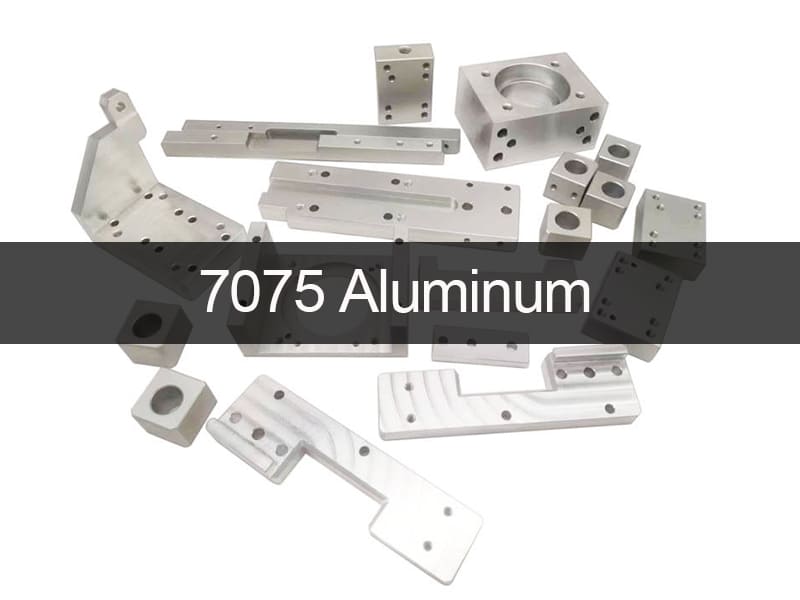
7075 aluminum alloy has a unique and often misunderstood place in the large wrought aluminum alloy system. It shows the practical upper limit of strength for regular aluminum. It has mechanical properties that are similar to those of many low-carbon steels, but it is still lightweight. 7075 is the best “high-strength aluminum” because it has an amazing strength-to-weight ratio. It is also a key material in aerospace and high-performance engineering.
7075-T6 is often called “steel-like aluminum” by engineers. Its yield and tensile strengths are much higher than those of the 6061 alloy, which is used in many products. This is why 7075 is so important for things like aircraft fuselage frames, wing spars, and precision climbing gear, where weight loss is very important and load paths are very stressed.
The value of 7075, on the other hand, is not just how strong it is, but also how much that strength costs. 7075 is different from other alloys because it makes big engineering trade-offs. Its high levels of zinc and copper make it more likely to corrode, make it impossible to weld, and make it harder to machine.
This guide gives a full technical look at 7075 aluminum. We will look at what it’s made of, how the T6 heat treatment works, how to machine it, and the important decision-making framework you need to choose this strong but difficult material.
What is the 7075 aluminum alloy? Alloy System and Composition
7075 aluminum is the best alloy in the 7xxx series. This family was made to be as strong as possible, not just easy to make.
The Engineering Role of 7xxx Series Aluminum Alloys
The Aluminum–Zinc–Magnesium–Copper (Al-Zn-Mg-Cu) system defines the 7xxx series. To see where it fits in the material hierarchy, think about this comparison:
-
5xxx Series (e.g. 5083): Can’t be heat treated. Puts corrosion resistance and weldability first. Used in the hulls of boats.
-
6xxx Series (e.g. 6061): Alloys that can be heat-treated in a balanced way. Puts versatility, extrudability, and resistance to corrosion first. Used in buildings in general.
-
7xxx Series (e.g. 7075): Alloys that can be heat-treated to make them stronger. Gives up weldability and resistance to corrosion in order to get the most strength and stiffness.
Why Zinc Is the Most Important Metal for Strength
The main alloying element is zinc (Zn), which makes up 5.1% to 6.1% of the total. When mixed with Magnesium (Mg) and Copper (Cu), Zinc makes it possible for heat treatment to create very strong strengthening precipitates. Not like the Mg2Si in 6061, the precipitates in η′ In 7075, MgZn2 precipitates make a much denser and stronger barrier to dislocation movement within the metal’s crystal lattice.
Mühendislik İçgörüsü: 7075 is not just a better version of 6061; it is a special alloy. It is chosen when strength is the most important factor and the trade-offs that come with it—difficulty in machining, inability to weld, and risk of corrosion—are carefully considered.
The chemical makeup of 7075 aluminum and how it gets its strength
7075 is very strong because of the way its chemicals are mixed together.
Table 1: Common Chemical Composition (wt.%)
| Element | Minimum % | Maksimum % | Main Engineering Function |
| Çinko (Zn) | 5.1 | 6.1 | The main strengthening agent; it makes MgZn2 precipitates. |
| Magnezyum (Mg) | 2.1 | 2.9 | important for precipitation hardening and makes things stronger. |
| Bakır (Cu) | 1.2 | 2 | Makes things stronger and harder, but less resistant to corrosion. |
| Krom (Cr) | 0.18 | 0.28 | Controls the structure of the grains and makes them better at resisting stress corrosion. |
| Demir (Fe) | – | 0.5 | an impurity that is kept low to keep the material tough. |
| Silisyum (Si) | – | 0.4 | Impurity (kept low). |
| Alüminyum (Al) | Denge | Temel matris. |
The Science of T6: Precipitation Hardening
7075 reaches its best properties through a specific thermal cycle called Precipitation Hardening:
-
Çözelti ısıl işlemi: Heating the alloy until Zn, Mg, and Cu dissolve into a solid solution.
-
Söndürme: These elements freeze in a supersaturated state when they cool quickly.
-
Yapay Yaşlanma (T6): Fine tuning the reheating process lets η′ to nucleate.
This microstructure shows why 7075 is so strong and why it is less flexible. The dense precipitates that stop deformation also make the material less able to stretch before it breaks.
7075 Aluminum’s Physical and Mechanical Properties
Engineers need to look at the properties of 7075 under certain temper conditions. The way the two types of metal behave mechanically is very different. The T6 is stronger at its peak, while the T73 is better at resisting corrosion.
Properties of Tempered Metal
Table 2: Comparison of Typical Mechanical Properties
| Mülkiyet | 7075-O (Annealed) | 7075-T6 / T651 | 7075-T73 | What They Mean in Engineering |
| Çekme Dayanımı | ~228 MPa | ~572 MPa (83 ksi) | ~505 MPa | T6 is one of the strongest types of aluminum. |
| Akma Mukavemeti | ~103 MPa | ~503 MPa (73 ksi) | ~435 MPa | The yield strength of T6 is almost twice that of 6061-T6. |
| Uzama | 17% | 11% | 13% | T6 has low ductility and is hard to shape. |
| Sertlik (Brinell) | 60 HB | 150 HB | 135 HB | Very hard; it doesn’t wear or dent easily. |
| Kırılma Tokluğu | Yüksek | Düşük | Orta | T73 is tougher than T6. |
Physical Properties Important for High-Load Design
-
Yoğunluk: 2.81 g/cm³ (a little heavier than 6061 because it has zinc and copper in it).
-
Elastisite Modülü: 71.7 GPa (10.4 msi).
-
Termal İletkenlik: ~130 W/m-K (less than 6061; heat builds up faster when machining).
Important Design Note: 7075 is 80% stronger than 6061, but it is not much stiffer. If your design is limited by deflection (bending), switching to 7075 won’t help unless you change the shape. Strength keeps things from changing shape permanently, and stiffness keeps things from bending elastically.
7075-T6 Aluminum: Heat Treatment, Strength, and Risk of Stress-Corrosion
The 7075-T6 condition is the point at which this alloy is strongest in real life. But working at this peak level has risks for metals.
The Trade-off: Strength vs. SCC
T6 makes the yield strength as high as possible, but it also makes the microstructure more likely to crack under stress (SCC).
-
Mekanizma: When there is a corrosive environment (like saltwater) and a constant tensile load (like a preloaded bolt), cracks can start along grain boundaries and spread quickly, causing sudden catastrophic failure.
-
The Solution (T73 Temper): Engineers often use 7075-T73 for important aerospace parts that will be outside in the weather. This “over-aged” temper loses about 10–15% of its strength (see Table 2), but it makes SCC and exfoliation corrosion much less likely to happen.
T651 and Residual Stress
Rapid quenching causes thick plates to have a lot of internal stress. These stresses let go when the part is machined, which makes it warp.
Tip: Always order 7075-T651 for machining. The “51” means that the material has been mechanically stretched to relieve internal stress, which keeps its shape.
How easy it is to machine 7075 aluminum in CNC manufacturing
People often call 7075 aluminum “machinable” in CNC manufacturing, but this term needs more information to be understood. It cuts cleanly, but you have to be careful with it.
Why 7075 Works Well (But Is Not Easy)
7075 is hard and brittle for aluminum, which makes it good for chip formation. It makes short, breakable chips that are easy to get rid of. This is different from the “gummy” chips made by soft alloys like 3003 or 5052. This makes for great finishes on the surface.
The problem is that the high shear strength means that cutting forces are much stronger. It makes the spindle and workholding work harder.
İşleme Stratejisi Kılavuzu
-
Aletler: Use sharp, polished carbide tools for tooling. 7075 is hard for aluminum, but it’s soft compared to steel. Coatings like TiB2 or DLC help stop built-up edge (BUE).
-
Heat Control: The tool tip gets hotter because the material doesn’t conduct heat as well as 6061. To avoid mistakes caused by thermal expansion, high-pressure coolant is necessary.
-
Tool Wear: The life of the tool will be shorter than with 6061. The alloying elements, such as Zn and Cu, are more abrasive.
Table 3: Comparison of Machinability
| Özellik | 7075-T6 | 6061-T6 |
| Yüzey İşlemi | Great (Crisp) | Çok iyi |
| Chip Control | Great (Breaks well) | İyi |
| Kesme Kuvveti | Yüksek | Orta |
| Life of the Tool | İyi | Mükemmel |
7075 Aluminum’s Limitations in Joining and Welding
7075 is very strong, but it has one big problem: it can’t be welded.
Why you shouldn’t weld 7075
Fusion welding (TIG/MIG) has a lot of Zinc and Copper in it, which causes:
-
Hot Cracking: As the alloy cools, it makes tiny cracks in the weld bead.
-
Destruction of Microstructure: The heat destroys the T6 temper. The Heat Affected Zone (HAZ) loses almost all of its strength and goes back to a soft, annealed state that can’t be fixed by just aging.
-
Korozyon: The weld zone becomes very anodic, which causes galvanic corrosion to happen quickly.
Joining Options
-
Bolting and riveting: are the standards in the aerospace industry. Using strong fasteners keeps the base metal from breaking.
-
Adhesive Bonding: Structural epoxies are good for spreading loads.
-
Friction Stir Welding (FSW): A solid-state joining process used in specialized aerospace applications to join 7075 without melting it.
How to Treat the Surface and How to Stop Corrosion
7075 doesn’t resist corrosion as well as the 5xxx or 6xxx series do. The copper content makes it easier for galvanic corrosion to happen.
Ways to Protect
7075 anodizes well.
-
Sert Kaplama (Tip III): Best for protecting against wear and rust.
-
Color Note: Because of the mix of alloys, clear anodize may have a yellowish or golden tint, and dyed colors may not match 6061 parts exactly.
-
Alclad 7075: 7075 is often sold as “Alclad” for sheet metal. This is a core of strong 7075 sandwiched between thin layers of pure aluminum. The skin of pure aluminum keeps the core from rusting.
-
Chem-Film (Alodine): Needed for electrical conductivity and as a base for paint.
7075 vs 6061 Aluminum: Pros and Cons of Strength, Machinability, and Cost
One of the most common choices for materials is to compare 6061 and 7075 aluminum.
Table 4: A Comparison of 7075 and 6061 Engineering
| Özellik | 7075-T6 | 6061-T6 | Seçim Mantığı |
| Akma Mukavemeti | ~503 MPa | ~276 MPa | Use 7075 for the best strength-to-weight ratio. |
| Kaynaklanabilirlik | Bad (Don’t use it) | İyi | Use 6061 for welded frames. |
| Korozyon | Adil | Çok iyi | 6061 is good for general outdoor use. |
| Maliyet | Yüksek | Low/Medium | 7075 costs 2–3 times as much as 6061. |
| Fabrication | Machining Only | Evrensel | Use 6061 for extrusions and forming. |
Rule for Choosing:
-
If strength is the most important thing and you have the money, go with 7075. (e.g., carabiners for rock climbing and ribs for airplane wings).
-
For general manufacturing, welding, and cost-effectiveness, choose 6061. (e.g., Car chassis, electronic housings).
7075 and 2024 Aluminum: Rivals in the Aerospace Industry
7075 and 2024 are the two most common choices in aerospace.
-
7075 (Al-Zn): Stronger when not moving. Used for fittings that are under a lot of stress and parts that are under a lot of pressure (like upper wing skins).
-
2024 (Al-Cu): Better at withstanding fatigue and breaking. Used for parts that are under tension (like the lower wing skins) where cracks need to grow slowly.
Common Uses of 7075 Aluminum in Engineering
7075 is used when failure is not an option and weight is a problem.
-
Havacılık ve Uzay: Fuselage frames, bulkheads, wing spars, and landing gear parts.
-
Defense: Receiver extensions for guns (like M16/AR15 buffer tubes) and precision optics housings.
-
Otomotiv: Suspension parts, racing chassis plates, and gears for cars and racing.
-
Sports Gear: High-end bike frames, rock climbing gear, and lacrosse shafts.
-
Mold Making: used for short-run injection molds (7075-T651 plate) because it can be machined faster than steel and keeps details well.
7075 Aluminum’s Engineering Limits
7075 is a “super alloy,” but it has limits:
-
No welding: If your design needs welded joints, you need to use a different alloy.
-
Risk of Corrosion: It will pit and break down in wet places if it doesn’t have a protective coating (anodize/paint).
-
Maliyet: It costs a lot more than 6061. It’s a waste of money to use it for low-stress cosmetic parts.
-
Low Formability: You can’t bend 7075-T6 without breaking it. It needs to be shaped while it is in the annealed state (O-condition) and then heated, which makes it bend.
Summary: Important Engineering Lessons
7075 aluminum alloy is like a muscle car in the aluminum world: it works well, costs a lot, and needs to be handled carefully. It pushes the limits of what aluminum can do by being as strong as steel but lighter.
Önemli Noktalar:
-
Use 7075-T6 when yield strength and strength-to-weight ratio are the most important factors in the design.
-
Control the Temper: Use T651 for machined parts to make sure they are flat. If the part will be in corrosive environments and under heavy loads for a long time, use T73.
-
Design for Assembly: Plan for bolted or bonded joints, not welds.
-
Always ask for anodizing or conversion coating to protect the surface from rust.
Engineers can make safe, long-lasting, and easy-to-manufacture structures that are lightweight and high-performing by knowing what 7075 can do and what it can’t.
Sıkça Sorulan Sorular
Q: Is 7075 aluminum stronger than steel?
A: Yes, 7075-T6 is stronger than many structural steels, like A36, when it comes to specific strength (strength-to-weight ratio). It is as strong as lower-grade steels but not as strong as high-strength alloy steels like 4140 or stainless steel.
Q: Is it possible to weld 7075 aluminum?
A: No. Fusion welding makes tiny cracks and weakens the material. You should use fasteners or glue to put it together.
Q: Will 7075 rust?
A: It doesn’t “rust” (red iron oxide), but it does corrode more easily than other types of aluminum. It makes a white powder called aluminum oxide and is likely to get pits. It needs to be anodized or painted to stay safe.
Q: What makes 7075 so expensive?
A: It has costly alloying elements like zinc and copper, and it needs a complicated, multi-step heat treatment process (Solution treat -> Quench -> Stretch -> Age). It takes longer and uses more energy to make than 6061.
Q: What’s the difference between 7075-T6 and 7075-T651?
A: T6 is just treated with heat. T651 is heated up and then stretched by 1–3% using machines. This stretching gets rid of internal residual stresses, so the T651 plate won’t warp as much when you cut away material.


