
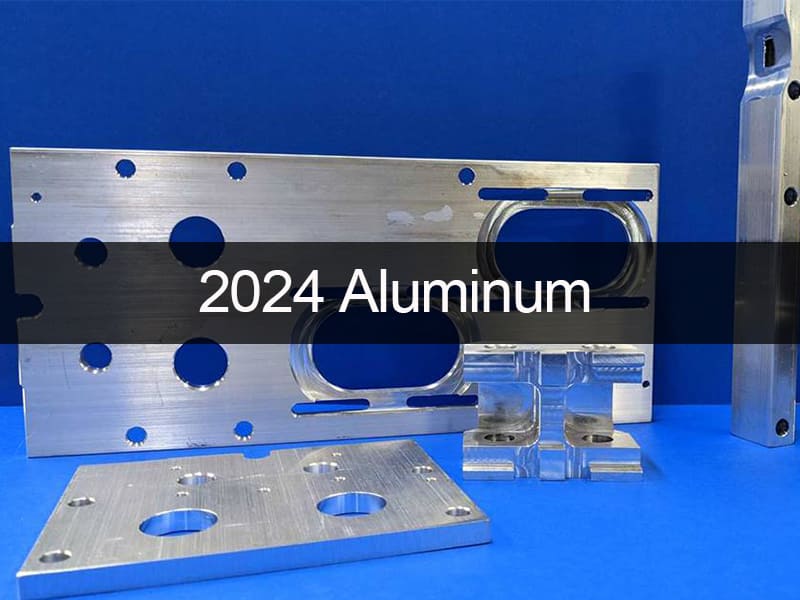
2024 aluminum alloy is a historically important and technically unique member of the family of high-strength aerospace materials. Originally made for aircraft structures that needed very high strength-to-weight ratios under cyclic loading, it is still a key material for fuselage skins, wing tension members, and parts that are critical for fatigue.
But 2024 aluminum is not a "easy-to-use" alloy. Because it has a lot of copper in its chemistry, it is naturally difficult to resist corrosion, weld, and machine. Engineers today have to make a conscious choice when they specify 2024 aluminum: they have to accept that it will be harder to make in exchange for better damage tolerance. This guide looks at the properties, processing realities, and important limitations of 2024 aluminum. It helps designers and procurement teams figure out when this alloy is the best choice for high-performance applications.
What is the 2024 aluminum alloy? Series, composition, and material position
Classification and Series of Alloys
The Aluminum–Copper–Magnesium (Al-Cu-Mg) system defines the 2xxx series of wrought aluminum alloys, which includes 2024 Aluminum. The 2xxx series is made specifically to be resistant to fatigue and breakage, unlike the 6xxx series, which is made for general use, and the 7xxx series, which is made for ultra-high strength.
To see where 2024 fits in with other common series, look at it next to them:
Table 1: A Comparison of Aluminum Alloy Series
| Alaşım Serisi | Main Parts | Main Trait | Ortak Kullanım |
| 2xxx (e.g. 2024) | Al-Cu-Mg | High Damage Tolerance and Fatigue Strength | aircraft skins and tension members |
| 6xxx (örn. 6061) | Al-Mg-Si | Resistant to corrosion and easy to weld | Frames for buildings and parts for cars |
| 7xxx (örn. 7075) | Al-Zn-Mg-Cu | Maximum Static Tensile Strength | Gears with a lot of weight, tooling plates |
Mühendislik İçgörüsü: 2024 is often better for parts that are under tension and have to go through a lot of stress cycles because cracks move through its microstructure more slowly than 7075.
Chemical Makeup and How They Work to Make Things Strong
The strength of 2024 aluminum comes from precipitation hardening. The high amount of copper (3.8–4.9%) makes it possible for fine intermetallic precipitates to form (Al2CuMg) while being heated. These precipitates make it harder for dislocations to move, which greatly increases yield strength.
Table 2: Common Chemical Makeup (wt.%)
| Parça | Aralık | İşlev |
| Bakır (Cu) | 3.8–4.9 | This is the main strengthener; it makes things harder but less resistant to corrosion. |
| Magnezyum (Mg) | 1.2–1.8 | It makes the response to precipitation better and makes strain hardening stronger. |
| Manganez (Mn) | 0.3–0.9 | Makes the grain structure better and makes it more stable when it gets tired. |
| Alüminyum (Al) | Denge | A base matrix that balances things out. |
2024 Aluminum's Physical and Mechanical Properties
Engineers need to look at the properties of 2024 aluminum under certain temper conditions. The mechanical properties change a lot depending on how the material was heated and cooled.
Mekanik Özellikler için Tipik Değerler
Table 3: Mechanical Properties by Temperature
| Mülkiyet | 2024-T3 | 2024-T4 | 2024-T351 | What does engineering mean? |
| Çekme Dayanımı | ~485 MPa (70 ksi) | ~470 MPa (68 ksi) | ~470 MPa | Similar to mild steel. |
| Akma Mukavemeti | ~345 MPa (50 ksi) | ~325 MPa (47 ksi) | ~325 MPa | Very hard to change shape permanently. |
| Esneme hareketleri | ~18% | ~20% | ~19% | Good ductility; can be shaped in some ways. |
| Fatigue Strength* | ~140 MPa | ~140 MPa | ~140 MPa | Great performance under cyclic loads. |
*The R.R. Moore test shows that the fatigue strength is 5 x 10 ^8cycles.
Fiziksel Özellikler
-
Yoğunluk: 2.78 g/cm³ (a little heavier than 6061 because it has more copper in it).
-
Elastikiyet Modülü: 73 GPa (10.6 msi). Stiffness is similar to that of other aluminum alloys, but strength is not the same as stiffness.
-
Termal iletkenlik: about 121 W/m-K (lower than 6061, which means that heat builds up more during machining).
Learning about 2024-T3 Aluminum: Heat Treatment and Stress Left Over
The most common temper for aerospace sheets and plates is 2024-T3 aluminum. For planning manufacturing, it's very important to know what the "T3" designation means.
What T3 Temper Means
The T3 temper shows that the alloy has been:
-
Solution Heat Treated: Heated to get rid of the alloying elements.
-
Cold Worked (Stretched): Changed shape to make it stronger and relieve some of the stress from quenching.
-
Naturally Aged: Let sit at room temperature to stabilize.
This process makes T3 very strong and flexible, which is great for fuselage skins that need to be able to bend without breaking.
Residual Stress and Stability in Machining
Even after cold working, 2024-T3 still has a lot of internal residual stress. When CNC machining removes material from one side of a plate, it changes the balance of internal stress, which can cause the part to bend or warp.
Tip for DFM: If you need parts that fit tightly, think about using 2024-T351. The "51" at the end means that the stretching process is controlled and relieves stress, which greatly improves dimensional stability.
Why aerospace still chooses 2024 aluminum for its fatigue performance
Why pick 2024 when 7075 is stronger? The answer is Damage Tolerance.
Static Strength vs. Fatigue Strength
-
Static strength tells you how much weight a part can hold at once.
-
Yorulma mukavemeti tells you how much load it can handle over and over again.
7075-T6 is stronger when it is not moving, but it is more prone to cracking. Once a crack starts, it can spread quickly. 2024-T3 has better Fracture Toughness and slower rates of crack growth.
Safety and Crack Propagation
It is assumed that micro-cracks will eventually form in aerospace design. The goal of engineering is to make sure these cracks grow slowly enough that they can be found during regular maintenance before they cause a major failure. Aluminum 2024 is great here. The way its microstructure is set up makes it easier for crack tips to blunt, which stops the crack from moving forward. This behavior is what makes it necessary for structures that are under tension, like the lower wing skins.
What CNC Machining Is Like for 2024 Aluminum
From a manufacturing point of view, machining 2024 aluminum is a different kind of challenge than machining 6061 aluminum, which is everywhere.
Rating for Machinability
2024 is a little harder than 6061 and makes more heat, but it makes shorter, cleaner chips. Compared to 7075, 2024 is less rough on tools but "gummier."
Problems with Process Control
-
Takım Aşınması: The high copper content makes it harder for heat to move through. The heat stays in the tool edge instead of going with the chip, which speeds up flank wear.
-
Yüzey İşlemi: 2024 can be prone to micro-tearing if the cutting tool is dull, even though it machines to a high finish. You need sharp, polished carbide tools with high positive rake angles.
-
Distorsiyon: As was said with the T3 temper, parts with thin walls will move.
-
Çözüm: Follow the "Rough – Relax – Finish" plan. Take off the bulk material, unclip the part so it can settle, and then make light finishing passes.
Ways to protect surfaces and resist corrosion
Corrosion is the weak point of 2024 aluminum. The copper that gives the alloy strength also makes galvanic cells in the microstructure, which makes it more likely to get pitting and exfoliation corrosion.
The "Alclad" Fix
To help with this, aerospace sheets are often sold as Alclad 2024.
-
What it is: A strong 2024 core with thin layers of pure aluminum on either side.
-
Nasıl çalışıyor? The pure aluminum cladding protects the core both physically and electrically by acting as a sacrificial anode.
-
Sınırlama: Alclad is mostly for sheets. Machined parts (like plates and bars) usually can't be Alclad because machining takes off the protective layer.
Coating and Anodizing
Surface protection is required for parts that are not clad.
-
Anodizasyon: It's hard to anodize 2024. The oxide layer turns yellowish or dark gray because of the copper, and the coating isn't as strong as it is on 6061.
-
Chem-Film (Alodine): Commonly used for its ability to conduct electricity and resist mild corrosion.
-
Primer/Paint: The standard for long-lasting aerospace durability.
A Useful Guide to Choosing Between 2024 and 6061 Aluminum
When designing a structure, one of the most important choices is whether to use 2024 or 6061 aluminum.
Table 4: A Side-by-Side Look at 2024 and 6061 Engineering
| Özellik | 2024-T3/T351 | 6061-T6 | Choice Logic |
| Ana Güç | High Fatigue / Yield | Balanced / Flexible | Use 6061 for static frames and 2024 for cyclic loads. |
| Life of Fatigue | Harika | Orta | For parts that vibrate or move, use 2024. |
| Korozyon direnci | Kötü | Harika | For outdoor and marine use, use 6061. |
| Kaynaklanabilirlik | Not weldable (very bad) | Yes (Great) | Use 6061 for assemblies that need to be welded. |
| İşlenebilirlik | Good for breaking chips | Gummy chips | 2024 chips are better, and 6061 makes longer strings. |
| Maliyet | Daha fazla | Daha az | Use 6061 to save money in general. |
Limitations of 2024 Aluminum in Engineering
Engineers need to respect the hard limits of this alloy to avoid failures while it is in use.
1. Not Good for Welding
Don't weld aluminum 2024. The weld zone gets "hot cracking" because it has a lot of copper in it, and the heat-affected zone (HAZ) loses a lot of strength. If you need to weld something, use 6061 or 5083 instead. You must use fasteners (like rivets or bolts) to put together 2024 parts.
2. Not Safe to Use Outside Without Protection
If you don't put a protective coating on it, 2024 will rust quickly in humid or salty places. It is not a material that doesn't need maintenance, like 5052 or 6061.
3. Not good for cosmetic anodizing
Stay away from 2024 if the look of the anodized layer is important (like in consumer electronics). The finish that comes out is often dirty or uneven.
Summary: Important Engineering Lessons
2024 aluminum alloy is still an important material for engineers to have on hand. It's not the newest, but it has a proven, predictable balance of high strength and damage resistance.
Last Suggestions:
-
For parts that will be under tension, vibration, and fatigue cycles in 2024, such as aircraft skins and connecting rods, please specify.
-
To reduce distortion, use T351 temper for machined parts.
-
Plan for Protection: Always use a surface treatment like cladding, anodizing, or painting to keep rust from forming.
-
Don't weld; make sure that assemblies can be bolted or riveted.
Engineers can take advantage of the unique fatigue performance of 2024 aluminum while staying within its manufacturing and environmental limits by knowing these trade-offs.
Sıkça Sorulan Sorular
Q: Is 6061 aluminum stronger than 2024?
A: Yes. The yield strength of 2024-T3 is about 345 MPa, and the yield strength of 6061-T6 is about 276 MPa. But strength isn't everything; 6061 is much better at resisting rust and welding.
Q: Why do planes use 2024?
A: Because it doesn't get tired. Aircraft go through constant cyclic loading, like pressurization and turbulence. 2024 is less likely to crack than stronger alloys like 7075, which makes it safer for tension members and fuselage skins.
Q: Is it possible için CNC machine 2024 aluminum?
A: Yes, it works well with short chips. However, designers need to know that T3 plate can have residual stress, which can cause warping. Using 2024-T351 helps with this.
Q: Does aluminum 2024 rust?
A: It doesn't "rust" like steel, but it does corrode easily because it has a lot of copper in it, which makes it turn white and powdery. It needs protection, such as Alclad, anodizing, or painting.
Q: What's the difference between 2024-T3 and 2024-T4?
A: T3 means working with cold (stretching) after heat treatment to make it stronger. T4 is aged naturally without being cold worked. T3 is stronger and more often used for structural sheet and plate.


