
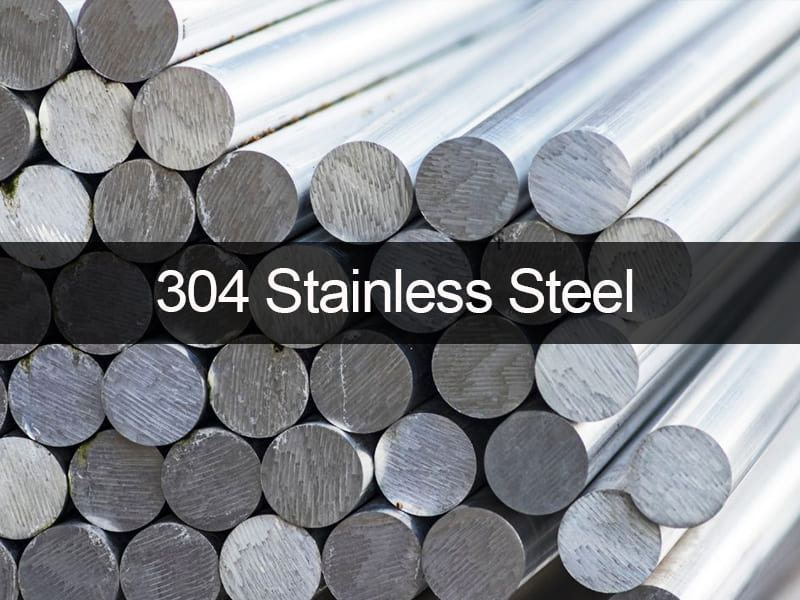
Стандартный сплав 304 производится с низким содержанием углерода, что снижает вероятность межкристаллитной коррозии сварных деталей. Основное металлургическое преимущество заключается в снижении риска сенсибилизации в зоне термического влияния (ЗТВ). Это означает, что сварные конструкции сохраняют коррозионную стойкость без необходимости отжига после сварки.
Инженеры используют нержавеющую сталь 304L в качестве стандарта для изготовления сложных изделий, таких как сосуды под давлением, промышленные трубопроводы и фармацевтические резервуары. Она обладает несколько меньшей механической прочностью, чем стандартная 304, но выбирается за свою надёжность в технологическом процессе. Она гарантирует, что структурная целостность и коррозионная стойкость сборки не пострадают от термических циклов сварки, что делает её хорошим выбором для долговечного производства.
Из чего состоит нержавеющая сталь 304L
Чем 304L отличается от 304 благодаря низкоуглеродному дизайну
Самое важное в нержавеющей стали 304L — это очень низкое содержание углерода. Согласно стандартам ASTM и EN (UNS S30403 / EN 1.4307), 304L может содержать только 0,03 вес.% углерода, тогда как стандартная 304 может содержать до 0,08 вес.%. Это может показаться незначительным химическим различием, но оно влияет на поведение материала при нагреве.
Когда аустенитные нержавеющие стали нагреваются до диапазона сенсибилизации (около 450–850 °C), избыток углерода реагирует с хромом, образуя карбиды хрома на границах зёрен. Эта реакция снижает содержание хрома в стандартной 304, что облегчает возникновение межкристаллитной коррозии. Это вид отказа, который часто может быть вызван сваркой. 304L предотвращает выпадение карбидов, ограничивая содержание углерода до 0,03%. Это защищает толстостенные сечения и многопроходные сварные швы от коррозии после сварки.
Как никель и хром влияют на стабильность аустенитной стали
304L не только контролирует углерод, но и сохраняет классический баланс хрома и никеля, который делает семейство аустенитных сталей серии 300 уникальным.
Типичные диапазоны состава:
| Элемент | Типичное содержание (вес.%) | Роль инженера |
| Хром (Cr) | 18.0–20.0 | Это создаёт пассивную плёнку оксида хрома, которая защищает от коррозии. |
| Никель (Ni) | 8.0–12.0 | Стабилизирует аустенитную структуру и повышает её пластичность и ударную вязкость. |
| Углерод (C) | ≤ 0,03 | Снижает сенсибилизацию и выпадение карбидов при сварке. |
| Марганец (Mn) | ≤ 2,0 | Стабилизирует аустенит и удаляет кислород. |
| Кремний (Si) | ≤ 1.0 | Повышает стойкость к окислению при обработке. |
| Железо (Fe) | Баланс | Основная структурная матрица. |
Хром придаёт материалу базовую коррозионную стойкость, а никель обеспечивает полную аустенитность, что означает пластичность, ударную вязкость при очень низких температурах и немагнитность в отожжённом состоянии. Важно помнить, что термическая обработка не может упрочнить нержавеющую сталь 304L; это возможно только холодной обработкой.
Микроструктура и поведение металлов в различных условиях
Инженерам, изготавливающим санитарное оборудование или сосуды под давлением, необходимо знать, насколько стабильна микроструктура 304L. Её ценность заключается не в повышенной прочности, а в способности противостоять металлургической деградации при изготовлении.
Аустенитная структура и свойства, не притягивающие магнит
Кристаллическая структура нержавеющей стали 304L — гранецентрированная кубическая (ГЦК), что типично для аустенитного семейства. Эта структура делает материал немагнитным после гомогенизирующего отжига, что является важным свойством для устройств, требующих отсутствия магнитных помех, таких как медицинские визуализационные аппараты и электроника.
Однако механическая деформация (холодная обработка), такая как гибка, глубокая вытяжка или интенсивная механическая обработка, может вызвать фазовое превращение, при котором часть аустенита превращается в мартенсит. Это делает материал слегка магнитным. Инженеры должны знать, что этот магнитный отклик является физическим эффектом деформационного упрочнения, а не химическим дефектом, и сам по себе не ослабляет коррозионную стойкость.
Почему низкое содержание углерода снижает вероятность сенсибилизации
Инженерная причина использования 304L — предотвращение сенсибилизации. В стандартной 304 образование карбидов хрома (Cr23C6) на границах зёрен создаёт области с низким содержанием хрома. Эти области действуют как аноды по отношению к внутренней части зерна, что вызывает быструю межкристаллитную атаку в коррозионных средах.
Низкоуглеродная химия 304L предотвращает эту реакцию. Углерода недостаточно для связывания хрома, даже когда металл подвергается воздействию сварочных температур в течение длительного времени. Таким образом, хром остаётся в твёрдом растворе, сохраняя пассивный оксидный слой. Такое поведение означает, что послесварочная термическая обработка (ПСТО) не требуется, что часто невозможно для больших резервуаров или трубопроводных систем, сооружаемых в полевых условиях.
Что это означает для проектирования
-
Надёжность сварных швов: Безопасно применять на толстых сварных швах, где скорость охлаждения низкая.
-
Эффективность процесса: Устраняет затраты и риски деформации, связанные с послесварочным отжигом.
-
Безопасность: Снижает вероятность катастрофического межкристаллитного коррозионного разрушения при эксплуатации.
Физические и механические свойства нержавеющей стали 304L
Нержавеющая сталь 304L отличается от высокопрочных сплавов, так как она очень пластична и вязка. Проектировщикам необходимо учитывать её низкий предел текучести и другие физические свойства, особенно тепловое расширение.
Механические свойства (состояние отжига)
304L обладает умеренной прочностью, но очень легко формуется в отожжённом состоянии.
| Недвижимость | Нормальное значение | Инженерное примечание |
| Предел текучести (смещение 0,2%) | ~170–190 МПа | Намеренно ниже, чем у 304, для облегчения формообразования. |
| Прочность на разрыв | ~480–620 МПа | Высокий предел прочности обеспечивает запас безопасности. |
| Удлинение | ~40–55% | Очень пластична для глубокой вытяжки и гибки. |
| Твердость | ~150–170 HB | It is moderately hard and becomes harder quickly when worked on. |
The yield strength is the most important thing to think about when designing a structure. 304L is not as strong as carbon steel, but its high ductility makes it less likely to break when it is hit or overloaded. This makes it safer in those situations.
Design Needs to Know About Physical Properties
-
Thermal Expansion (~17.2 µm/m·°C): 304L expands a lot more than carbon steel. To avoid thermal stress failures in mixed-metal assemblies like heat exchangers, this difference in expansion must be taken into account.
-
Low thermal conductivity (~16 W/m·K): means that heat stays in one place during welding and machining. This needs careful control of the heat input to keep distortion to a minimum.
Инженерная интерпретация: 304L is a material that is easy to shape and weld. For most containment and structural uses, its mechanical properties are good enough as long as the thickness of the sections is based on its yield strength.
Where 304L is good and where it isn’t (Corrosion Resistance)
304L stainless steel is the most common type of stainless steel used in the industry for general corrosion resistance, but it is not the best choice for every situation. To choose the right material, you need to know the exact chemical environment.
General resistance to corrosion in factories
304L works very well in places where it is exposed to oxygen, in freshwater systems, and in the air. It quickly regenerates its passive film, which gives long-term protection in:
-
Atmospheric environments: inside and outside (not on the coast).
-
Sanitary systems: processing food, drinks, and dairy.
-
Handling chemicals: weak alkalis and organic acids like acetic and citric acid.
Restrictions on Chloride and Marine Conditions
The main problem with 304L is that it is easily damaged by chlorides. When saltwater, brackish water, or cleaning products with a lot of chlorine are around, the passive film is damaged in some places. This causes:
-
Pitting Corrosion: Deep holes that are only in one place.
-
Crevice Corrosion: Attack that happens under gaskets or bolt heads.
-
Коррозионное растрескивание под напряжением (SCC): This can happen in chloride environments at temperatures above 60°C.
Useful Engineering Tips:
| Окружающая среда | Пригодность | Примечания |
| Indoor / General Outdoor | ✅ Recommended | Lasts a long time. |
| Food and Drink | ✅ Recommended | Make sure to use sanitizers that don’t contain chloride. |
| Freshwater Systems | ✅ Recommended | Safe for drinking water. |
| Marine / Coastal | ❌ Not Recommended | There is a high risk of tea-staining and pitting. |
| Chloride Processing | ❌ Not Recommended | Upgrade to 316L (with added molybdenum). |
How to Make and Weld 304L Stainless Steel
The fact that 304L stainless steel is easy to work with is a big reason why it is so popular. It is made to lower the metallurgical risks that come with welding.
Why 304L Is Better for Structures That Are Welded
Welding needs are almost always what makes engineers choose 304L over 304. The heat-affected zone (HAZ) in standard 304 is likely to become sensitive. The carbon cap on 304L (≤ 0.03%) almost completely removes this risk. This makes it possible to make complicated pressure vessels and piping spools that don’t rust when they are welded, which gets rid of the logistical and financial burden of heat treatment after welding.
Common Ways to Weld and Helpful Hints
-
Compatible with TIG (GTAW), MIG (GMAW), Stick (SMAW), and Laser welding.
-
The standard filler metals are ER308L or ER308LSi. The “L” in the filler keeps the low-carbon chemistry across the joint.
-
Controlling heat: 304L doesn’t get sensitized, but it does expand a lot when it gets hot, which can cause distortion. Intermittent welding, back-stepping, and proper clamping are very important.
Managing the Heat-Affected Zone (HAZ)
Cleaning after welding is necessary to keep corrosion resistance. The heat tint that forms during welding breaks down the surface chromium layer. Welds need to be chemically passivated or mechanically cleaned (pickled) to get rid of oxides and free iron in order to restore the passive film.
What CNC Machining Can Do with 304L Stainless Steel
304L is easy to weld, but it can be hard to work with in subtractive manufacturing. It is described as “gummy” and likely to harden when worked on.
How Work Hardening Works in Machining
304L doesn’t cut cleanly; it bends and breaks before the cutting tool. When the tool stays still or rubs, the work material hardens right away, and it can even get harder than the cutting edge itself. This causes tools to fail quickly and leaves a rough surface. 304L makes long, stringy chips that are harder to get rid of than 303 stainless steel, which has sulfur in it to break up chips.
Tooling, Feeds, and Speeds: Helpful Hints
-
Инструменты: Use rigid, high-quality carbide tools with positive rake angles to cut the metal instead of plowing it.
-
Feed Rates: Keep the feed rate steady and high. “Babying” the cut makes the tool ride on the layer that has hardened from work.
-
Охлаждающая жидкость: You need heavy flood coolant to keep things cool and help get rid of chips.
-
Стратегия: Don’t make cuts that are broken up if you can help it. Make sure that drills go in quickly and come back out mostly to clear chips, not to stay there.
Инженерное влияние: Compared to carbon steels or free-machining stainless grades, you should expect longer cycle times and higher tooling costs.
304L vs 304 vs 316L: How to Pick the Right Engineering Material
You should choose one of these austenitic grades based on how you plan to use it and how much exposure it will have to the environment.
304L vs. 304: Welding vs. General Use
The only difference is the amount of carbon and how well it can be welded.
| Фактор | 304 (Standard) | 304L (Low Carbon) |
| Содержание углерода | 0.08% or less | 0.03% or less |
| Welding Risk | High (Sensitization) | Low (Safe for Welding) |
| Сила | A Little Higher | A Little Lower |
| Наилучшее применение | Machined parts and non-welded items | Welded tanks, piping, and structures |
Selection Logic: If the part is welded, choose 304L. 304 is fine for a machined bracket or bolt that won’t get hot (and it is often a little cheaper).
How bad is the environment for 304L vs 316L?
The difference is the amount of molybdenum.
| Фактор | 304L | 316L |
| Alloy Difference | Basic Cr-Ni | Adds 2–3% Molybdenum |
| Chloride Resistance | Ограниченный | Отлично |
| Стоимость | Less | More |
| Наилучшее применение | General industrial, sanitary | Marine, chemical, and pharmaceutical |
Selection Logic: Use 304L for most sanitary and industrial uses. Only switch to 316L if there are chlorides, saltwater, or strong chemicals.
What People Use 304L Stainless Steel For
304L stainless steel is the most important material for making things in factories because it is easy to weld and resists rust.
Welded tanks, vessels, and piping systems
This is the main use for 304L. Post-weld heat treatment is often not possible in big pressure vessels and process piping. 304L makes sure that the miles of weld seams in a chemical plant or water treatment facility stay as resistant to corrosion as the base metal.
Tools for Making Food and Drinks
For hygiene, surfaces need to be smooth and able to withstand frequent washdowns. 304L is the standard material for food conveyors, dairy piping, and brewing tanks. It can handle low-chloride sanitizing methods and doesn’t break down when exposed to organic acids found in food.
Chemicals and Drugs Equipment
304L is a cheap way to store skids, hoppers, and structural frameworks in places with moderate chemical exposure. It is used a lot in places where controlling contamination is very important, but the chemical aggressiveness doesn’t make 316L or Hastelloy worth the money.
Standards, Specifications, and Global Equivalents
Engineers should use well-known international standards to specify 304L so that the supply chain stays the same.
The Most Important Global Standards
| Region/Org | Стандарт | Назначение класса | Note |
| USA (ASTM) | ASTM A240/A276 | Type 304L | Standard for plate and bar. |
| Global (UNS) | — | S30403 | Number for the whole world. |
| Европа (EN) | EN 10088 | 1.4307 | Same as X2CrNi18-9. |
| Япония (JIS) | G4303 | SUS 304L | Used a lot in Asia. |
Engineering Best Practice: Always list the standard along with the grade, like “Material: ASTM A240 Type 304L.” This sets the limits for how the material can be used, how big it can be, and what tests it needs to pass to make sure it meets engineering standards.
A summary of engineering lessons
304L stainless steel is not stronger than other types of stainless steel; it is more reliable to make. Its low carbon chemistry (≤ 0.03%) is a specific engineering solution to the problem of carbide precipitation in welded structures.
-
If you need to weld something: like tanks, pressure vessels, or piping where post-weld annealing is not possible, choose 304L.
-
Manage the trade-offs: When machining, you have to accept a slightly lower yield strength and more work hardening.
-
Know the Limit: 304L will probably fail if it is exposed to chlorides or marine environments. Instead, use 316L.
Часто задаваемые вопросы
What is 304L stainless steel?
The standard austenitic 304 stainless steel has a low carbon content (≤0.03% C). It is designed to stop sensitization (carbide precipitation) during welding, which makes sure that the heat-affected zone is resistant to corrosion.
What makes 304 different from 304L?
The main difference is how much carbon is in it. 304 can have up to 0.08% carbon, but 304L can only have 0.03%. 304 is a little stronger, but 304L is a lot better at resisting intergranular corrosion after welding.
Is 304L better for welding than 304?
Yes. 304L is the standard for welded parts in the industry because it doesn’t need to be heat-treated after welding to keep its corrosion resistance.
Is 304L not as strong as 304?
A little bit. The lower carbon content means that the yield and tensile strength are only slightly lower than those of standard 304. But this difference doesn’t matter much for most structural and pressure applications when you think about the benefits of making things.
Is 304L safe to use for food and medicine?
Yes. 304L is used a lot in the food, drink, and pharmaceutical industries because it is easy to clean, doesn’t corrode when exposed to organic acids, and doesn’t react with other materials.
Can 304L replace 316L?
No, 304L doesn’t have Molybdenum and doesn’t resist chlorides and pitting corrosion as well as 316L does. Do not use it in water or with strong chemicals.
Is it simple to use 304L?
It can be welded, but machining it is hard. 304L work-hardens quickly, just like all other austenitic stainless steels. To keep tools from breaking, it needs rigid setups, sharp tools, and fast feed rates.


