
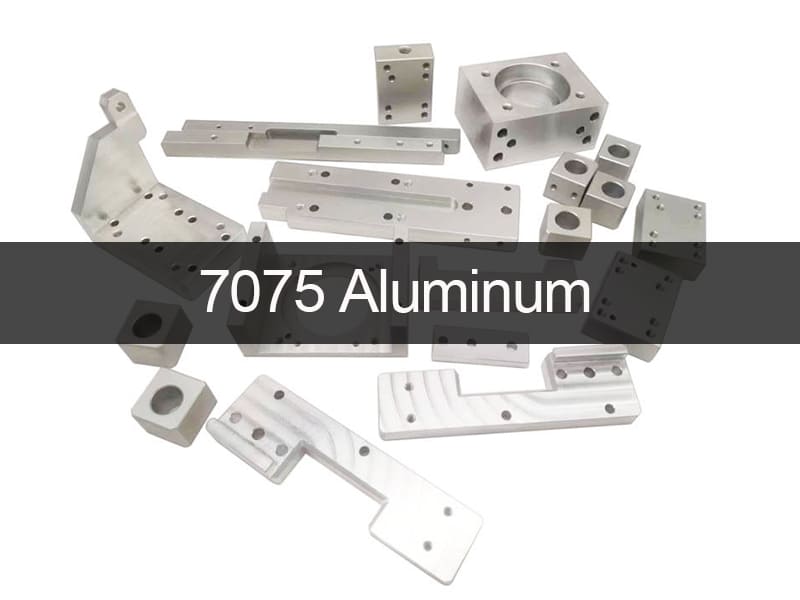
Сплав алюминия 7075 занимает уникальное и часто неправильно понимаемое место в большой системе деформируемых алюминиевых сплавов. Он демонстрирует практический верхний предел прочности для обычного алюминия. Его механические свойства схожи со свойствами многих низкоуглеродистых сталей, но при этом он остаётся лёгким. 7075 — это лучший “высокопрочный алюминий”, поскольку он обладает удивительным соотношением прочности и веса. Это также ключевой материал в аэрокосмической отрасли и высокопроизводительном машиностроении.
7075-T6 часто называют “сталеподобным алюминием” инженеры. Его предел текучести и предел прочности на разрыв значительно выше, чем у сплава 6061, который используется во многих изделиях. Именно поэтому 7075 так важен для таких деталей, как каркасы фюзеляжа самолётов, лонжероны крыльев и прецизионное альпинистское снаряжение, где снижение веса очень важно, а силовые пути испытывают высокие нагрузки.
Ценность 7075, с другой стороны, заключается не только в его прочности, но и в том, сколько эта прочность стоит. 7075 отличается от других сплавов тем, что предполагает серьёзные инженерные компромиссы. Высокое содержание цинка и меди делает его более подверженным коррозии, делает невозможной сварку и затрудняет обработку резанием.
Это руководство представляет полный технический обзор алюминия 7075. Мы рассмотрим его состав, принцип работы термической обработки T6, особенности его обработки резанием, а также важную систему принятия решений, необходимую для выбора этого прочного, но сложного материала.
Что такое алюминиевый сплав 7075? Система сплавов и состав
Алюминий 7075 — лучший сплав в серии 7xxx. Это семейство было создано для максимально возможной прочности, а не просто для лёгкости изготовления.
Инженерная роль алюминиевых сплавов серии 7xxx
Система алюминий–цинк–магний–медь (Al-Zn-Mg-Cu) определяет серию 7xxx. Чтобы понять, где она находится в иерархии материалов, рассмотрите следующее сравнение:
-
Серия 5xxx (например, 5083): Не поддаётся термической обработке. На первом месте — коррозионная стойкость и свариваемость. Используется в корпусах судов.
-
Серия 6xxx (например, 6061): Сплавы, которые можно сбалансированно подвергать термической обработке. На первом месте — универсальность, экструдируемость и коррозионная стойкость. Используется в строительных конструкциях общего назначения.
-
Серия 7xxx (например, 7075): Сплавы, которые можно подвергать термической обработке для повышения прочности. Жертвует свариваемостью и коррозионной стойкостью ради максимальной прочности и жёсткости.
Почему цинк — важнейший металл для прочности
Основной легирующий элемент — цинк (Zn), который составляет от 5,1% до 6,1% от общего состава. В сочетании с магнием (Mg) и медью (Cu) цинк делает возможным создание при термической обработке очень прочных упрочняющих выделений. В отличие от Mg2Si в 6061, выделения η′ В 7075 выделения MgZn2 создают гораздо более плотный и прочный барьер для движения дислокаций внутри кристаллической решётки металла.
Инженерный взгляд: 7075 — это не просто улучшенная версия 6061; это особый сплав. Его выбирают, когда прочность является наиболее важным фактором, а связанные с ней компромиссы — сложность обработки резанием, невозможность сварки и риск коррозии — тщательно учитываются.
Химический состав алюминия 7075 и то, как он приобретает свою прочность
7075 очень прочен благодаря способу смешивания его химических элементов.
Таблица 1: Типичный химический состав (мас.%)
| Элемент | Минимум % | Максимум % | Основные инженерные функции |
| Цинк (Zn) | 5.1 | 6.1 | Основной упрочняющий агент; образует выделения MgZn2. |
| Магний (Mg) | 2.1 | 2.9 | важен для дисперсионного твердения и повышает прочность. |
| Медь (Cu) | 1.2 | 2 | Повышает прочность и твёрдость, но снижает коррозионную стойкость. |
| Хром (Cr) | 0.18 | 0.28 | Контролирует структуру зерна и повышает сопротивление коррозионному растрескиванию под напряжением. |
| Железо (Fe) | – | 0.5 | примесь, содержание которой поддерживается низким для сохранения вязкости материала. |
| Кремний (Si) | – | 0.4 | Примесь (поддерживается на низком уровне). |
| Алюминий (Al) | Баланс | Базовая матрица. |
Наука T6: дисперсионное твердение
7075 достигает своих лучших свойств благодаря определённому термическому циклу, называемому дисперсионным твердением:
-
Термическая обработка на твёрдый раствор: Нагрев сплава до растворения Zn, Mg и Cu в твёрдом растворе.
-
Закалка: При быстром охлаждении эти элементы фиксируются в пересыщенном состоянии.
-
Искусственное старение (T6): Точная настройка процесса повторного нагрева позволяет η′ зарождаться.
Эта микроструктура показывает, почему 7075 такой прочный и почему он менее пластичен. Плотные выделения, препятствующие деформации, также снижают способность материала растягиваться до разрушения.
Физические и механические свойства алюминия 7075
Инженерам необходимо рассматривать свойства 7075 при определённых состояниях термообработки. Механическое поведение двух типов металла очень различается. T6 прочнее на пике, тогда как T73 лучше сопротивляется коррозии.
Свойства термообработанного металла
Таблица 2: Сравнение типичных механических свойств
| Недвижимость | 7075-O (отожжённый) | 7075-T6 / T651 | 7075-T73 | Что они означают в инженерии |
| Прочность на разрыв | ~228 МПа | ~572 МПа (83 ksi) | ~505 МПа | T6 — один из самых прочных типов алюминия. |
| Предел текучести | ~103 MPa | ~503 MPa (73 ksi) | ~435 MPa | The yield strength of T6 is almost twice that of 6061-T6. |
| Удлинение | 17% | 11% | 13% | T6 has low ductility and is hard to shape. |
| Твёрдость (по Бринеллю) | 60 HB | 150 HB | 135 HB | Very hard; it doesn’t wear or dent easily. |
| Вязкость разрушения | Высокий | Низкий | Умеренный | T73 is tougher than T6. |
Physical Properties Important for High-Load Design
-
Плотность: 2.81 g/cm³ (a little heavier than 6061 because it has zinc and copper in it).
-
Elasticity Modulus: 71.7 GPa (10.4 msi).
-
Теплопроводность: ~130 W/m-K (less than 6061; heat builds up faster when machining).
Important Design Note: 7075 is 80% stronger than 6061, but it is not much stiffer. If your design is limited by deflection (bending), switching to 7075 won’t help unless you change the shape. Strength keeps things from changing shape permanently, and stiffness keeps things from bending elastically.
7075-T6 Aluminum: Heat Treatment, Strength, and Risk of Stress-Corrosion
The 7075-T6 condition is the point at which this alloy is strongest in real life. But working at this peak level has risks for metals.
The Trade-off: Strength vs. SCC
T6 makes the yield strength as high as possible, but it also makes the microstructure more likely to crack under stress (SCC).
-
Механизм: When there is a corrosive environment (like saltwater) and a constant tensile load (like a preloaded bolt), cracks can start along grain boundaries and spread quickly, causing sudden catastrophic failure.
-
The Solution (T73 Temper): Engineers often use 7075-T73 for important aerospace parts that will be outside in the weather. This “over-aged” temper loses about 10–15% of its strength (see Table 2), but it makes SCC and exfoliation corrosion much less likely to happen.
T651 and Residual Stress
Rapid quenching causes thick plates to have a lot of internal stress. These stresses let go when the part is machined, which makes it warp.
Tip: Always order 7075-T651 for machining. The “51” means that the material has been mechanically stretched to relieve internal stress, which keeps its shape.
How easy it is to machine 7075 aluminum in CNC manufacturing
People often call 7075 aluminum “machinable” in CNC manufacturing, but this term needs more information to be understood. It cuts cleanly, but you have to be careful with it.
Why 7075 Works Well (But Is Not Easy)
7075 is hard and brittle for aluminum, which makes it good for chip formation. It makes short, breakable chips that are easy to get rid of. This is different from the “gummy” chips made by soft alloys like 3003 or 5052. This makes for great finishes on the surface.
The problem is that the high shear strength means that cutting forces are much stronger. It makes the spindle and workholding work harder.
Guide to Machining Strategy
-
Инструменты: Use sharp, polished carbide tools for tooling. 7075 is hard for aluminum, but it’s soft compared to steel. Coatings like TiB2 or DLC help stop built-up edge (BUE).
-
Heat Control: The tool tip gets hotter because the material doesn’t conduct heat as well as 6061. To avoid mistakes caused by thermal expansion, high-pressure coolant is necessary.
-
Износ инструмента: The life of the tool will be shorter than with 6061. The alloying elements, such as Zn and Cu, are more abrasive.
Table 3: Comparison of Machinability
| Особенность | 7075-T6 | 6061-T6 |
| Отделка поверхности | Great (Crisp) | Очень хорошо |
| Chip Control | Great (Breaks well) | Хорошо |
| Сила резания | Высокий | Умеренный |
| Life of the Tool | Хорошо | Отлично |
7075 Aluminum’s Limitations in Joining and Welding
7075 is very strong, but it has one big problem: it can’t be welded.
Why you shouldn’t weld 7075
Fusion welding (TIG/MIG) has a lot of Zinc and Copper in it, which causes:
-
Hot Cracking: As the alloy cools, it makes tiny cracks in the weld bead.
-
Destruction of Microstructure: The heat destroys the T6 temper. The Heat Affected Zone (HAZ) loses almost all of its strength and goes back to a soft, annealed state that can’t be fixed by just aging.
-
Коррозия: The weld zone becomes very anodic, which causes galvanic corrosion to happen quickly.
Joining Options
-
Bolting and riveting: are the standards in the aerospace industry. Using strong fasteners keeps the base metal from breaking.
-
Adhesive Bonding: Structural epoxies are good for spreading loads.
-
Friction Stir Welding (FSW): A solid-state joining process used in specialized aerospace applications to join 7075 without melting it.
How to Treat the Surface and How to Stop Corrosion
7075 doesn’t resist corrosion as well as the 5xxx or 6xxx series do. The copper content makes it easier for galvanic corrosion to happen.
Способы защиты
7075 anodizes well.
-
Hardcoat (Type III): Best for protecting against wear and rust.
-
Color Note: Because of the mix of alloys, clear anodize may have a yellowish or golden tint, and dyed colors may not match 6061 parts exactly.
-
Alclad 7075: 7075 is often sold as “Alclad” for sheet metal. This is a core of strong 7075 sandwiched between thin layers of pure aluminum. The skin of pure aluminum keeps the core from rusting.
-
Chem-Film (Alodine): Needed for electrical conductivity and as a base for paint.
7075 vs 6061 Aluminum: Pros and Cons of Strength, Machinability, and Cost
One of the most common choices for materials is to compare 6061 and 7075 aluminum.
Table 4: A Comparison of 7075 and 6061 Engineering
| Особенность | 7075-T6 | 6061-T6 | Логика отбора |
| Предел текучести | ~503 МПа | ~276 MPa | Use 7075 for the best strength-to-weight ratio. |
| Свариваемость | Bad (Don’t use it) | Хорошо | Use 6061 for welded frames. |
| Коррозия | Ярмарка | Очень хорошо | 6061 is good for general outdoor use. |
| Стоимость | Высокий | Low/Medium | 7075 costs 2–3 times as much as 6061. |
| Fabrication | Machining Only | Универсальный | Use 6061 for extrusions and forming. |
Rule for Choosing:
-
If strength is the most important thing and you have the money, go with 7075. (e.g., carabiners for rock climbing and ribs for airplane wings).
-
For general manufacturing, welding, and cost-effectiveness, choose 6061. (e.g., Car chassis, electronic housings).
7075 and 2024 Aluminum: Rivals in the Aerospace Industry
7075 and 2024 are the two most common choices in aerospace.
-
7075 (Al-Zn): Stronger when not moving. Used for fittings that are under a lot of stress and parts that are under a lot of pressure (like upper wing skins).
-
2024 (Al-Cu): Better at withstanding fatigue and breaking. Used for parts that are under tension (like the lower wing skins) where cracks need to grow slowly.
Common Uses of 7075 Aluminum in Engineering
7075 is used when failure is not an option and weight is a problem.
-
Аэрокосмическая промышленность: Fuselage frames, bulkheads, wing spars, and landing gear parts.
-
Defense: Receiver extensions for guns (like M16/AR15 buffer tubes) and precision optics housings.
-
Автомобильная промышленность: Suspension parts, racing chassis plates, and gears for cars and racing.
-
Sports Gear: High-end bike frames, rock climbing gear, and lacrosse shafts.
-
Mold Making: used for short-run injection molds (7075-T651 plate) because it can be machined faster than steel and keeps details well.
7075 Aluminum’s Engineering Limits
7075 is a “super alloy,” but it has limits:
-
No welding: If your design needs welded joints, you need to use a different alloy.
-
Risk of Corrosion: It will pit and break down in wet places if it doesn’t have a protective coating (anodize/paint).
-
Стоимость: It costs a lot more than 6061. It’s a waste of money to use it for low-stress cosmetic parts.
-
Low Formability: You can’t bend 7075-T6 without breaking it. It needs to be shaped while it is in the annealed state (O-condition) and then heated, which makes it bend.
Summary: Important Engineering Lessons
7075 aluminum alloy is like a muscle car in the aluminum world: it works well, costs a lot, and needs to be handled carefully. It pushes the limits of what aluminum can do by being as strong as steel but lighter.
Важные моменты:
-
Use 7075-T6 when yield strength and strength-to-weight ratio are the most important factors in the design.
-
Control the Temper: Use T651 for machined parts to make sure they are flat. If the part will be in corrosive environments and under heavy loads for a long time, use T73.
-
Design for Assembly: Plan for bolted or bonded joints, not welds.
-
Always ask for anodizing or conversion coating to protect the surface from rust.
Engineers can make safe, long-lasting, and easy-to-manufacture structures that are lightweight and high-performing by knowing what 7075 can do and what it can’t.
Часто задаваемые вопросы
Q: Is 7075 aluminum stronger than steel?
A: Yes, 7075-T6 is stronger than many structural steels, like A36, when it comes to specific strength (strength-to-weight ratio). It is as strong as lower-grade steels but not as strong as high-strength alloy steels like 4140 or stainless steel.
Q: Is it possible to weld 7075 aluminum?
A: No. Fusion welding makes tiny cracks and weakens the material. You should use fasteners or glue to put it together.
Q: Will 7075 rust?
A: It doesn’t “rust” (red iron oxide), but it does corrode more easily than other types of aluminum. It makes a white powder called aluminum oxide and is likely to get pits. It needs to be anodized or painted to stay safe.
Q: What makes 7075 so expensive?
A: It has costly alloying elements like zinc and copper, and it needs a complicated, multi-step heat treatment process (Solution treat -> Quench -> Stretch -> Age). It takes longer and uses more energy to make than 6061.
Q: What’s the difference between 7075-T6 and 7075-T651?
A: T6 is just treated with heat. T651 is heated up and then stretched by 1–3% using machines. This stretching gets rid of internal residual stresses, so the T651 plate won’t warp as much when you cut away material.


