
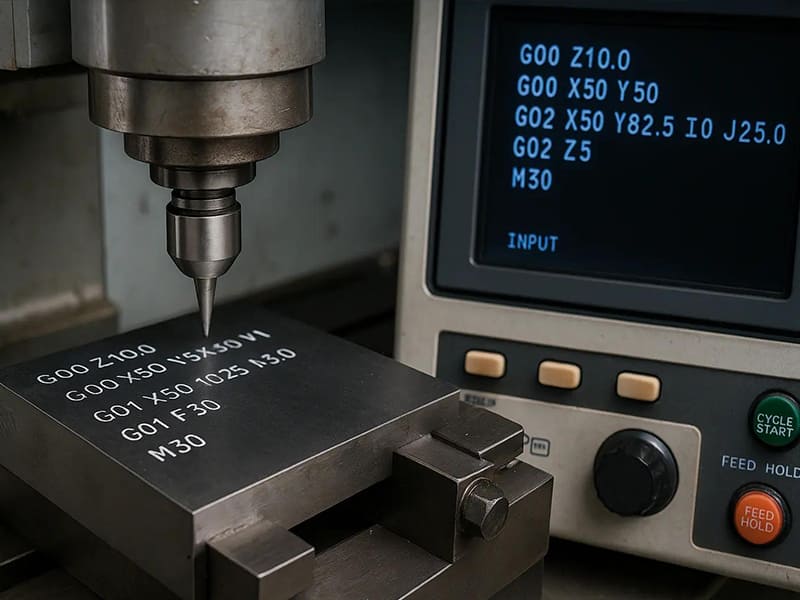
CNC (Computer Numerical Control) программирование является критически важным аспектом современной механообработки, обеспечивая точное управление станками для создания сложных деталей с высокой точностью. Понимание методов программирования CNC и основ G-кода необходимо для оптимизации процесса обработки и достижения желаемых результатов в производстве.
В этой статье будут представлены основные концепции программирования CNC, с акцентом на методы программирования, основы G-кода и методы оптимизации процессов. Независимо от того, являетесь ли вы новичком или хотите усовершенствовать свои навыки, понимание этих принципов поможет вам повысить эффективность обработки, сократить ошибки и улучшить качество деталей в различных производственных применениях.
Что такое программирование CNC в контексте механообработки?
В контексте механообработки, программирование CNC — это не просто написание G-кода. Это инженерный процесс, который преобразует геометрию детали и функциональные требования в контролируемое взаимодействие между станком, режущими инструментами, приспособлениями и материалом. Программа определяет не только то, куда перемещается инструмент, но и как и при каких условиях удаляется материал.
С инженерной точки зрения программирование CNC находится в центре процесса обработки на станках с ЧПУ CNC. Программа должна учитывать кинематику станка, геометрию инструмента, возможности шпинделя, жёсткость приспособлений и поведение материала. Правильная программа синхронизирует эти элементы так, чтобы силы резания оставались предсказуемыми, стружка эффективно отводилась, а допуски стабильно выдерживались на протяжении всего производства.
Именно поэтому “знание G-кода не равно умению обрабатывать деталь”.” Синтаксически правильная программа всё равно может вызвать вибрацию, поломку инструмента или размерный дрейф, если подачи, скорости, стратегии врезания или траектории инструмента выбраны неудачно. Эффективное программирование CNC требует знания процесса — понимания того, как взаимодействие инструмента, тепловыделение и динамика станка взаимодействуют при реальном резании, а не просто того, как пишутся команды.
На практике программирование CNC функционирует как дисциплина проектирования процессов. Оно связывает конструкторский замысел и физическое производство, встраивая инженерные решения непосредственно в логику управления станком. Для конструкторов, инженеров и закупочных команд качество программы, таким образом, является основным фактором точности деталей, повторяемости и производственных затрат, а не второстепенной технической деталью.
Какие основные методы программирования CNC используются в механообработке?
В практической механообработке методы программирования CNC различаются не по “уровню навыков”, а по сложности процесса, требованиям к точности и объёму производства. Современные цеха часто используют более одного метода, выбирая подход, который наилучшим образом соответствует инженерным и экономическим ограничениям каждой работы.
Ручное программирование CNC
Ручное программирование CNC предполагает написание G-кода непосредственно на стойке или в автономном режиме. Оно по-прежнему полезно для простых элементов— таких как базовые схемы отверстий, операции торцевания или быстрые правки программы во время наладки.
-
Где это работает хорошо: простые геометрии, корректировка параметров, устранение неполадок
-
Ограничения: высокий риск человеческой ошибки, плохая масштабируемость, ограниченная способность управлять сложными 3D-траекториями инструмента
-
Инженерный риск: небольшие синтаксические или логические ошибки могут вызвать столкновения, брак или нестабильные результаты
Ручное программирование лучше всего рассматривать как вспомогательный инструмент, а не как основной метод производственной обработки.
Программирование CNC на основе CAM
CAM-программирование преобразует модели CAD в траектории инструмента, затем постпроцессирует их в G-код для конкретного станка. Этот CAD → CAM → G-код рабочий процесс является доминирующим методом в промышленном производстве.
-
Сильные стороны: высокая точность, повторяемость, обработка сложной геометрии, симуляция и проверка на столкновения
-
Промышленная ценность: поддержка многоосевой обработки, адаптивных траекторий инструмента и оптимизации процессов
-
Рекомендации: качество CAM по-прежнему зависит от решений программиста — программное обеспечение не заменяет знания в области механообработки
Для большинства операций фрезерования и точения CNC программирование на основе CAM обеспечивает наилучший баланс точности, эффективности и масштабируемости.
Диалоговое программирование CNC
Диалоговое программирование использует структурированные подсказки на системе управления станком (распространено на токарных станках CNC и некоторых обрабатывающих центрах). Операторы вводят размеры, инструменты и параметры без написания полного G-кода.
-
Лучше всего подходит для: прототипы, единичные детали, мелкосерийное производство
-
Преимущества: быстрая настройка, снижение затрат на программирование
-
Ограничения: ограниченная гибкость для сложных геометрий или продвинутой оптимизации
Сравнение методов программирования (инженерный взгляд)
| Метод программирования | Точность | Эффективность | Типичный размер партии |
| Ручное программирование CNC | Средний | Низкий | Очень малый / корректировки |
| Программирование на основе CAM | Высокий | Высокий | Средний и крупный объём |
| Диалоговое программирование | Средний | Средний | Прототипы / мелкая серия |
С инженерной точки зрения, ни один метод не является универсально “лучшим”.” Эффективная стратегия программирования CNC согласует метод со сложностью детали, требованиями к допускам и масштабом производства — обеспечивая точность обработки и эффективность производства без ненужного риска или затрат.
Как работает программирование CNC от CAD до выполнения обработки?
В промышленной обработке программирование CNC следует структурированному рабочему процессу от CAD до станка , предназначенному для преобразования проектного замысла в контролируемые, повторяемые действия резания. Понимание каждого шага помогает инженерам диагностировать ошибки, оптимизировать время цикла и избегать дорогостоящей переделки.
Шаг 1: Моделирование CAD (определение проектного замысла)
Процесс начинается с модели CAD , которая определяет геометрию, размеры, допуски и базы. С точки зрения обработки качество CAD имеет значение: неоднозначные элементы, отсутствующие скругления или нереалистичные допуски распространяются вниз по цепочке в неэффективные траектории инструмента или нестабильное резание. Дизайнеры, которые моделируют с учётом производства — чёткие элементы, логичная структура баз — обеспечивают более надёжное программирование CNC.
Шаг 2: Генерация траекторий инструмента в CAM
Модель CAD импортируется в программное обеспечение CAM, где программисты выбирают инструменты, стратегии резания и параметры для генерации траекторий инструмента. Этот шаг определяет, как удаляется материал: методы входа, шаг по строке, глубина резания и контакт инструмента. CAM не “решает” это автоматически; он кодирует инженерные решения, которые напрямую влияют на точность обработки, качество поверхности и стойкость инструмента. Здесь используются симуляция и проверка на столкновения для подтверждения осуществимости перед началом резания.
Шаг 3: Преобразование постпроцессором
Траектории инструмента CAM не зависят от станка, пока не пройдут через постпроцессор. Постпроцессор преобразует общие данные траектории инструмента в G-код, специфичный для станка, учитывая синтаксис контроллера, конфигурацию осей, логику смены инструмента и соглашения безопасности. Несоответствующий или плохо настроенный постпроцессор может внести ошибки даже при правильных траекториях CAM — что делает этот шаг распространённой, но недооценённой точкой риска.
Шаг 4: Загрузка программы и настройка
Сгенерированный G-код загружается на станок CNC. Операторы проверяют смещения заготовки, длины инструментов, приспособления и системы координат. Холостые прогоны или покадровое выполнение часто используются для подтверждения движения перед резанием материала.
Шаг 5: Выполнение обработки
Во время выполнения контроллер CNC интерпретирует G-код в реальном времени, координируя оси, скорость шпинделя и подачу. Качество программы определяет, остаются ли силы резания стабильными и согласуются ли результаты от детали к детали.
С инженерной точки зрения этот рабочий процесс не является линейным, а итеративным. Обратная связь от обработки часто приводит к корректировкам CAD или CAM — подчёркивая, что программирование CNC является замкнутым производственным процессом, а не одноразовым этапом перевода.
Что такое G-код и M-код и почему они важны в обработке?
При обработке CNC, G-код и M-код — это не программистская мелочь — это прямой слой управления между инженерным замыслом и поведением станка. Понимание того, чем они управляют и как они взаимодействуют с параметрами процесса, необходимо для точности, эффективности и операционной безопасности.
G-код: управление движением и геометрией
G-коды определяют как движется инструмент. Они управляют линейной и круговой интерполяцией, режимами позиционирования, системами координат и стандартными циклами. С инженерной точки зрения G-код определяет точность траектории инструмента— будет ли элемент обработан со стабильным контактом, правильными углами подхода и постоянной глубиной. Даже небольшие решения (например, абсолютное или инкрементное позиционирование) могут повлиять на накопление допусков и качество поверхности по всей партии.
M-Code: Machine State and Auxiliary Functions
M-codes manage what the machine does beyond motion. This includes spindle start/stop, coolant control, tool changes, and program flow. While they do not define geometry, M-codes are critical to process reliability. Incorrect sequencing—such as engaging feed before spindle speed stabilizes—can lead to tool wear, chatter, or scrap.
The Practical Meaning of S / F / T / D
Beyond G and M commands, several parameters directly shape cutting conditions:
-
S (Spindle Speed): Sets rotational speed; improper values cause heat buildup or poor chip formation.
-
F (Feed Rate): Controls material removal rate; mismatches lead to deflection or premature wear.
-
T (Tool Selection): Calls the physical tool; accuracy depends on correct tool library management.
-
D (Tool Offset/Compensation): Applies diameter or wear offsets; errors here translate immediately into dimensional deviation.
These values embed process assumptions into the program. Changing them without understanding the cutting context can destabilize the entire operation.
Controller Differences: A Real Manufacturing Risk
G-code standards exist, but controller implementations vary. The same command can behave differently across machines due to syntax, default modes, or supported cycles. This creates risk when transferring programs between shops or machines—one reason post processors and verification are critical.
In practice, G-code and M-code matter because they encode engineering decisions. Mastery is not about memorization, but about understanding how commands translate into real cutting behavior on a specific machine.
How Toolpaths and Programming Strategy Affect Machining Results
При обработке CNC, toolpath strategy is a primary driver of cutting forces, thermal load, and dimensional stability. Two programs that remove the same volume of material can produce very different results depending on toolpath type, sequence, and engagement control.
Toolpath Type → Machining Impact
-
Contour (Profile) Toolpaths Used for external and internal edges, contour paths prioritize geometric accuracy. However, aggressive radial engagement can cause deflection on thin walls. Programming lighter finishing passes after roughing is critical to recover accuracy.
-
Drilling Toolpaths Beyond hole location, strategy choices—spotting, pecking, and dwell—govern chip evacuation and heat. Poor sequencing (e.g., drilling before roughing nearby pockets) can introduce positional drift as material relaxes.
-
Pocket/Cavity Toolpaths Traditional zig-zag pocketing creates frequent entry/exit shocks and variable load. Modern strategies favor smoother engagement to stabilize forces and reduce tool wear.
Toolpath Sequence → Deformation and Accuracy
Order matters. Removing material in the wrong sequence can release residual stresses, leading to part movement and tolerance loss—especially in thin-walled aluminum or pre-hardened steels. A common best practice is:
-
Rough internal features
-
Semi-finish to balance stresses
-
Finish critical surfaces last This sequence minimizes distortion and improves repeatability without changing the machine or tooling.
Dynamic (Adaptive) vs Traditional Cutting
-
Traditional Cutting uses constant step-over and depth, which causes fluctuating tool load at corners and re-entries.
-
Dynamic/Adaptive Cutting maintains near-constant tool engagement by varying path curvature and step-over. Engineering benefit: lower peak cutting forces, reduced heat, longer tool life, and often shorter cycle times—particularly in roughing operations.
Programming Strategy vs Real Cutting Load
A key misconception is that feed rate alone controls load. In reality, engagement angle, step-over, and path curvature dominate cutting forces. A program that looks conservative on paper can overload tools if engagement spikes occur. Conversely, optimized paths allow higher feeds with lower effective load.
Strategy → Outcome (Summary)
| Programming Strategy | Cutting Force Stability | Accuracy Impact | Типичное использование |
| Conventional pocketing | Низкий | Переменная | Simple roughing |
| Adaptive clearing | Высокий | Стабильный | CNC optimization |
| Finish-last sequencing | Высокий | Высокий | Жёсткие допуски |
For engineers and buyers, the takeaway is clear: programming strategy defines the process window. Optimized toolpaths improve accuracy, protect tools, and reduce cost—without changing material or equipment.
How to Optimize CNC Programs for Accuracy, Tool Life, and Cycle Time
Optimizing CNC programs is not about maximizing a single metric. In production machining, accuracy, tool life, and cycle time are interdependent variables, and improving one often impacts the others. Effective optimization therefore focuses on process stability, not peak performance.
Cutting Parameter Optimization: Speed and Feed in Context
Adjusting spindle speed and feed rate is the most visible form of optimization, but it must be done with an understanding of actual tool engagement. Increasing feed rate can reduce cycle time, yet if engagement spikes occur (corners, slotting), cutting forces rise sharply, accelerating wear or causing deflection. Experienced programmers optimize parameters per toolpath segment, not globally—using lower engagement zones to gain speed while protecting tools in high-load regions.
Program-Level Efficiency Improvements
Many cycle-time reductions come from program structure, not cutting harder. Examples include eliminating unnecessary retracts, optimizing tool change order, and reducing air-cutting through smarter linking moves. These changes shorten non-cutting time without increasing mechanical or thermal load, making them low-risk, high-return optimizations.
Balancing Tool Life and Stability
Maximum tool life rarely coincides with minimum cycle time. Running conservatively extends tool life but inflates part cost; pushing parameters shortens cycles but risks unpredictable failure. Industrial optimization targets a stable wear pattern, where tools fail gradually and predictably. This stability allows scheduled tool changes and consistent quality—often more valuable than marginal cycle-time gains.
Program Modification vs. Process Modification
A critical engineering judgment is deciding what to change. Some problems are best solved at the program level—adjusting toolpaths, entry strategies, or sequencing. Others indicate a process issue, such as improper tool selection, insufficient rigidity, or fixturing limitations. Attempting to “fix” a process problem purely through programming usually leads to diminishing returns or hidden risk.
Practical Optimization Mindset
High-performing CNC programs are rarely created in a single pass. They result from iterative refinement, using machining feedback—tool wear, surface finish, dimensional drift—to narrow the safe operating window. The goal is not the fastest cut, but the most repeatable cut at scale.
For engineers and procurement teams, optimized CNC programming directly translates into predictable quality, controlled tooling cost, and reliable delivery—outcomes that matter far more than theoretical machining limits.
What Are the Challenges of CNC Programming for Multi-Axis Machining?
Multi-axis machining expands manufacturing capability, but it also raises the complexity and risk profile of CNC programming. Compared with 3-axis work, 4- and 5-axis programming introduces additional motion coordination, tighter safety margins, and greater dependence on accurate digital validation.
Increased Program Complexity (4/5-Axis Kinematics)
In multi-axis CNC programming, tool orientation becomes as critical as tool position. The program must continuously manage rotary axis motion, tool tilt, and effective cutting angle, all while maintaining stable engagement. Small errors in axis coordination can amplify into surface deviation, gouging, or loss of dimensional accuracy—especially on contoured or freeform surfaces.
Collision Risk and the Limits of Intuition
With simultaneous multi-axis motion, visual intuition is no longer reliable. Collisions can occur between the tool, holder, spindle, fixture, or machine components—even when toolpaths appear safe in isolation. This makes simulation and collision detection mandatory, not optional. However, simulations are only as accurate as the machine model, tooling data, and post processor configuration behind them.
Post Processor and Machine Matching Challenges
Multi-axis programs are highly sensitive to post processor accuracy. Differences in rotary axis configuration, pivot points, and control logic mean that a post tuned for one 5-axis machine may produce unsafe motion on another. In practice, many multi-axis issues arise not from CAM strategy, but from subtle mismatches between the post processor and the physical machine.
Risk Mitigation Strategies (Engineering View)
-
Use machine-specific posts validated with real cutting tests
-
Maintain accurate digital twins for tools, holders, and fixtures
-
Limit simultaneous motion where not functionally required
-
Validate with staged dry runs and reduced feed overrides
For engineers and buyers, the takeaway is clear: multi-axis CNC capability is unlocked through programming discipline, not machine hardware alone. Effective multi-axis CNC programming manages risk through simulation, validation, and tight integration between CAM, post processing, and the actual machine—turning complexity into a controlled manufacturing advantage rather than a source of variability.
How CNC Programming Impacts Part Quality in Different Industries
CNC programming quality directly shapes part performance, but the definition of “quality” varies by industry. Tolerance targets, surface integrity, and repeatability expectations differ significantly, driving distinct programming strategies even on similar machines.
Aerospace: Accuracy Under Variable Load
В aerospace machining, parts often feature thin walls, complex geometries, and hard-to-machine alloys. Programming emphasizes force control and deformation management: conservative roughing, stress-balanced sequencing, and finish-last strategies are common. Toolpaths prioritize constant engagement to minimize deflection, while verification focuses on avoiding overcuts that could compromise structural integrity. Here, programming choices are tightly coupled to dimensional stability and surface integrity rather than raw cycle time.
Automotive: Repeatability and Throughput
Automotive CNC programs are optimized for high repeatability at scale. Tight tolerances are important, but the dominant drivers are cycle time consistency, predictable tool wear, and automation compatibility. Programming strategies favor standardized toolpaths, fixed parameters, and minimal variation between parts to ensure stable Statistical Process Control (SPC). Small inefficiencies per cycle can compound into significant cost at volume, making program-level efficiency critical.
Medical: Surface Quality and Process Control
В medical CNC machining, surface finish and process traceability often outweigh speed. Programming must minimize burrs, micro-tearing, and heat-affected zones, especially for implants and surgical components. Lower engagement strategies, controlled entry/exit moves, and additional finishing passes are common. Repeatability is essential, but process validation and consistency are paramount due to regulatory requirements.
Industry-Driven Programming Trade-Offs
These examples illustrate a key principle: industry requirements reshape programming priorities. Aerospace favors stability over speed, automotive favors efficiency with control, and medical favors surface integrity and validation. Effective CNC programming adapts strategy—toolpaths, sequencing, and parameters—to the industry context, ensuring part quality is achieved not by machine capability alone, but by intentional, industry-aware program design.
How Engineers and Buyers Should Evaluate CNC Programming Capability
For engineers and buyers, CNC programming capability is a core indicator of a machining supplier’s true technical strength—yet it is often misunderstood. Owning CAM software or modern machines does not guarantee effective programming. Capability is reflected in how well programming decisions translate into stable, repeatable machining outcomes.
What Strong CNC Programming Capability Looks Like
A capable supplier demonstrates programming strength through process results, not software labels. Key indicators include consistent dimensional accuracy across batches, controlled tool wear patterns, and minimal reliance on manual rework or operator intervention. Well-structured programs show clear sequencing logic, appropriate toolpath strategies, and evidence of parameter optimization rather than default settings.
Why CAM Software Alone Is Not Enough
CAM systems generate toolpaths, but they do not make engineering decisions. Poorly trained programmers can still produce inefficient or risky programs using advanced software. True capability lies in understanding cutting mechanics, machine behavior, and fixturing constraints—and embedding that knowledge into the program. Simulation use, post-processor tuning, and documented programming standards are stronger signals than software brand names.
Supplier Evaluation Checklist (Engineering View)
When evaluating an external machining partner, engineers and procurement teams should look for:
-
☐ Use of simulation and collision detection before cutting
-
☐ Machine- and tool-specific post processors
-
☐ Evidence of optimized toolpaths (not default CAM output)
-
☐ Stable, repeatable results across similar parts
-
☐ Ability to explain почему a programming strategy was chosen
-
☐ Willingness to adjust programs based on machining feedback
Decision-Oriented Takeaway
Strong CNC programming capability reduces risk throughout the supply chain—fewer defects, predictable lead times, and controlled manufacturing cost. For B2B buyers, evaluating programming competence is not a technical formality; it is a quality and reliability decision that directly affects long-term production performance.
Резюме
In modern machining, CNC programming is a core manufacturing capability, not a secondary technical task. It defines how design intent is translated into controlled cutting behavior, directly influencing dimensional accuracy, surface integrity, tool life, and production consistency. Machines and tooling set the potential—but programming determines whether that potential is realized or wasted.
Effective CNC programming is built on three inseparable elements: programming methods, code-level control, and machining strategy. CAM workflows, G- and M-code logic, and toolpath sequencing must work together to manage cutting forces, heat generation, and part deformation. Weakness in any one area often appears downstream as quality variation, premature tool wear, or inflated cycle time.
For engineers and buyers, the practical implication is clear: strong CNC programming converts technical capability into measurable cost and quality advantages. Optimized programs reduce rework, stabilize processes, and support predictable delivery at scale. In competitive manufacturing environments, programming quality is not just an operational detail—it is a decisive factor in production performance and supplier reliability.
Часто задаваемые вопросы
Is CAM programming always better than manual programming?
Not always—but it is usually more appropriate for industrial machining. CAM programming excels at managing complex geometry, multi-axis motion, and repeatable production, especially when simulation and collision checking are required. Manual programming still has value for simple features, quick edits, or troubleshooting. The key distinction is not superiority, but fit-for-purpose: CAM is a production tool; manual code is a tactical tool.
How much does CNC programming affect part accuracy?
Significantly. Programming decisions control tool engagement, cutting forces, heat input, and sequencing—all of which directly influence dimensional accuracy and surface finish. Even with a high-precision machine, suboptimal toolpaths or parameter choices can cause deflection, chatter, or thermal drift. In practice, program quality often determines whether machine accuracy is achieved or compromised.
Why do CNC programs fail during machining?
Most failures stem from process mismatch rather than syntax errors. Common causes include incorrect feeds and speeds for actual tool engagement, poor chip evacuation in deep features, unverified post processors, or assumptions about rigidity that do not match the setup. Programs may also fail when transferred between machines with different controllers or kinematics without proper validation.
How is CNC programming different for 5-axis machines?
5-axis programming introduces tool orientation control, rotary-axis kinematics, and much tighter collision margins. Toolpath intent must be coordinated with machine geometry via accurate post processors and verified through simulation. Unlike 3-axis work, intuition is insufficient; digital verification and staged prove-outs are essential to manage risk.
What should buyers look for in a CNC programming team?
Buyers should evaluate outcomes and discipline, not just software. Indicators of a strong team include consistent results across batches, documented programming standards, use of simulation and collision detection, machine-specific post processors, and the ability to explain programming choices in terms of cutting mechanics and process stability. Teams that can adapt programs based on machining feedback typically deliver lower risk and more predictable cost.


